



Business travel by car is less about the car than about everything attached to it: the colleague who needs collecting on the way, the boxes of samples that will not fit in an overhead locker, the second city on the same afternoon and the hotel that turns out to be twenty minutes from the office you assumed it was beside. This page describes how those parts are put together.
The account below follows an ordinary business booking in sequence, and it assumes somebody is coordinating rather than travelling. Most of these arrangements are made by an assistant, an office manager or whoever drew the short straw, and the questions that come from them are consistently practical ones. Those are the questions answered here.
What the person organising it should send
The most useful first message is a rough itinerary rather than a request for a car. Where the day starts, the sequence of destinations, when each appointment is expected to finish and how many people are travelling on each leg. If two colleagues join in Birmingham and only one continues to Manchester, say so at the outset, because that changes the vehicle rather than merely the plan.
We will come back with questions about the awkward parts. Client sites inside business parks often have a barrier and a visitor procedure. City centre offices frequently have a service entrance on a different street from the one on the letterhead. None of this is difficult once known, and all of it is troublesome when discovered on the morning with three people waiting in a car park.
- A rough itinerary with expected finish times, not just addresses
- Who joins and who leaves at each leg of the day
- Anything travelling in the boot: cases, samples, display materials
- Access notes for client sites: barriers, visitor logs, service entrances
- The hotel, if there is one, and where it sits relative to the office
- A single contact for the day, and who covers when they are in a meeting
Collecting colleagues along the way
Picking people up en route is ordinary work and the only real requirement is honesty about timings. A colleague who says they will be outside at eight will be outside at ten past, and a sensible plan assumes it. We build the sequence so that a late second pickup does not eat the margin protecting the first appointment, which is usually a matter of ordering the stops well rather than driving faster.
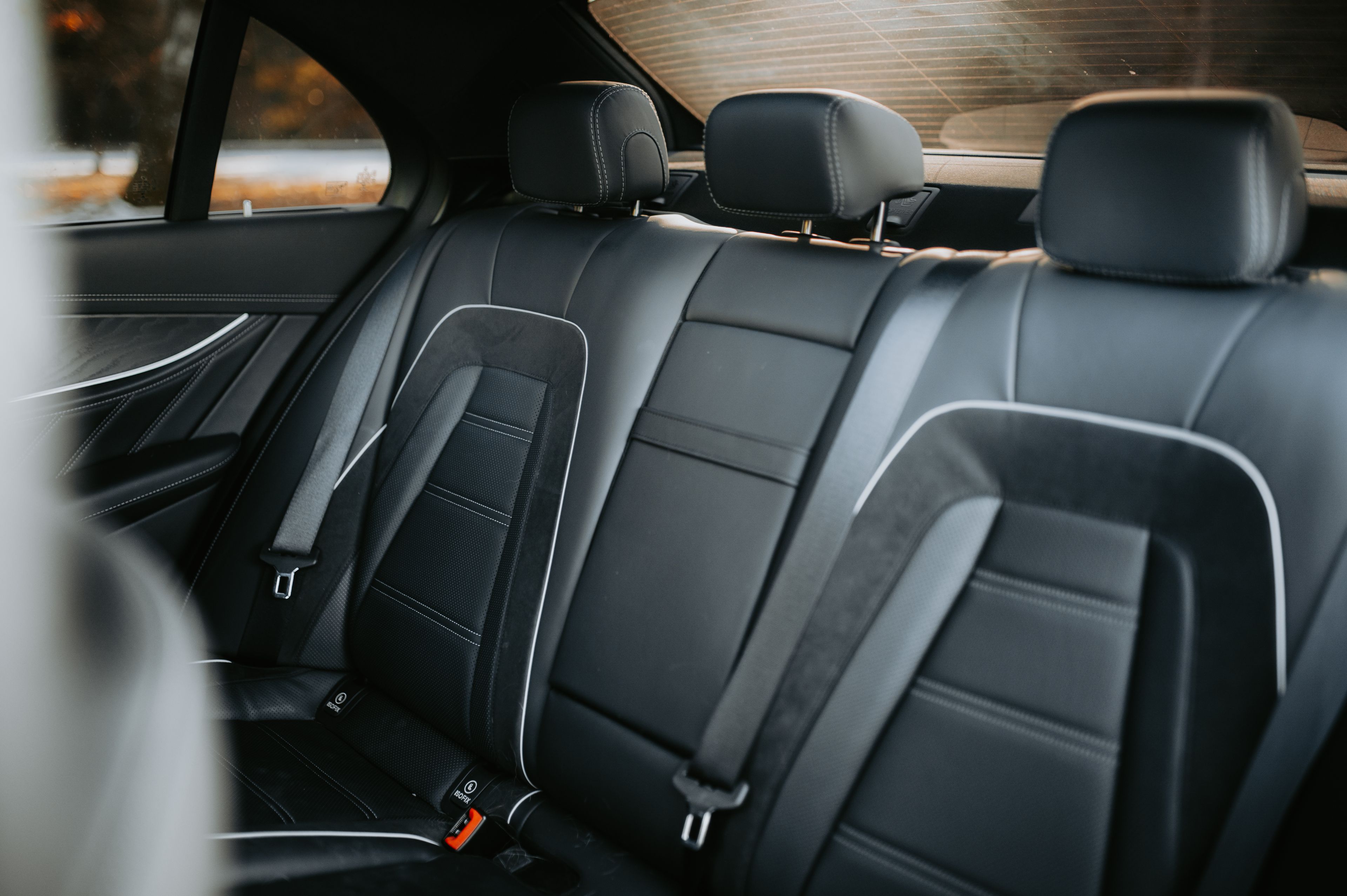
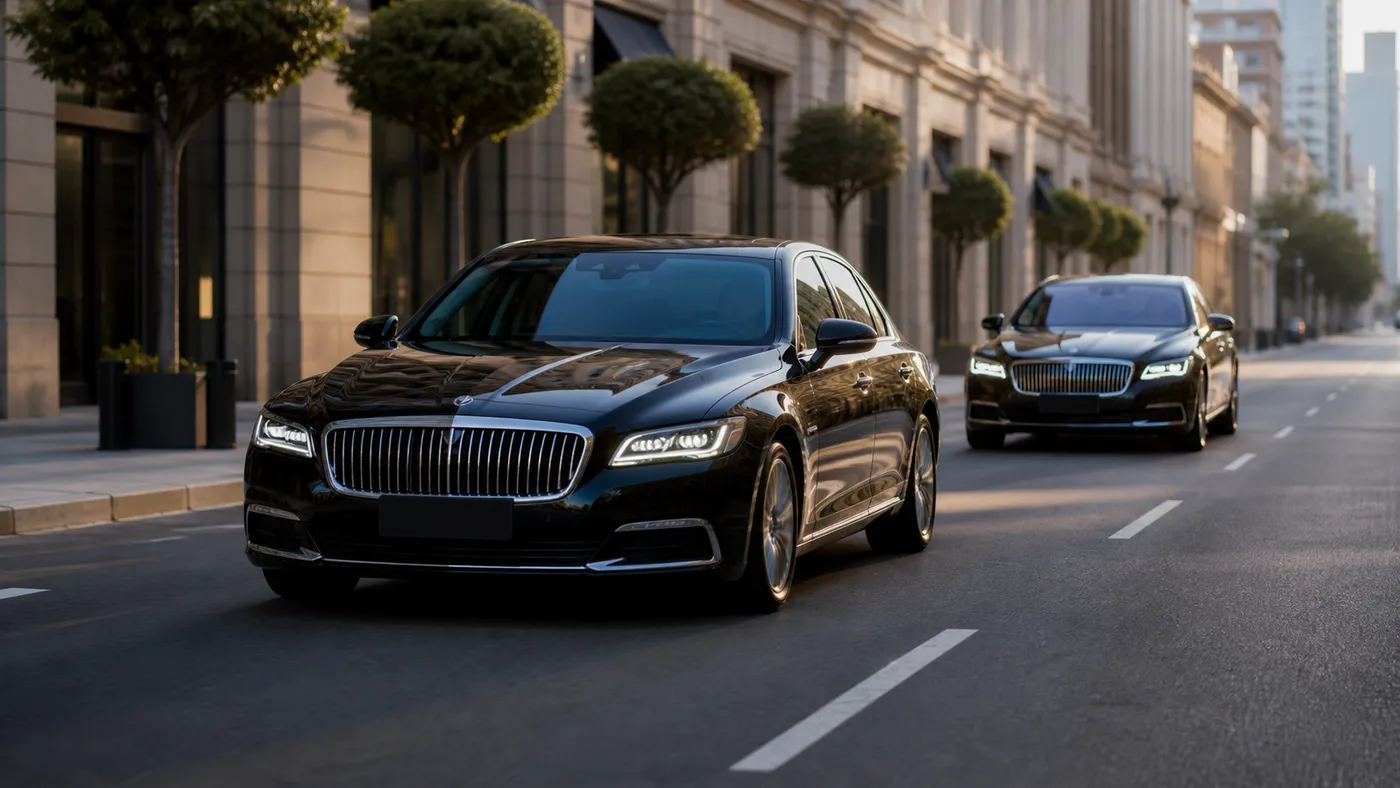
Where four people are converging on the same postcode, one larger vehicle is almost always better than three cars leaving from three places at slightly different times. It is simpler to coordinate, and the rear compartment turns the drive into the preparation meeting nobody managed to schedule. Individual rear seats matter here far more than luxury does, so we specify on the number of people rather than the occasion.

Materials, cases and the boot
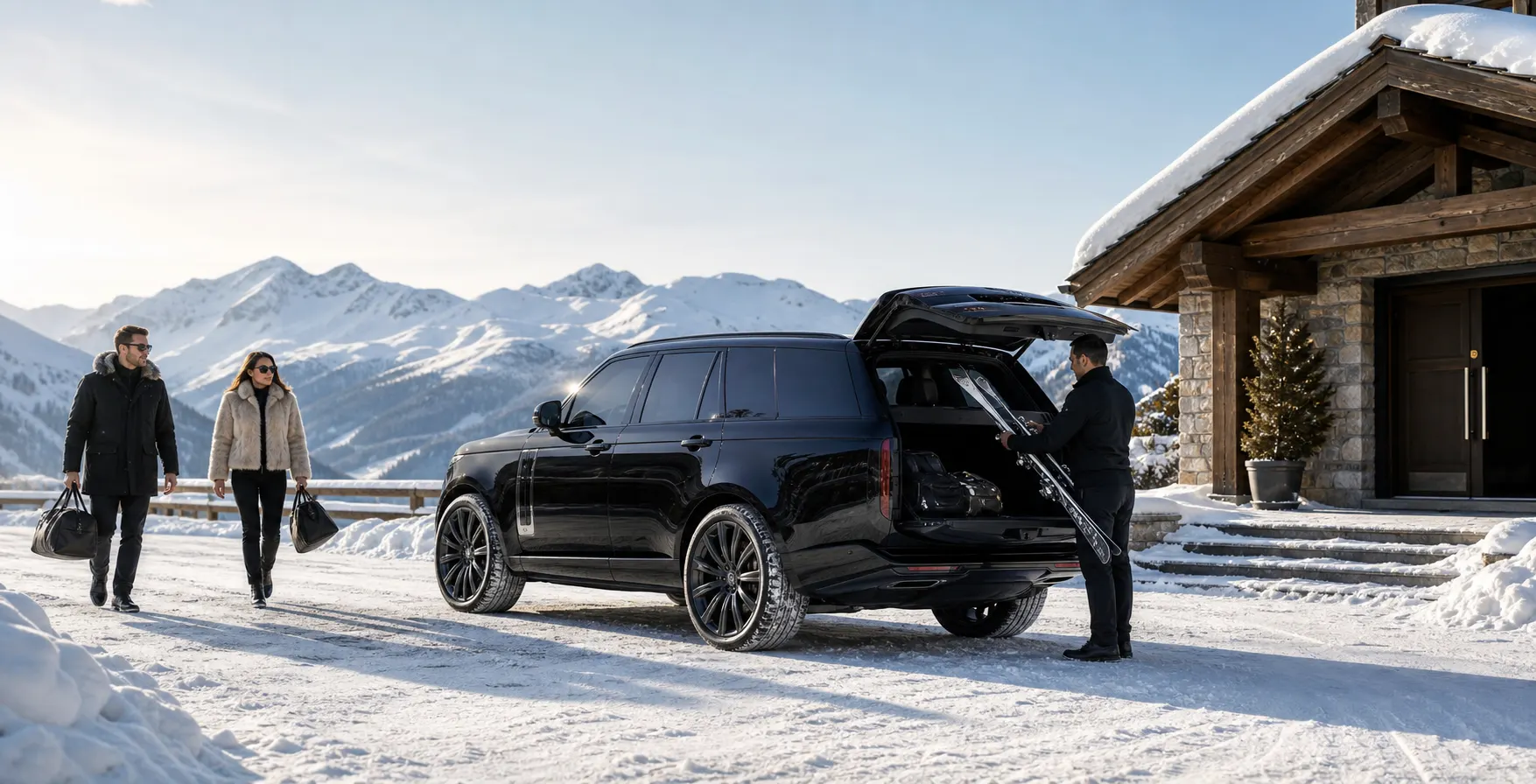
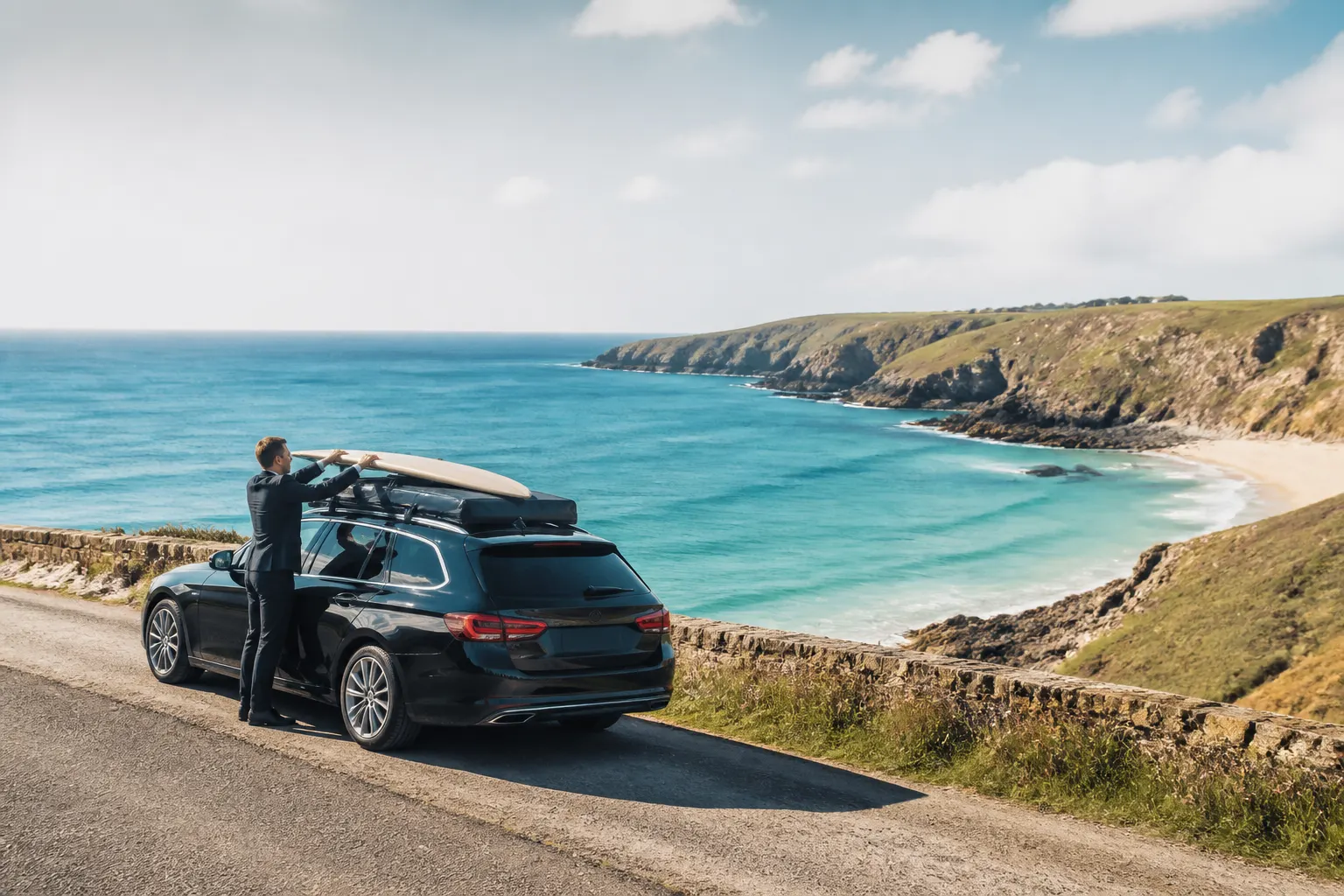
Tell us what is travelling as well as who. A pull-up banner, a sample case, a box of printed proposals and four overnight bags are a completely different vehicle from four people with laptops, and the difference gets discovered at the kerb if nobody mentions it. Measurements are welcome for anything unusual, since guessing at the dimensions of a display stand has a poor record.
Items may stay in the vehicle between stops on a continuous booking, which is one of the practical reasons to keep the car for the day rather than book separate legs. What your chauffeur will not do is sign for goods, store them unattended overnight or deliver them somewhere on your behalf. That is a courier task and it is worth arranging as one.
Days that cross several cities
Multi-city days are built backwards from the last appointment that cannot move, then tested against realistic road times rather than optimistic ones. We will tell you when a schedule does not hold. Three cities in a day is often possible; three cities with an hour of contingency between each is frequently not, and that difference is better found on paper than on a motorway slip road at four o'clock.
Where a trip runs across consecutive days with overnight stays, the same chauffeur usually stays with you, subject to driving hours and his own rest requirements. That continuity is worth more than it sounds by the second morning, because nothing has to be explained twice. Where the schedule genuinely exceeds what one chauffeur can cover safely, we propose a second rather than stretch the first.
Discretion on a working journey
A car full of colleagues talks freely, and it should be able to. Chauffeurs work on the assumption that anything said in the cabin does not exist outside it. Client names, figures, the state of a negotiation and whatever somebody says about a competitor at the end of a long afternoon are all treated identically, which is to say they are not repeated anywhere at all.
Where your organisation requires a specific written confidentiality arrangement for a particular engagement, raise it at the enquiry stage so it can be in place before anything is confirmed. Booking details are never acknowledged to a third party, including somebody who makes contact claiming to be part of the trip.
Where plans usually slip
After enough of these, the failure points become predictable, and almost none of them involve the car. Naming them in advance is the cheapest form of insurance available, because each one has a straightforward answer if it is anticipated and a poor one if it is not.
None of this is an argument for over-planning a working day. It is an argument for building the sequence with the two or three known weaknesses in mind, and for agreeing in advance which appointment is protected if the day starts to lose time.
- Lunch meetings scheduled for one hour that never are
- Visitor procedures at client sites, adding fifteen minutes at the barrier
- A hotel further from the office than the map suggested
- A final appointment added after the plan was already fixed
- Colleagues reaching a pickup later than they promised
- Return legs routed through a city centre at the worst hour