







Most people arranging a chauffeur for the first time are not worried about the car. They are worried about the unknowns: how much they need to explain, whether anyone will actually be there, and what happens if the day does not go to plan. This page answers those questions in order, following a booking from the first message through to the moment the car pulls away.
Nothing here is about persuading you that the service is worth having. It is about removing surprises, because a chauffeur booking that goes smoothly is almost always one where both sides knew what was expected. Where something is genuinely outside what a chauffeur does, we say so, and where a detail depends on your own arrangements rather than ours, we say that too.
What we ask at the enquiry stage
The first exchange is shorter than most people expect. We need the date, the collection address, where you are going, roughly when you need to be there, how many people are travelling and how much luggage is coming with you. Everything else is refinement. If you have only half of that, send what you have and we will ask for the rest rather than send you away to fill in a form.
The questions that follow are usually about the awkward edges of a journey rather than the journey itself. Which entrance you will come out of, whether a building has a barrier, whether anyone needs help with a low seat. These are the details that decide whether a collection feels smooth, and they are far easier to settle in a message on Tuesday than at the kerb on Friday morning.
- The date, the start time and the address you are leaving from
- Where you are going, and whether there are stops in between
- Passenger numbers, including children and their ages
- Large cases and cabin bags counted honestly rather than estimated
- Anything about access: barriers, steps, private entrances, gate codes
- Whether you would prefer a quiet cabin or do not mind conversation
The written confirmation and what it covers
Nothing is booked on a conversation alone. Once we understand the journey we send a written quotation covering the vehicle class we recommend, the timings, the route in outline and the terms that apply to your particular booking. You read it, you agree it, and only then are a chauffeur and a car held for your date. If something in it does not match what you had in mind, that is the moment to say so.
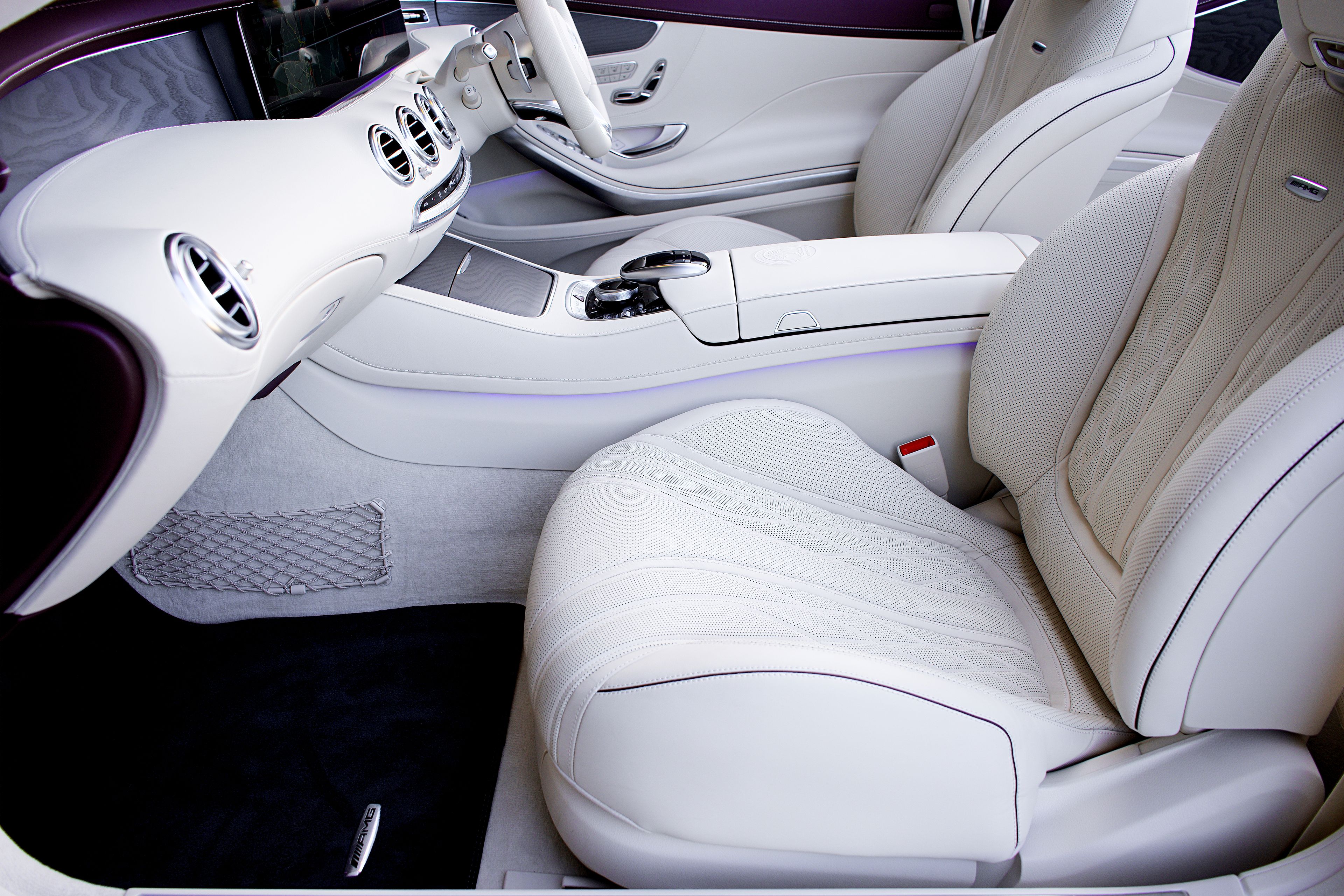
We describe a class of vehicle rather than a registration number, because cars come from our own vehicles and from a vetted network of professional chauffeur operators. Model, colour and specification are subject to availability and are confirmed at booking. If a particular detail matters to you, a dark exterior for a discreet arrival or a light interior for photographs, tell us early and we will say honestly whether it can be held.
The hour before your collection
Your chauffeur is briefed before he leaves for you. He has looked at the route, checked for closures, worked out where the car can legally stand at your address and decided which approach makes sense at that hour. He aims to be in position early and to wait somewhere sensible rather than idle outside your door, which matters more than it sounds on a residential street at six in the morning.
You will normally hear from him shortly before the agreed time, so you know the car is there without having to look. If you would rather he came to a reception desk, rang a bell or simply waited without contact, say so at the booking stage and that is what will happen. Preferences of this kind are recorded against the journey rather than left to be guessed at on the morning.
The journey itself
Doors are opened for you and bags are taken before you reach for them. The cabin is set to the temperature you asked for, still water is in the door, and the car pulls away smoothly rather than promptly. A good chauffeur drives so that you could read without effort, which means earlier braking, gentler steering and a route chosen for its surface as much as for its speed.
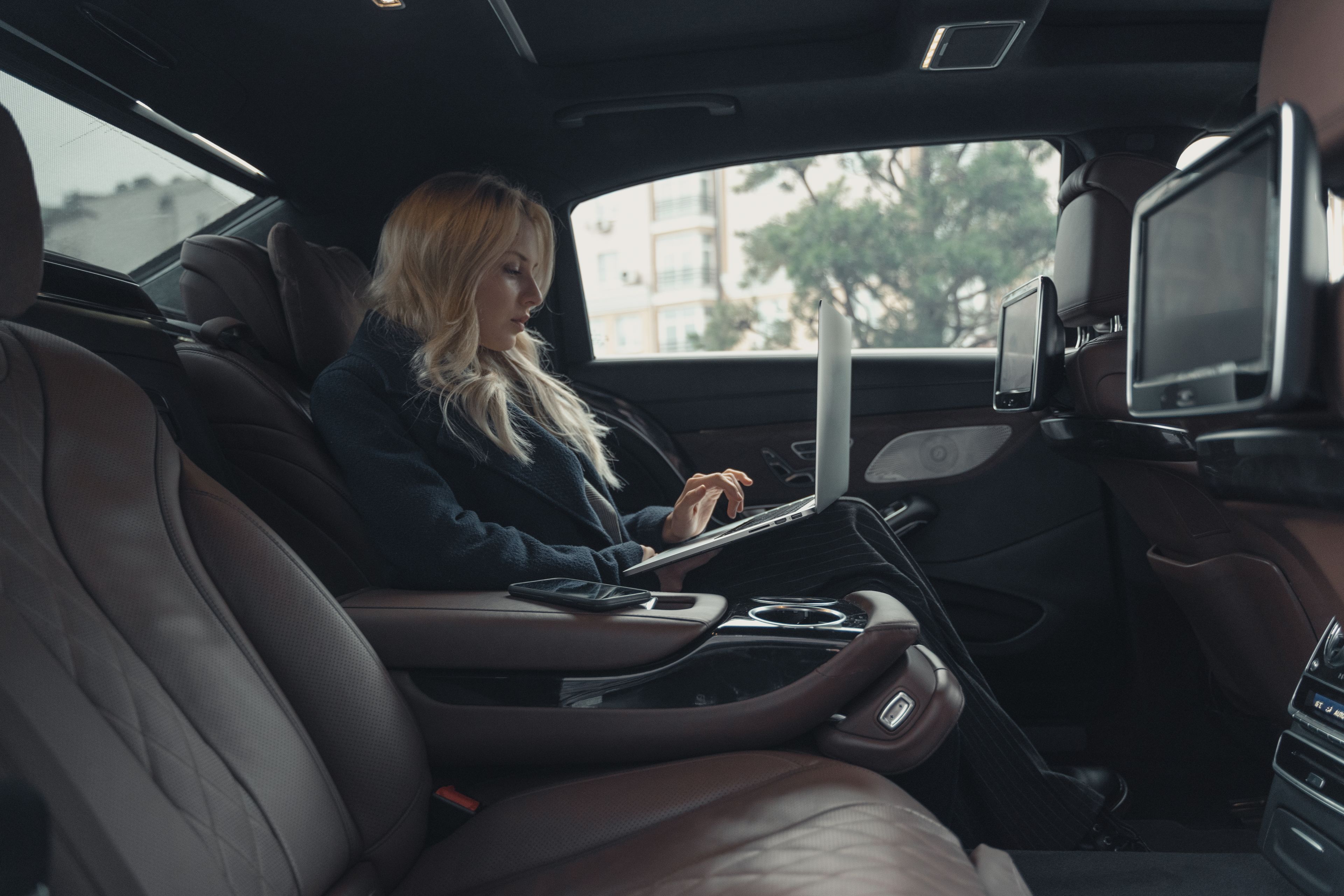
Conversation follows your lead. If you begin talking, your chauffeur will talk. If you take a call or open a laptop, the cabin goes quiet and stays quiet. Nobody will ask what you do, comment on where you have been or offer opinions about the traffic. This is a learned professional manner rather than a personality, and it is a large part of what separates the service from a well-driven taxi.
Between stops the car stays with you if your booking is hourly or for the day. Coats, shopping and papers can be left on the seat. Your chauffeur holds nearby, takes his own break while you are occupied, and is back at the door within a few minutes of your message. You never need to track him or wonder whether he has drifted too far away to be useful.
What sits outside the chauffeur role
The boundaries are worth knowing in advance, because they are rarely mentioned and occasionally matter. A chauffeur is a professional driver. He is not a guide, a courier, a bodyguard or an assistant, and there are a small number of requests he will decline politely rather than improvise around.
None of this is obstruction. Where a request falls outside the role we can usually suggest how to arrange it properly instead, whether that means a second chauffeur for a very long day, a licensed guide booked separately, or a specialist firm for anything involving protection. Saying so in advance is more useful than agreeing on the day and disappointing you later.
- Carrying passengers beyond the legal seating capacity of the vehicle
- Driving on once legal driving-hours limits have been reached
- Acting as security or close protection at an arrival
- Providing licensed guiding or commentary at attractions
- Signing for, storing or delivering goods unattended on your behalf
- Taking a child without the seat and arrangements agreed beforehand
If the day changes while you are out
Plans move, and a booking is expected to move with them. A meeting overruns, a dinner is added, a flight is put back two hours. Send a message and the rest of the day is rearranged around it. Where a change affects the quotation, because the booking extends well beyond its agreed length or the route alters substantially, we tell you before anything is committed rather than afterwards.
There are limits we will be straight about. Legal driving hours are fixed, and where an evening runs long enough to threaten them we say so early and propose a second chauffeur rather than stretch the first. It is one of the few points where we will push back on a plan, and we would far rather do it at four in the afternoon than at midnight.