








Almost every chauffeur booking is private in the ordinary sense that nobody else gets in. The question worth asking is narrower: does your journey actually need the car held, waiting and unavailable to anybody else, or would a pair of well-timed transfers do exactly the same job? The answer turns on three things, and none of them is how much the day matters to you.
Those three things are the number of stops, the predictability of the finish, and whether the rear compartment needs to be a private space rather than simply a comfortable one. Work through them honestly and the right arrangement is usually obvious within a minute. This guide also sets out, plainly, the journeys where we would steer you towards a different booking altogether.
Test one: count the stops
One collection and one destination, both at known times, is a transfer. There is nothing to wait for and nothing to protect, so paying for a car to be held gains you very little. Two stops with a long, fixed gap between them is often two transfers, and we will say so rather than quote the longer arrangement. The arithmetic changes at three.
From three stops onwards the friction of starting again dominates everything else. Each restart costs a wait, a walk to wherever a car can legally stop, and a fresh explanation of where you are going. Holding one car and one chauffeur through the sequence removes all of it, and that is the point where exclusivity stops being a comfort and becomes a practical saving of time.
- One stop, fixed times, no luggage: a straightforward transfer
- Two stops with a firm gap between them: usually two transfers
- Three stops in a morning: hold the car, it will be quicker
- Four or more stops in a day: an hourly or full-day private booking
- Stops in different towns with driving between: a full-day booking
- A single stop with an unknown finish time: hold the car regardless
Test two: how certain is the finish
Predictability matters more than distance. A meeting billed as an hour that could run to three, a hospital appointment that depends on a queue, a dinner that ends when the last person decides it does. In each case the value of a held car is that nobody has to make a decision under time pressure at the end of it, which is when decisions are worst.
Where every timing is genuinely fixed and short, that value disappears. An eight o'clock departure to a nine o'clock arrival, with a return booked separately for the afternoon, does not need the car sitting between the two. We would rather quote you two transfers than sell you seven hours of waiting you were never going to use.
Test three: does the cabin need to be private
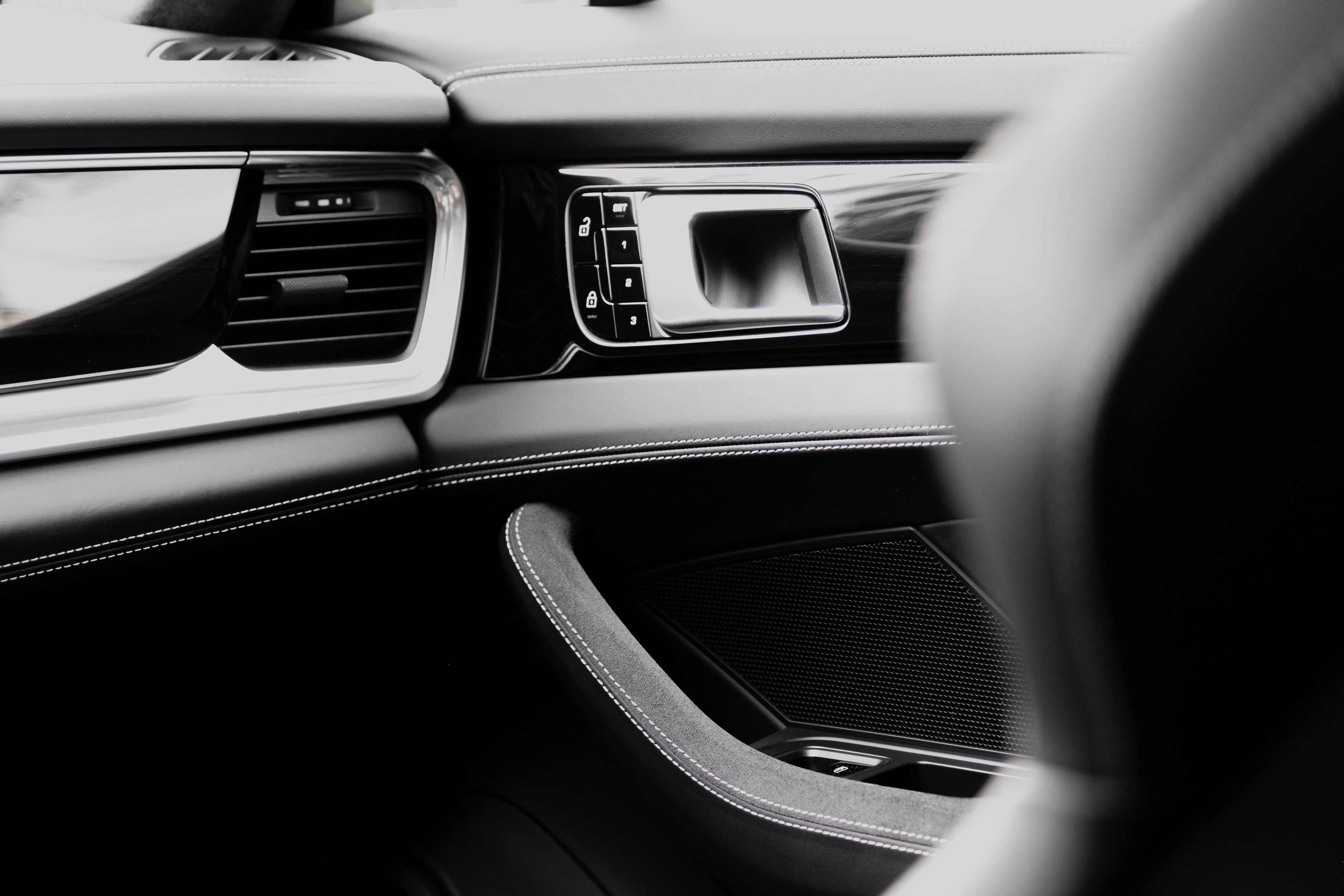
The third test is the one people find hardest to answer honestly. If you will take a confidential call, review something you would not leave on a table, or travel with somebody whose presence is nobody else's business, then the exclusivity of the compartment is doing real work. Rear privacy glass and an unmarked car are part of the same answer.
If, on the other hand, you will spend the journey looking out of the window, none of that is being used. That is still a perfectly good reason to book, because comfort is a legitimate purchase, but it is worth separating comfort from necessity while you are deciding what a journey should cost you.
There is a middle case worth naming. Travelling with children, elderly relatives or anyone who needs time to get in and out of a car benefits enormously from exclusivity, not for privacy but for pace. Nobody is waiting behind you and nothing is hurried, which is a different kind of value and frequently the one that matters most.
Who tends not to need it
There is a group of clients for whom we routinely suggest something simpler. People who travel alone between two fixed points on a repeating schedule, with no luggage and no waiting, are usually better served by regular transfers booked in advance than by a held car. What they need is reliability, not exclusivity, and the two are not the same purchase.
Similarly, a group travelling together to one venue for a fixed event rarely needs the car held all evening if the finish time is genuinely known. A drop-off and a separately arranged collection covers it perfectly well. We would rather tell you that than quote the longer booking by default and let you assume it was necessary.
When to book something else
Several journeys look like private chauffeur work at first glance and are better arranged another way. The distinction usually comes down to what the day is really organised around: a schedule, an arrival, a flight or a distance.
The last of these is worth expanding. Our chauffeurs are professional drivers rather than licensed tour guides. They will take you anywhere, park sensibly and wait as long as you need, but they do not give commentary, and admission tickets to attractions are arranged by you. If a day is really about seeing things rather than getting to them, book a guide alongside the car and the whole day works better.
- A day built around meetings and calls: an executive chauffeur booking
- A sensitive or photographed arrival at a venue: a VIP chauffeur booking
- A single flight in or out with waiting: an airport chauffeur transfer
- One long cross-country run with no stops: a long-distance booking
- A repeating weekly pattern of journeys: a personal chauffeur arrangement
- A wedding or event needing several vehicles: an event chauffeur arrangement
- Sightseeing with commentary: book a licensed guide alongside the car