





This is the figure that most often decides whether a morning begins well. Passenger numbers are easy to remember and easy to state; case numbers are the detail people estimate cheerfully and get wrong, and the consequence is discovered at the exact moment when there is no time left to fix it.
What follows explains why manufacturers' boot volumes are so misleading, how the figure is stated when you arrange a journey, what a passenger should do with it before the morning arrives, and the several related measures that get quoted in place of it on comparison sites and hire listings without meaning the same thing.
Why litres mislead
Boot volume is measured by filling the space with small blocks, which tells you how much loose material a car will swallow and almost nothing about how many rigid rectangles will go in. Two cars with identical figures can differ by a whole suitcase depending on the height of the loading lip, the intrusion of the wheel arches and the slope of the rear screen.
Aperture matters as much as volume. A boot that is deep but narrow at the opening will refuse a case that a shallower, squarer boot accepts without complaint, and hard-shell luggage cannot be persuaded to deform the way a soft bag will. This is why the trade counts cases and treats the manufacturer's number as background information.
How the figure is stated
When you enquire, the useful answer is a count by size rather than an adjective. Two large and two small is immediately actionable; a fair amount of luggage is not. The list below covers the categories that actually change a vehicle recommendation, and any of them is worth mentioning even if it seems minor.
- Large suitcases, meaning full-size cases intended for the hold
- Cabin bags and holdalls small enough for an overhead locker
- Suit carriers and garment bags, which need to lie flat
- Golf clubs, skis and sports equipment, by number of sets
- Pushchairs, travel cots and child equipment
- Instruments, samples, cases and anything an unusual shape

What to do with the information
Count honestly and count everything, including the bag somebody is planning to buy at the airport on the way back. It costs nothing to specify a slightly larger vehicle at the enquiry stage and it costs a great deal to discover the shortfall at five in the morning with a flight to catch and a boot that will not close.
If an item is unusual in shape rather than merely large, describe it rather than counting it. A cello, a folded wheelchair, a set of display boards and a crate of samples each need a different answer, and none of them is served by being included in a total of large cases. That detail is written into the booking so the chauffeur is expecting it.
Measures quoted in its place
Boot capacity in litres is the figure most often substituted, and it has been dealt with above. Seats-down volume is quoted for estate cars and SUVs, but folding a rear seat means losing a passenger, so it is irrelevant to a full car and useful only when the party is smaller than the vehicle.
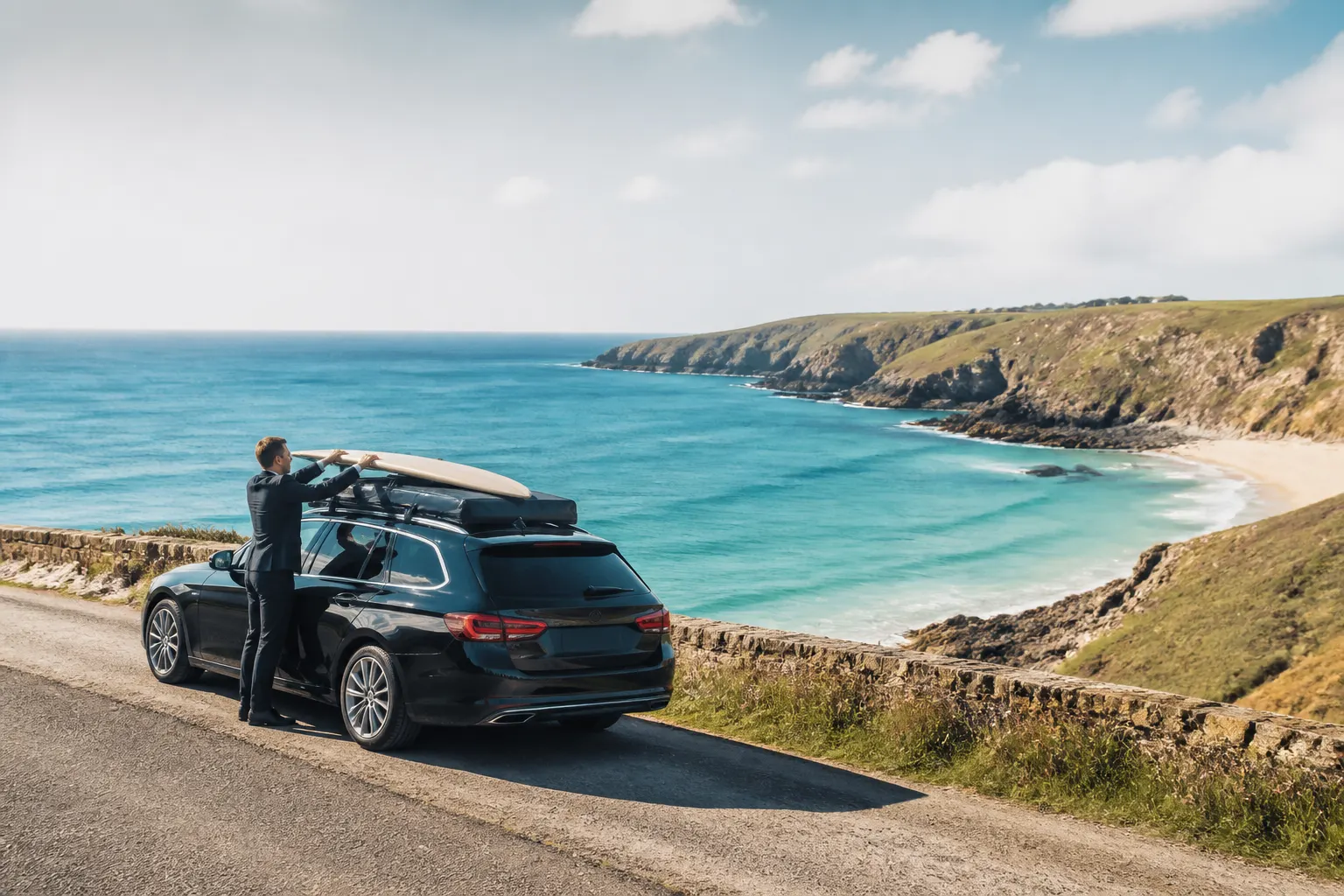
Roof boxes and roof rails do not enter the calculation at all: chauffeur vehicles are not fitted with them, and the appearance would be wrong even if they were. Where a party's luggage genuinely exceeds what a car will hold, the answer is a larger vehicle or a second one, arranged in advance rather than improvised.