








Booking a car for a whole stay rather than journey by journey changes something subtle. You stop making transport decisions. The car is simply there for the days you said you wanted it, the chauffeur already knows which hotel entrance works and where he can wait, and the evening's restaurant is a message rather than a negotiation at the front desk.
This page describes how such an arrangement is set up and how it runs. It covers what to send before you arrive, the shape of a typical day, the practicalities of hotel forecourts and waiting positions, and how the booking works when a concierge team is coordinating on your behalf. It is written for a guest arranging this for the first time.
Setting it up before you land
The useful first message contains the hotel, your arrival and departure details, and a rough sense of the week rather than a finished schedule. Most stays are only half planned at the point of booking, and that is entirely workable. What matters early is the arrival transfer and roughly which days will be busy, because those determine what is held.
We ask about the hotel specifically because forecourts vary enormously. Some have generous set-down areas, some sit on a street where stopping is restricted, and a few require vehicles to use a side entrance entirely. Knowing which applies means your chauffeur is not circling the block on your first evening working it out.
The arrival, and the first evening
The stay usually begins with an airport collection, which is planned like any other arrival: the chauffeur is in position before you are expected out, luggage goes straight into the boot, and the first conversation happens in the car rather than in the terminal. It is also the moment when preferences start being noticed, which is a large part of the value over the following days.
By the time you reach the hotel he will know whether you want the cabin quiet, how you like the temperature, and whether you are the kind of traveller who is ready ten minutes early or ten minutes late. None of that is asked directly. It simply informs how the rest of the stay is run.

How the days are blocked out
Most stays are arranged as blocks of hours on the days you need the car, or as full days where the schedule is genuinely busy. Within a block, the car is yours: it moves when you move, waits when you stop, and holds your belongings between stops. Outside a block, the chauffeur is released and returns for the next agreed time.
Blocks can be reshaped as the week develops. A quiet Tuesday becomes a day trip to Windsor; a Thursday evening that was going to be free acquires a restaurant on the other side of town. Send a message and the arrangement adjusts. Where a change moves the booking substantially beyond what was agreed, we confirm the revised position with you before anything is committed.
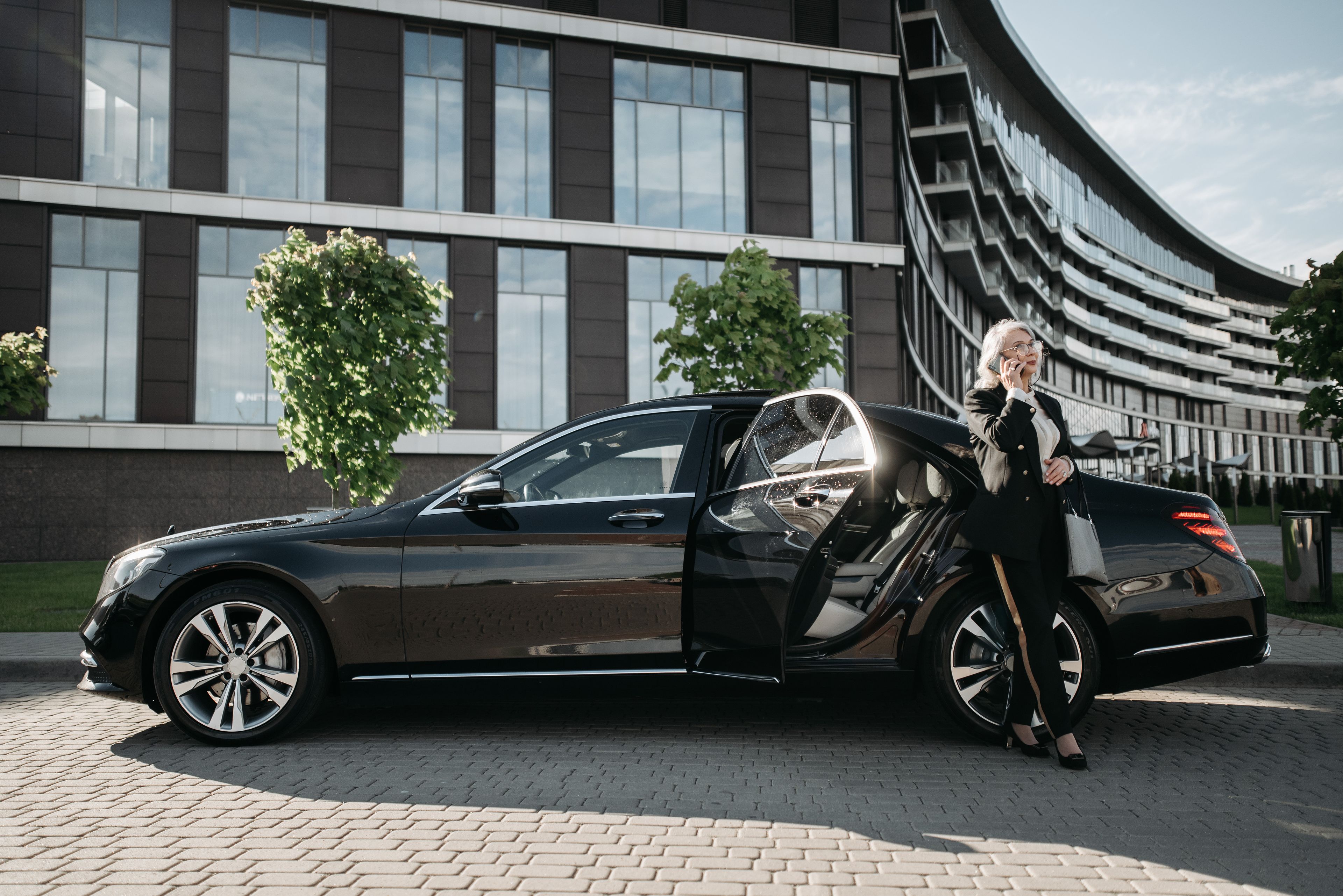
Between blocks, the car does not sit on the hotel forecourt. Most hotels would not permit it and it would be poor practice regardless. The chauffeur holds somewhere legal nearby and returns to the entrance when you message, which in central London usually takes only a few minutes.
Working with a concierge, without belonging to one
We are an independent chauffeur service and hold no partnership, affiliation or house arrangement with any hotel. That is worth saying plainly because it determines who the chauffeur answers to. Your instructions come first, and there is no arrangement behind the scenes influencing what is offered to you.
That said, concierge teams are frequently the ones coordinating, and they are straightforward to work with. We will take instructions from them, confirm timings with them and copy them into whatever they need to see. Many guests use the concierge for restaurant bookings and message us directly about the car, which works perfectly well and is probably the most common pattern.
Evenings, dinners and late returns
Evening use is where a stay booking earns its keep most obviously. A restaurant across town, a theatre, drinks somewhere afterwards and a return at midnight is a sequence that is tedious to arrange three separate times and simple to run as one held block. The chauffeur waits nearby throughout rather than being dispatched anew for each leg.
Late returns are ordinary work and need no special arrangement beyond being mentioned. What does need mentioning is a very late finish following a very early start, since driving-hours limits apply across the whole day. Where a day looks likely to run from a six o'clock airport collection to a two in the morning return, we will raise it when the day is planned rather than at midnight.
Departure day, and the small details
The departure transfer is the one that most often needs attention, because checkout time and flight time rarely align. Luggage can go into the car early while you use the hotel for a few more hours, and the chauffeur returns for you afterwards. It is a small thing that removes a great deal of standing about in a lobby.
A handful of other details are worth settling at the start of a stay rather than discovering during it.
- Which hotel entrance the car should use, and any restriction on the forecourt
- Whether you want the chauffeur to come into reception or wait outside
- A child seat, if one is needed, with the age and weight in advance
- Any dietary or comfort preference for what is kept in the car
- Whether guests joining you separately should be collected
- The departure day plan, including where luggage sits between checkout and flight