



Business travel decisions are usually made on a single number, which is the reason they are so often made badly. A rail fare looks cheaper than a car until you add the taxi at the far end, the hour lost to a fixed departure and the fact that three of you are travelling. This page compares the options across a whole door-to-door journey, which is the only comparison that means anything.
It is written to be usable rather than flattering. There are routes where the train wins outright, days where a short flight is the only sensible answer, and plenty of journeys where driving yourself is entirely reasonable. Those sit alongside the cases where a chauffeur is the obvious choice, and the final section names the booking to make instead.
Measure the whole door-to-door journey
The comparison people make is station to station. The journey they actually take is desk to meeting room. Add the walk or taxi to the departure station, the buffer built in so as not to miss the train, the walk at the other end and the onward taxi that may or may not be waiting. On a good many regional routes that adds an hour and a half to a two-hour journey.
Then add the fixed return. A train at twenty past four decides when your meeting ends, which is a cost nobody puts in the spreadsheet and almost everybody has paid at least once. A car leaves when you are ready. On a day where the value of the trip depends on the last twenty minutes of the conversation, that single difference is the whole argument.
Routes where the car wins
As a rule of thumb, anything up to roughly four hours of driving tends to favour the car once the full picture is counted, and the advantage grows sharply with the number of people travelling and the amount being carried with them.
The pattern is consistent. The car wins wherever the endpoints are awkward, the group is more than one person, or the schedule cannot tolerate a fixed departure. It loses wherever a fast direct line exists between two city centres and one person is travelling with nothing heavier than a laptop.
- London to Birmingham, Bristol, Oxford or Cambridge for a single day
- Any destination in a business park rather than a city centre
- Journeys with two or more colleagues travelling together
- Days carrying samples, display materials or equipment
- Meetings with no fixed finish and an important last half hour
- Routes needing two changes and a connection you would rather not risk
Where rail still wins
On the fast intercity lines the train remains the better tool, and we will say so. London to Edinburgh, Glasgow, Newcastle or Leeds in the teeth of rush hour are journeys where rail is quicker, considerably more restful and far easier to work on than five or six hours of motorway. Booking a car for the whole distance in those cases buys discomfort at a premium.
The sensible arrangement on those routes is a chauffeur at each end rather than for the whole run. You are collected from home or the office, delivered to the platform without carrying anything, and met at the far end by a car that goes to the actual entrance. It combines the fast part of rail with the two parts of the day that rail handles worst.
Group size changes the answer
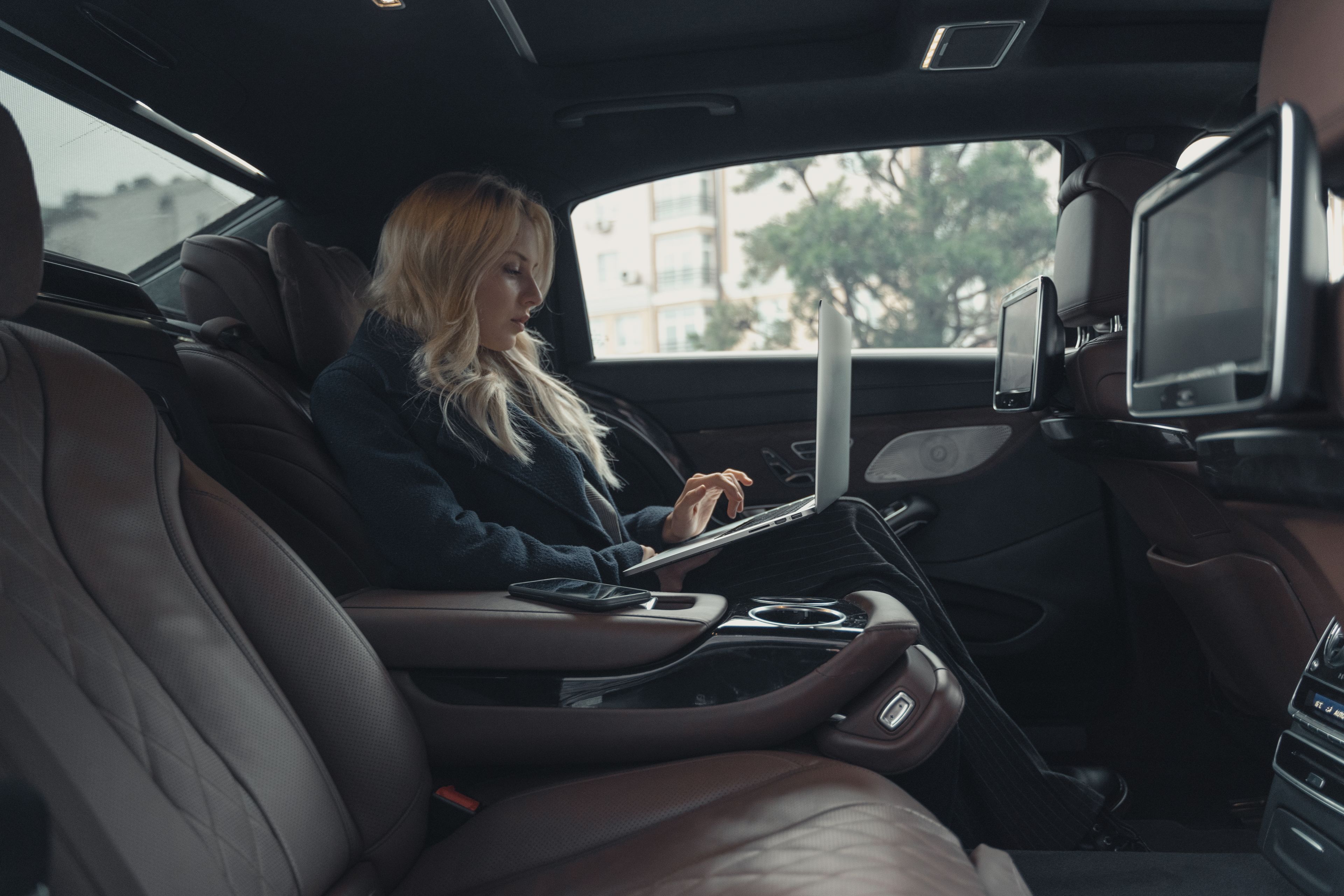
One traveller and a laptop is the case where every alternative competes well. Four people with cases is a different problem entirely. Four rail tickets, four onward taxis and four separate arrivals at slightly different times is more expensive, more fragile and much harder to coordinate than one vehicle leaving from one place and stopping at one door.
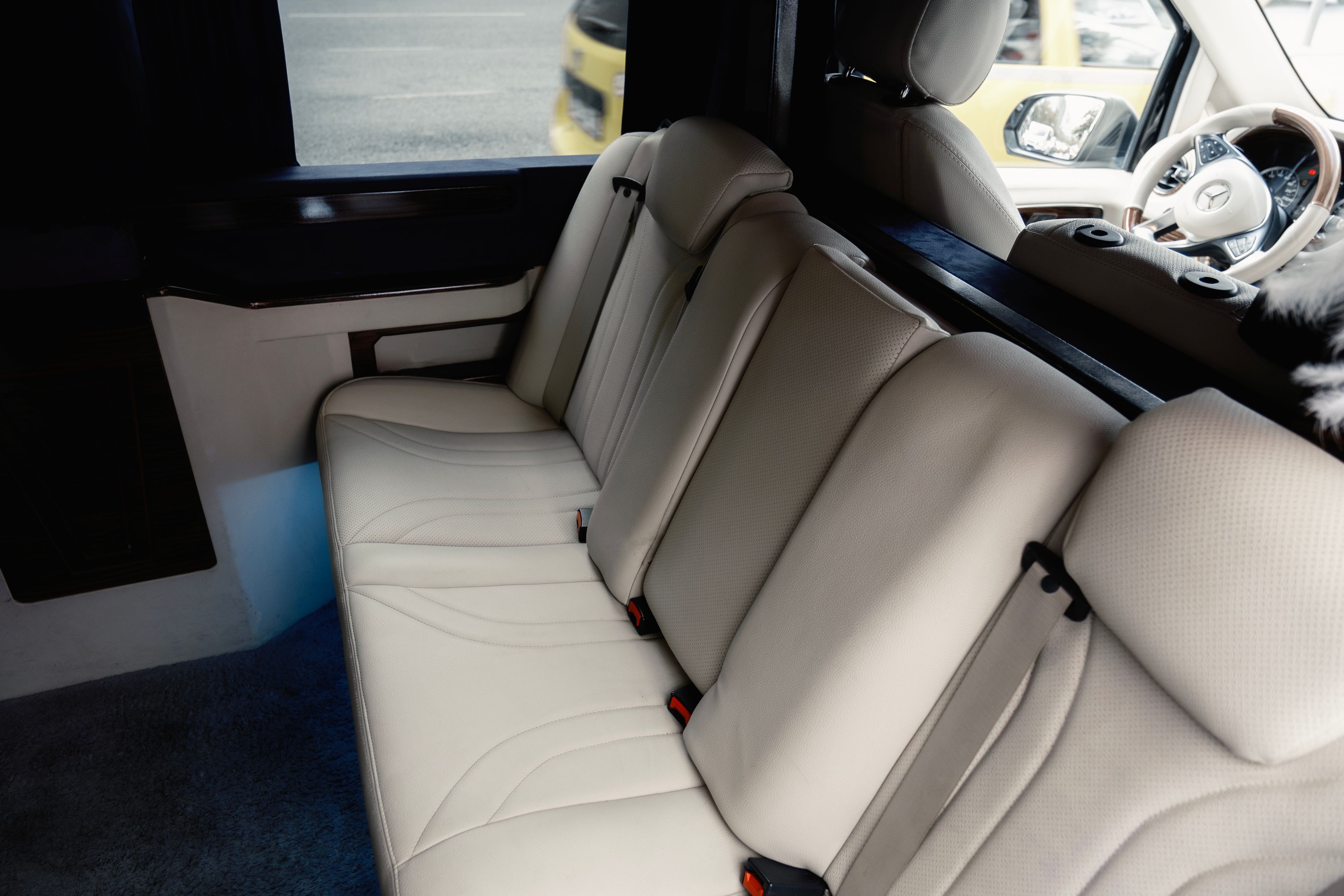
There is a working benefit as well. Four people in a cabin with individual seats will run through the agenda on the way, which is a meeting you would not otherwise have held. Nobody plans for it and everybody notices it afterwards, particularly on the return leg when the debrief happens while the detail is still fresh.
What to book instead
Some business journeys are simply the wrong shape for a straightforward point-to-point booking, and the alternatives below are what we would suggest in their place. Choosing correctly here matters more than choosing the vehicle, because the shape of the booking decides how much the day can absorb when it changes.
Give us the trip in outline and we will point at the right one, including where the answer is a rail ticket and nothing from us at all. That conversation takes a few minutes and is reliably more useful than a quotation for a journey that was never going to work.
- A day of unpredictable meeting times: a chauffeur by the hour
- Eight hours and several stops: one full-day booking, not four transfers
- Investor meetings across several cities in days: a roadshow chauffeur
- A flight at one or both ends: an airport chauffeur transfer
- Fast intercity routes: rail, with a chauffeur waiting at each end
- A private jet movement: a private aviation chauffeur booking
- One short off-peak hop in central London: a black cab