



The Defender occupies an unusual position in chauffeur work. It is not the most refined vehicle we arrange, it is not the most formal, and for a black-tie evening in Mayfair it would be an odd choice. Yet for a certain kind of journey there is nothing else that comes close, and clients who book it once for a Highland trip tend to ask for it again.
What follows is a plain account of what it offers a passenger. The modern Defender is a properly capable vehicle wearing modern luxury inside, and the tension between those two ideas is what makes it interesting. Understanding where the balance sits will tell you quickly whether it belongs on your journey or whether something else should.
A cabin with a different character
Step inside and the first thing you notice is that the design does not pretend to be a saloon. Structural elements are visible rather than hidden, surfaces are chosen to survive wet coats and dogs, and the whole thing feels built rather than upholstered. It is unmistakably a Land Rover, and for a lot of passengers that honesty is the appeal.
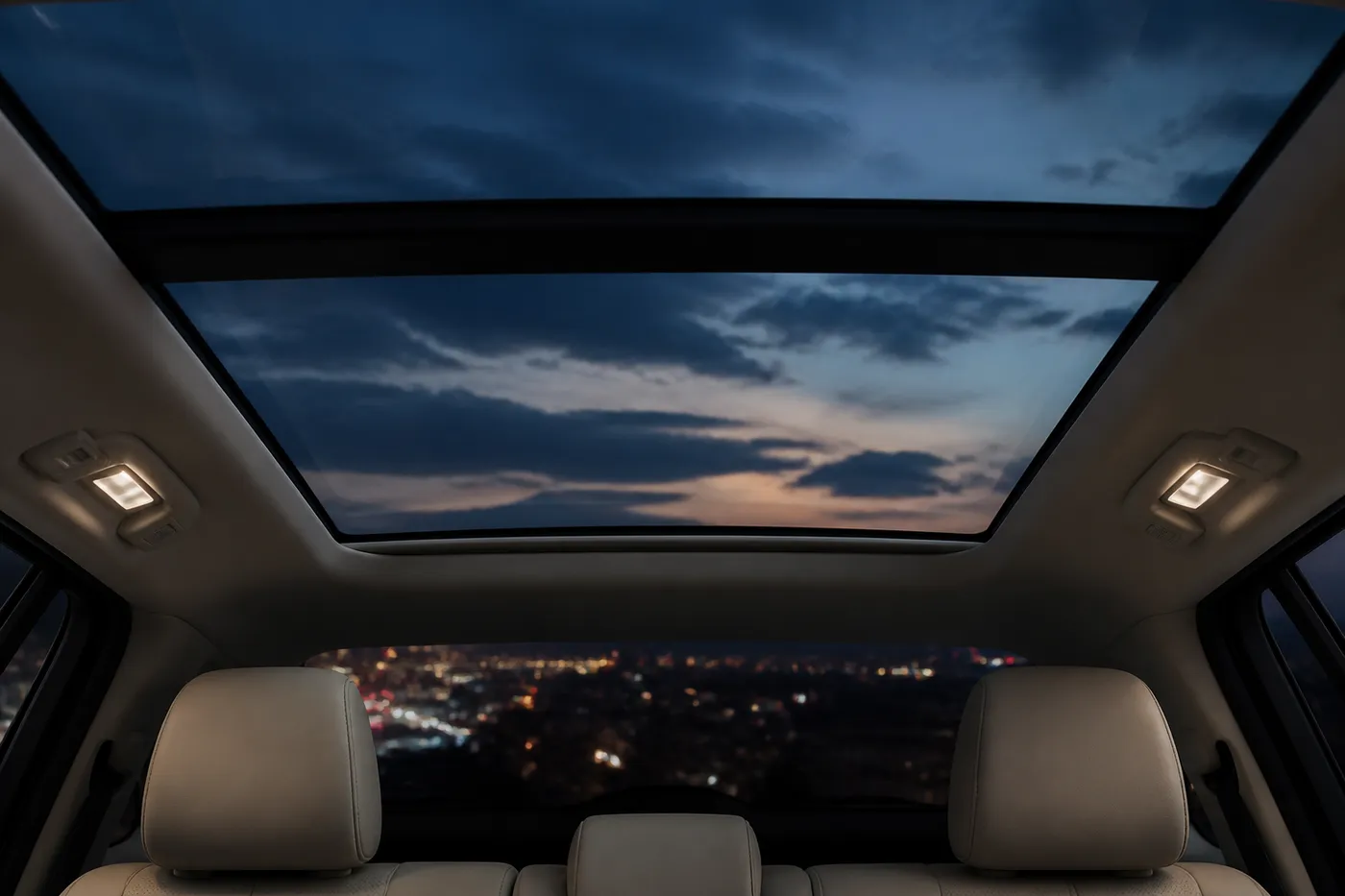
None of which means it is spartan. Seats are heated and supportive, the trim is properly finished, and the glass area is enormous, including small windows set high in the roof line that flood the cabin with light. On a Scottish road in autumn it is one of the pleasanter places to be sitting in any vehicle at any price.
The rear seat over distance
Rear legroom in the 110 body is generous and the bench is set high, so passengers sit upright with a clear view forwards between the front seats. Three adults across the back is genuinely comfortable rather than merely possible, which is not true of most luxury saloons and is one of the practical reasons clients choose it for a group.
Some vehicles carry a pair of occasional seats in the boot area, folding up to make a third row. They are best regarded as a short-journey solution for children rather than seating for adults on a two-hour run, and using them fills the load space almost completely. If seven people are travelling with luggage, this is not the vehicle.

How it rides and what it sounds like
Vehicles fitted with air suspension ride remarkably well for something this capable, absorbing potholes and farm tracks with equal indifference. Steel-sprung examples are firmer. It is a specification difference rather than a model difference, so it is worth asking about if a long motorway leg forms part of the journey.
At speed the shape tells. A tall, square vehicle with an exposed spare wheel on the tailgate generates more wind noise than a saloon, and there is a low background hum from the tyres that a flagship car simply does not have. Conversation and calls are perfectly comfortable, but nobody would describe the cabin as hushed.
The journeys it does better than anything
There is a category of trip where capability is not a luxury but a requirement, and where arriving in a low saloon would be either awkward or impossible. These are the bookings where the Defender is the correct answer rather than a stylistic preference.
- Estate and sporting travel where the last mile is an unmade track
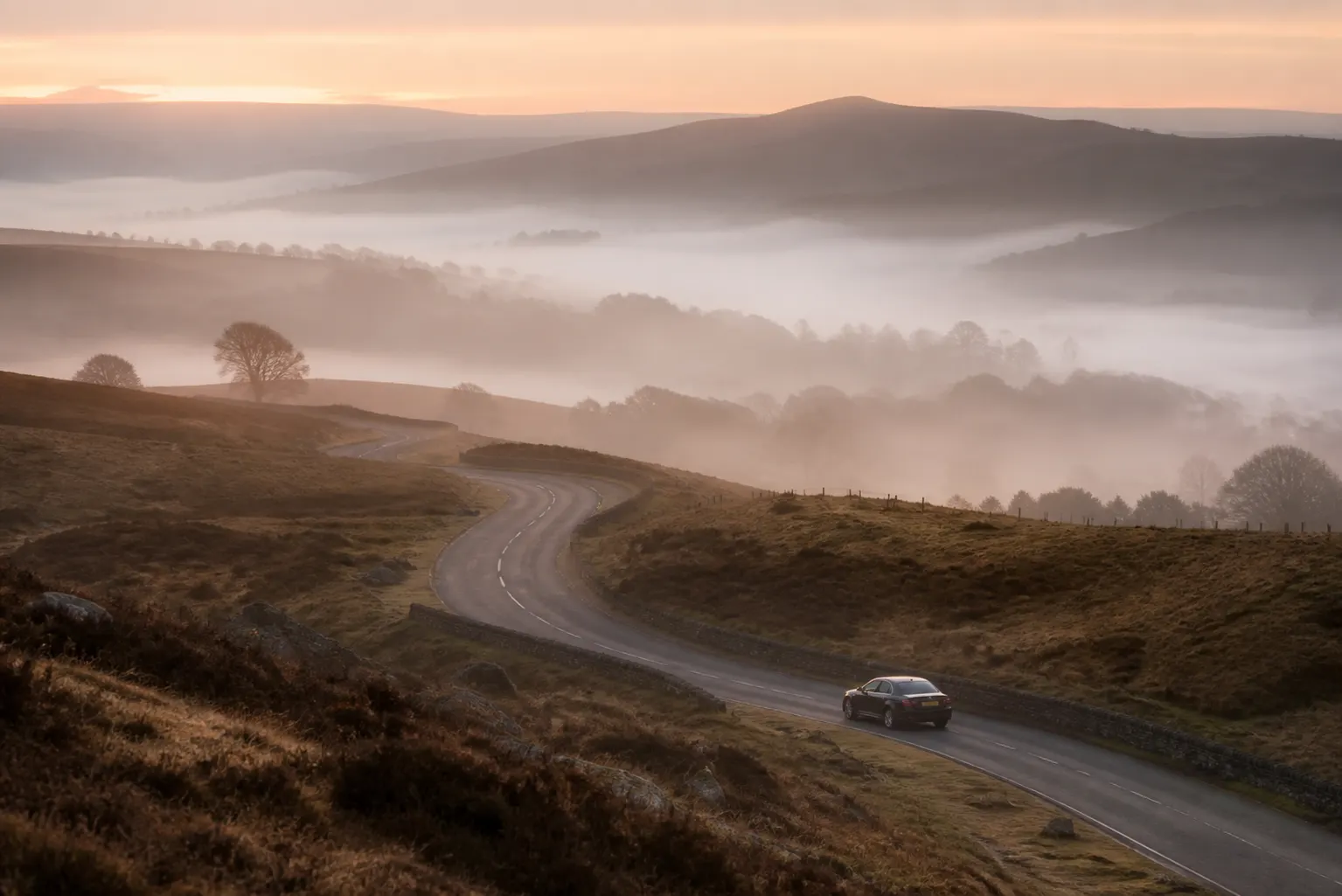
- Highland and island touring on single-track roads with passing places
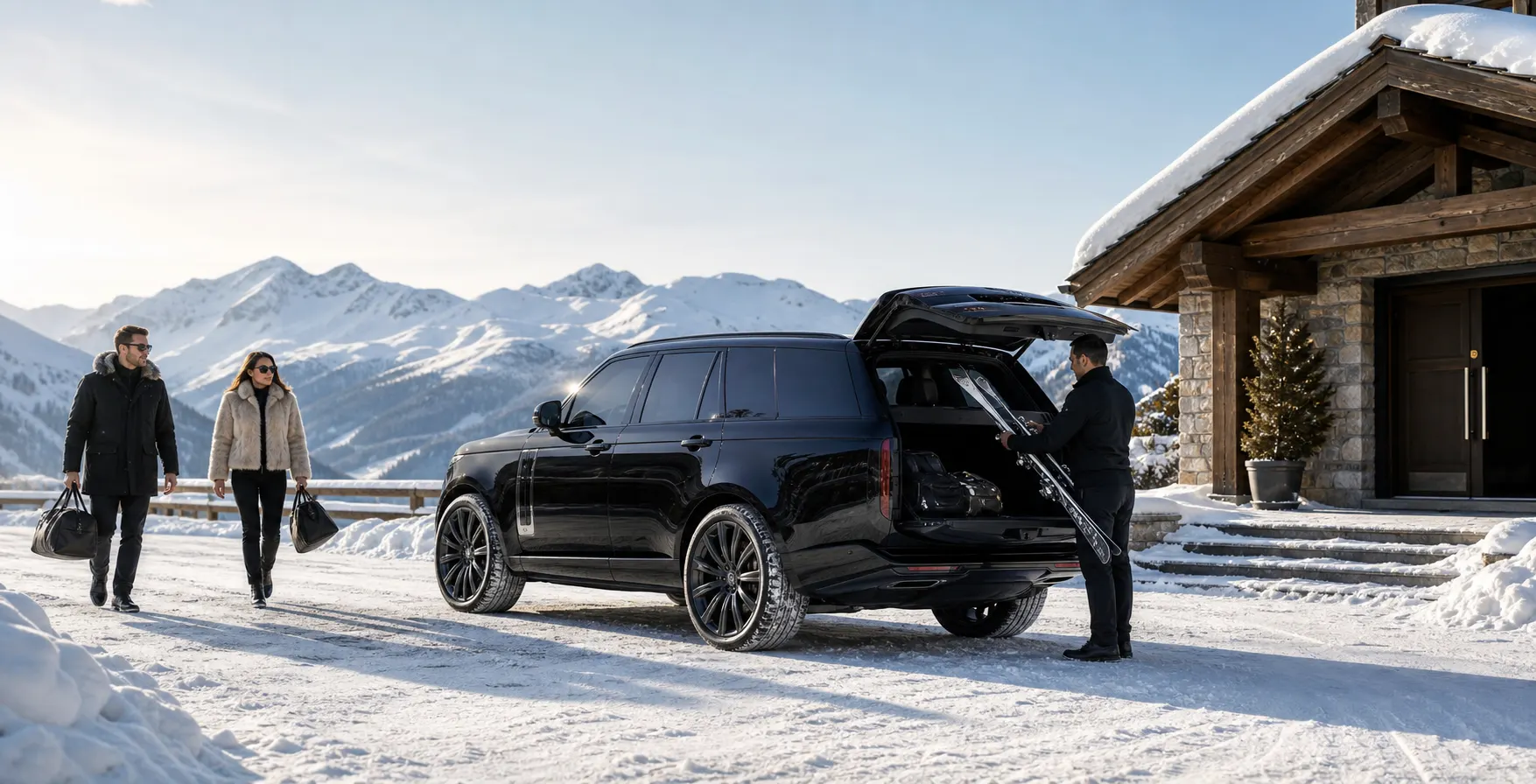
- Ski-season transfers on roads that may be treated but not cleared
- Farm, forestry and rural property visits in genuinely poor weather
- Film and location work needing access to fields and temporary roads
- Winter journeys where the forecast is uncertain and the schedule is not
When to book something else
For a formal occasion, the Defender is the wrong register. A wedding, a state dinner or a corporate arrival calls for a saloon or a Rolls-Royce, and no amount of capability compensates for a vehicle that reads as outdoor equipment at a black-tie door. That is not a criticism of the vehicle so much as a question of what the day is.
For long motorway journeys with no rough ground at either end, a flagship saloon or a Range Rover will leave passengers noticeably fresher. If your London to Edinburgh run finishes in a city-centre hotel, take the saloon. If it finishes at a lodge up a glen, take the Defender and be grateful for it.
Practical points and availability
Two things are worth flagging. The rear door is hinged at the side rather than lifting upwards, so it swings outwards and needs clear space behind the vehicle. And the step-in height is high on steel-sprung vehicles, though air suspension can lower it. If mobility is a consideration, tell us and we will check what the assigned vehicle offers.
Defender bookings come from our own vehicles and from a vetted network of professional chauffeur operators. Body length, seat count, suspension type, colour and interior specification all vary, are subject to availability, and are confirmed with your booking. Raise any requirement over WhatsApp or by email at the enquiry stage.