





People move things by chauffeur car that they would never put in a taxi: a portfolio of confidential papers, jewellery for an event, a piece of art between a dealer and a client, a laptop that would be a serious problem if it went missing. The car is chosen because it is a controlled, private space with one known person driving it.
That said, a chauffeur car is not a secure courier and should not be treated as one. Being useful here means describing what the arrangement genuinely offers, what it does not, where the responsibility sits, and the practical habits that prevent the small disasters — most of which involve a bag left in a footwell rather than anything dramatic.
What the car actually offers
The real advantages are continuity and control. One named person is with the vehicle throughout, the car is not shared with other passengers, there is no interchange or handover, and the doors are locked while moving. For most sensitive material that combination is considerably better than any public alternative and is usually sufficient. For most passengers that is the entire requirement, honestly stated.
What it is not is a secure transport service. There is no safe, no escort, no chain of custody and no specialist insurance for high-value goods. If what you are moving requires those things, the correct answer is a specialist carrier, and we would tell you so rather than take the booking. Taking work that should have gone elsewhere helps nobody, least of all on the day it matters.
What to say when booking
You do not need to describe the contents, and nobody will ask. What is useful is the practical shape: whether an item must travel in the cabin rather than the boot, whether it is fragile or awkwardly sized, whether the car needs to be within sight at a stop, and whether anyone else will be handling it at either end.
That information changes real decisions. A large flat item may determine the vehicle. A requirement that the car is never left unattended changes how a waiting period is arranged. An item that must not be loaded by anyone but you changes how the collection is handled. All of it is easier agreed in advance. A requirement mentioned at the kerb is a negotiation; the same one mentioned at booking is a plan.
- Whether anything must travel in the cabin rather than the boot
- Dimensions and fragility, if either affects the vehicle choice
- Whether the car must remain attended throughout the booking
- Who is permitted to handle the item at each end
- Whether any stop en route is acceptable, or none at all
- Any requirement about where the car parks at the destination

Cabin or boot
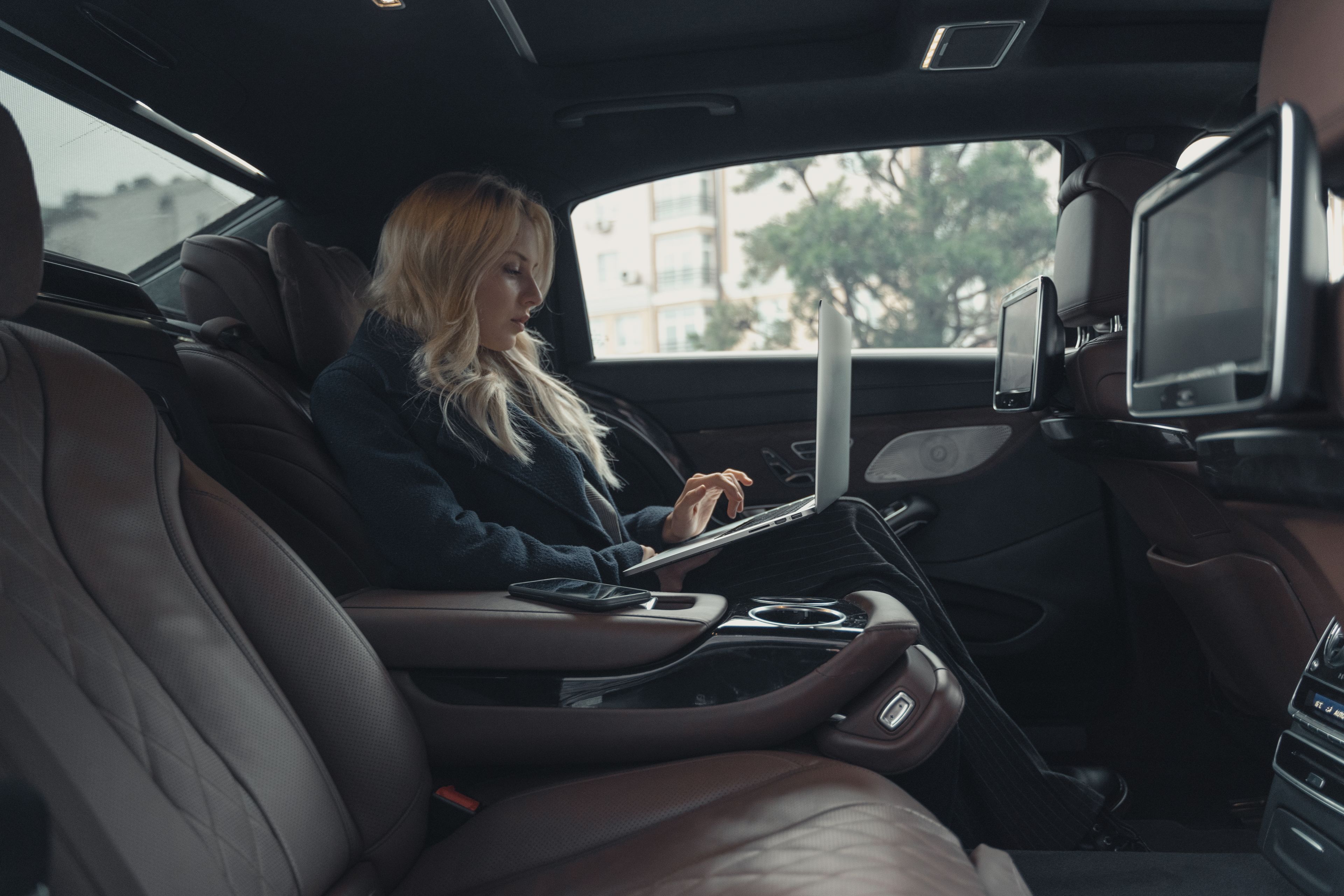
The default is that luggage goes in the boot and anything you want with you stays in the cabin. For documents, a laptop or a small case of jewellery, the cabin is the obvious answer: it stays where you can see it, it never leaves your sight at a stop, and it does not depend on anyone remembering to open the boot.
The boot has its own advantage, which is that it is out of view from outside the car. For a larger item left in a parked vehicle, that matters. The general principle is that small and sensitive stays with you, large and discreet goes in the boot, and nothing valuable is ever left visible on a seat. An empty-looking cabin is the cheapest security measure available.
Insurance, and where it actually sits
Motor insurance covers the vehicle and liability arising from its use. It is not property insurance for goods being carried, and passengers frequently assume otherwise. Anything of significant value travelling in a car should be covered by your own policy or by a specific arrangement made for the purpose, and that is worth checking before rather than after. Assumptions about insurance are only ever tested at the worst moment.
For genuinely high-value items — artwork, significant jewellery, bearer instruments — a specialist carrier with the appropriate cover and procedures is the right answer. A chauffeur car is a good way to move something that matters to you personally; it is not the right vehicle for something whose loss would be a claim. The distinction is not about trust; it is about what cover actually exists.
The habits that prevent losses
Almost everything left behind in a chauffeur car is lost the same way: put down beside the seat, forgotten during a phone call, and discovered missing three hours later. The single most effective habit is a deliberate pause before getting out — seat, footwell, seat pocket, then the door. Four seconds, every time, and it eliminates almost every lost item that this trade ever deals with.
Chauffeurs check the cabin after every drop as a matter of routine, and anything found is logged and returned. That safety net works well, but it works better on a laptop bag than on a small envelope that has slipped under a seat. Keeping sensitive items in one bag rather than several loose pieces removes most of the risk. One bag is one thing to remember rather than four.
- Keep everything sensitive in one bag rather than several loose items
- Pause deliberately before getting out: seat, footwell, seat pocket
- Never leave anything visible on a seat in a parked car
- Take valuables with you at every stop, however brief
- Say at collection if an item must not be moved from where you place it
- Report anything missing immediately rather than after the day ends
Documents, devices and confidentiality
For confidential papers and devices, the physical question is usually simpler than the informational one. Reading sensitive documents in the back of a car is generally fine, since the chauffeur is facing forward, but working on a screen at a set of traffic lights beside another vehicle is more exposed than people realise. Privacy filters are worth having on a laptop that travels.
If a booking involves material that would create a genuine problem if seen or overheard, say so when you enquire. Arrangements such as no interior recording, a specific chauffeur, or a vehicle with greater separation between front and rear can be built into the booking and confirmed to you in writing. Anything agreed only in conversation tends to survive exactly as long as the person who heard it.