



This is the question people ask most often and almost never out loud. The car pulls up, the rear door is opened, and somewhere in the back of the mind sits a worry about whether taking the back seat looks grand or whether taking the front looks like you have misunderstood what you booked. It is a small thing that occupies a surprising amount of anxiety for something with such a straightforward answer.
The convention in Britain is the back, and specifically the rear seat diagonally opposite the driver. That is where the door will be opened, where the legroom is greatest, and where the car is designed to be enjoyed from. But the convention exists for practical reasons rather than ceremonial ones, and when those reasons do not apply, sitting in the front is entirely reasonable and nobody minds.
Why the back seat is the default
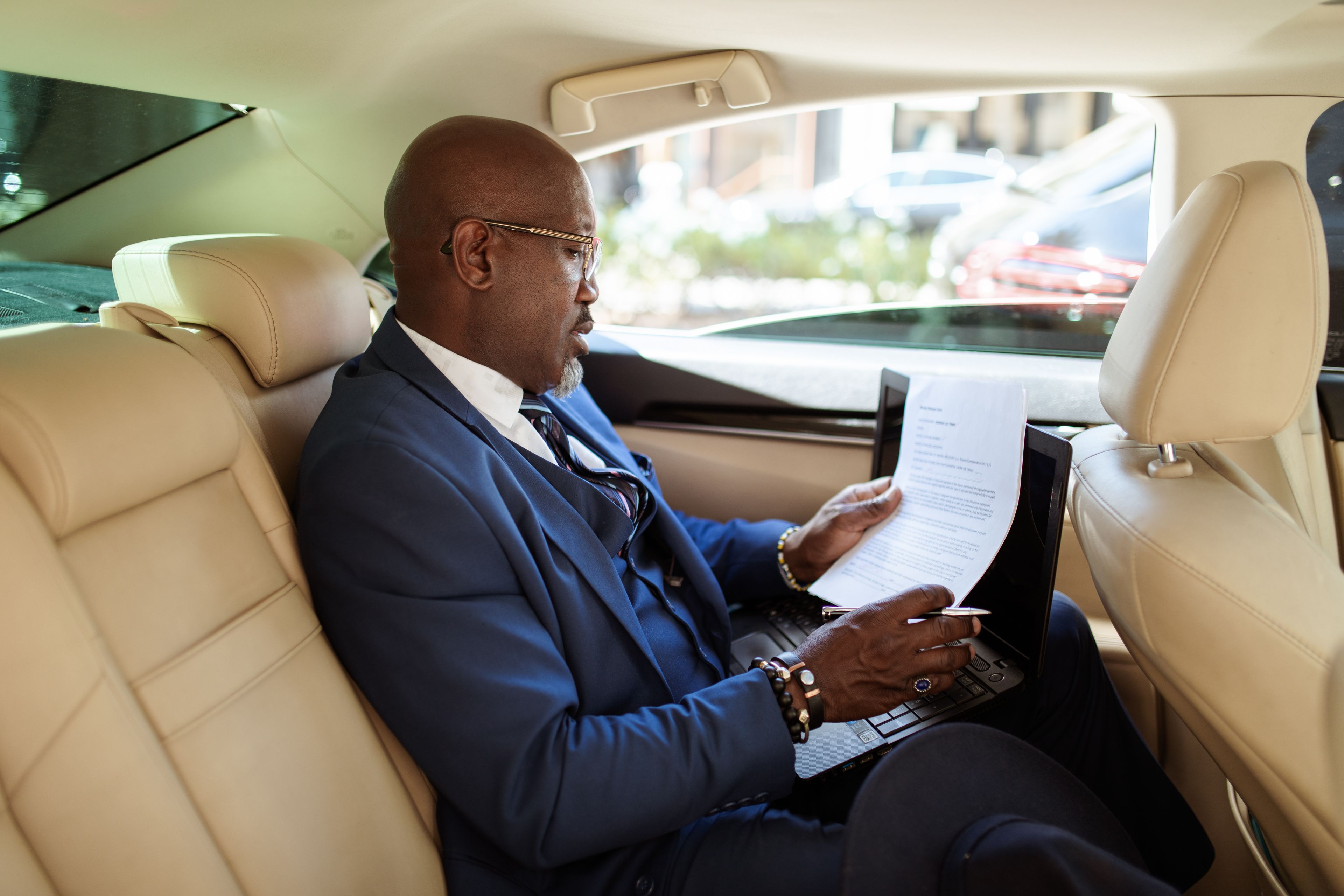
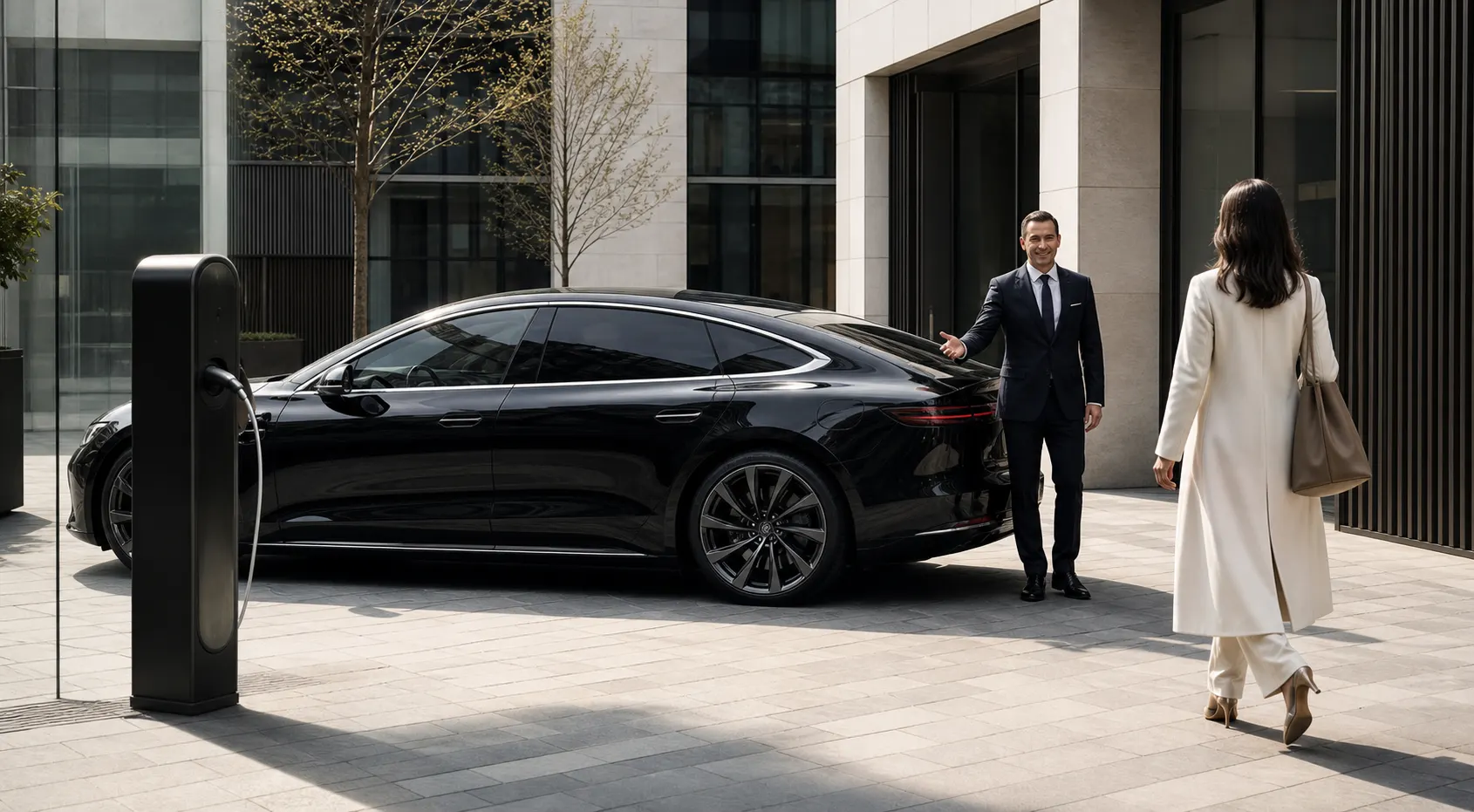
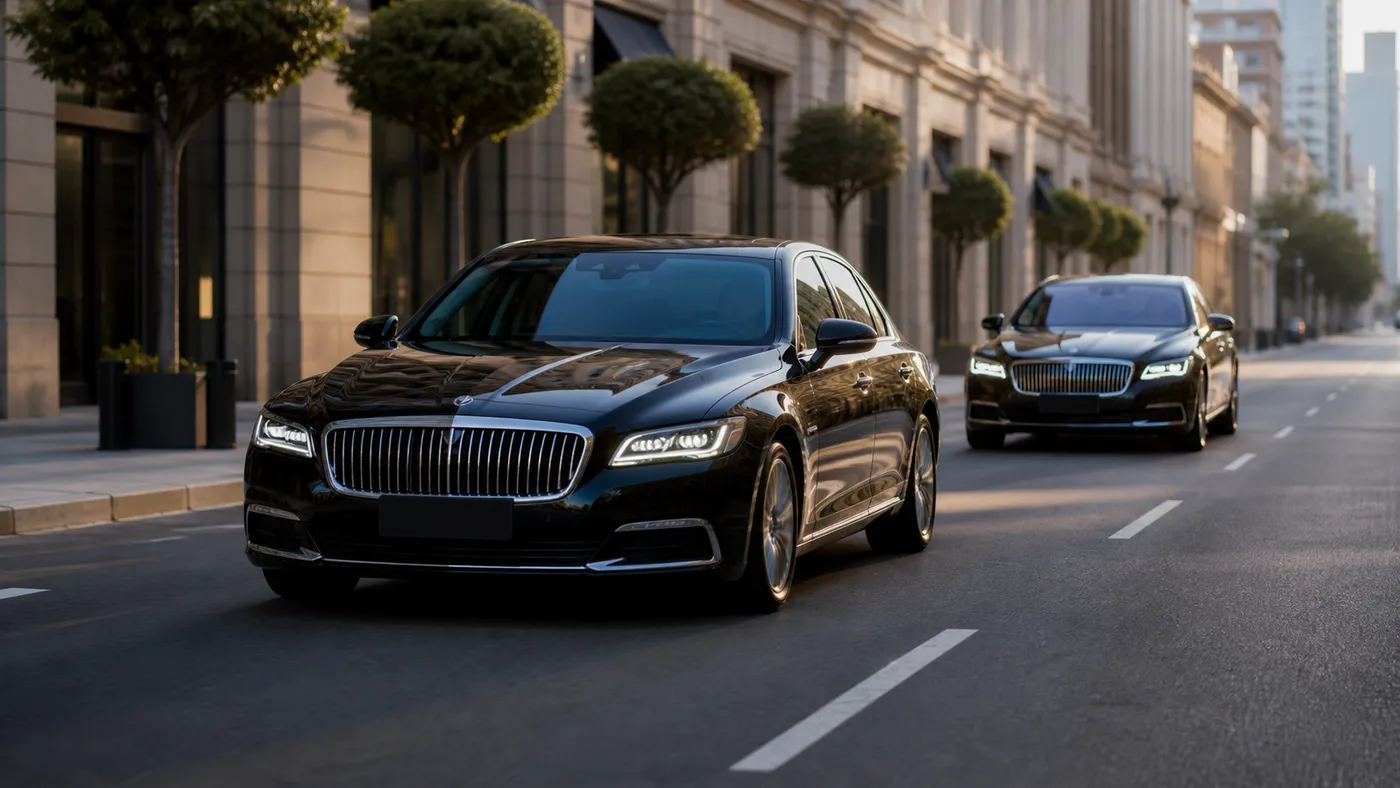
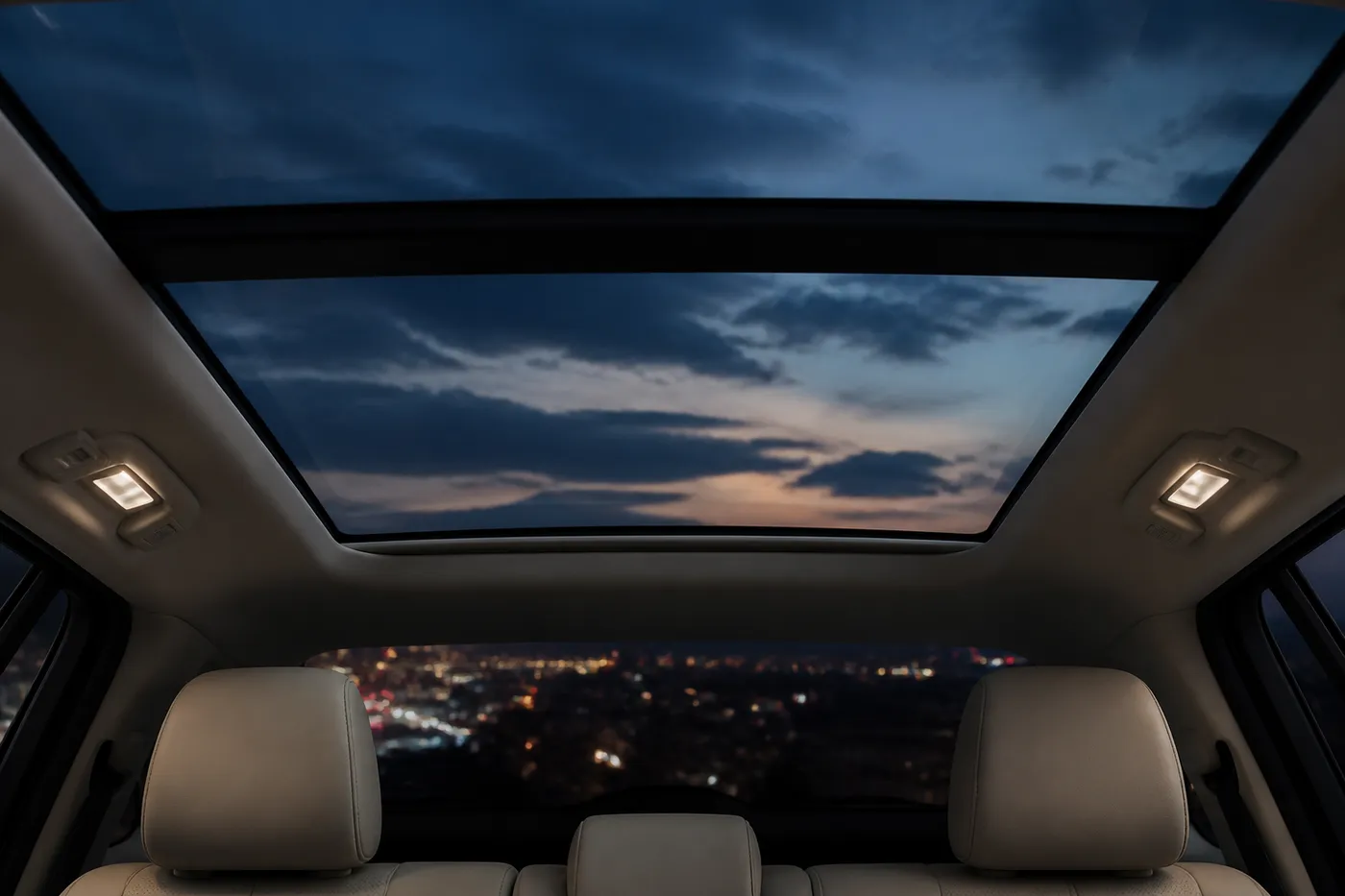
Chauffeur-driven cars are built around the rear compartment. In the flagship saloons that means more legroom behind than in front, reclining seats, separate climate control, better sound insulation and often window blinds. Sitting in the front of one of these cars means paying for a rear cabin you never use, which is a slightly odd way to travel. The front seat in those cars is, deliberately, the least interesting place to sit.
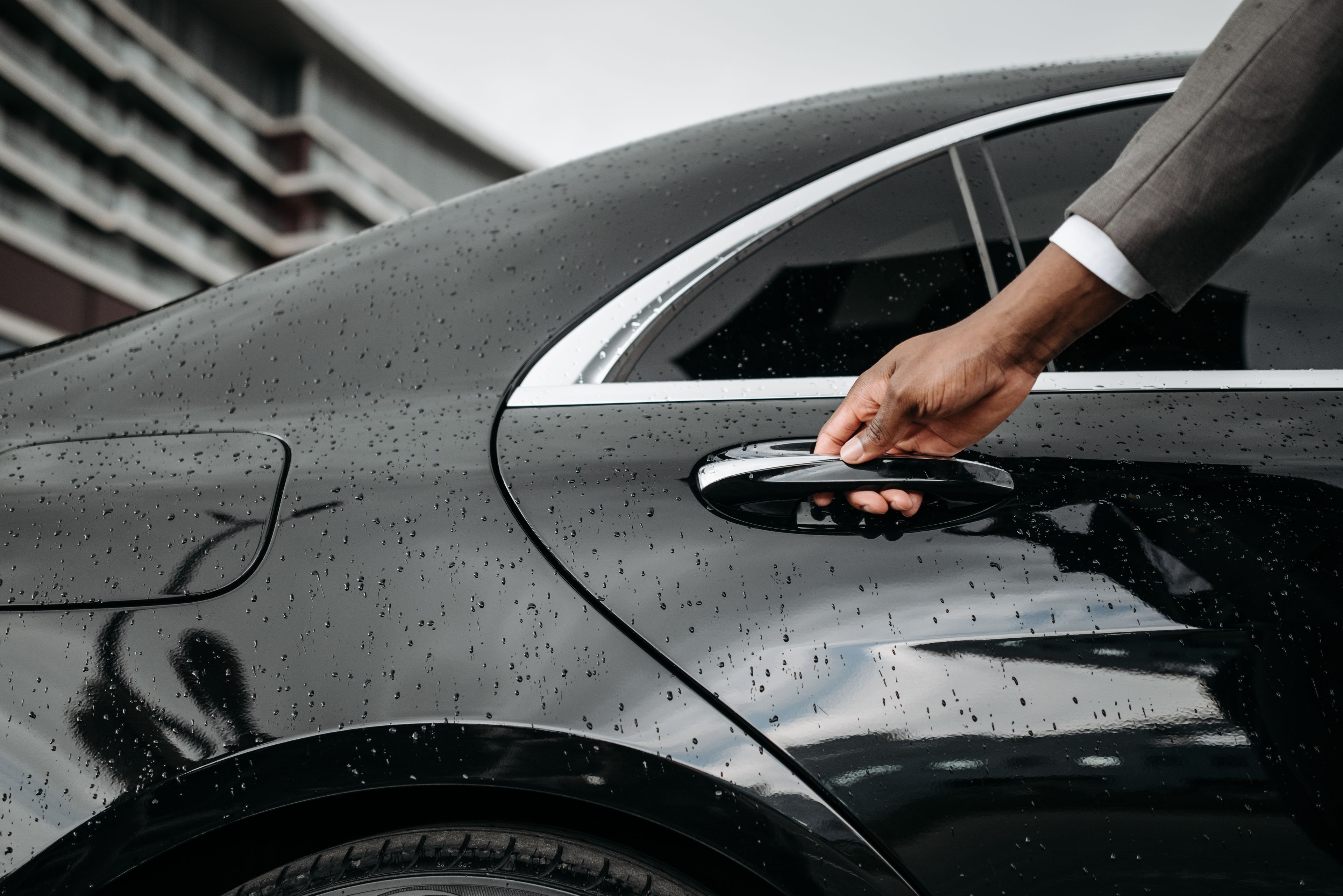
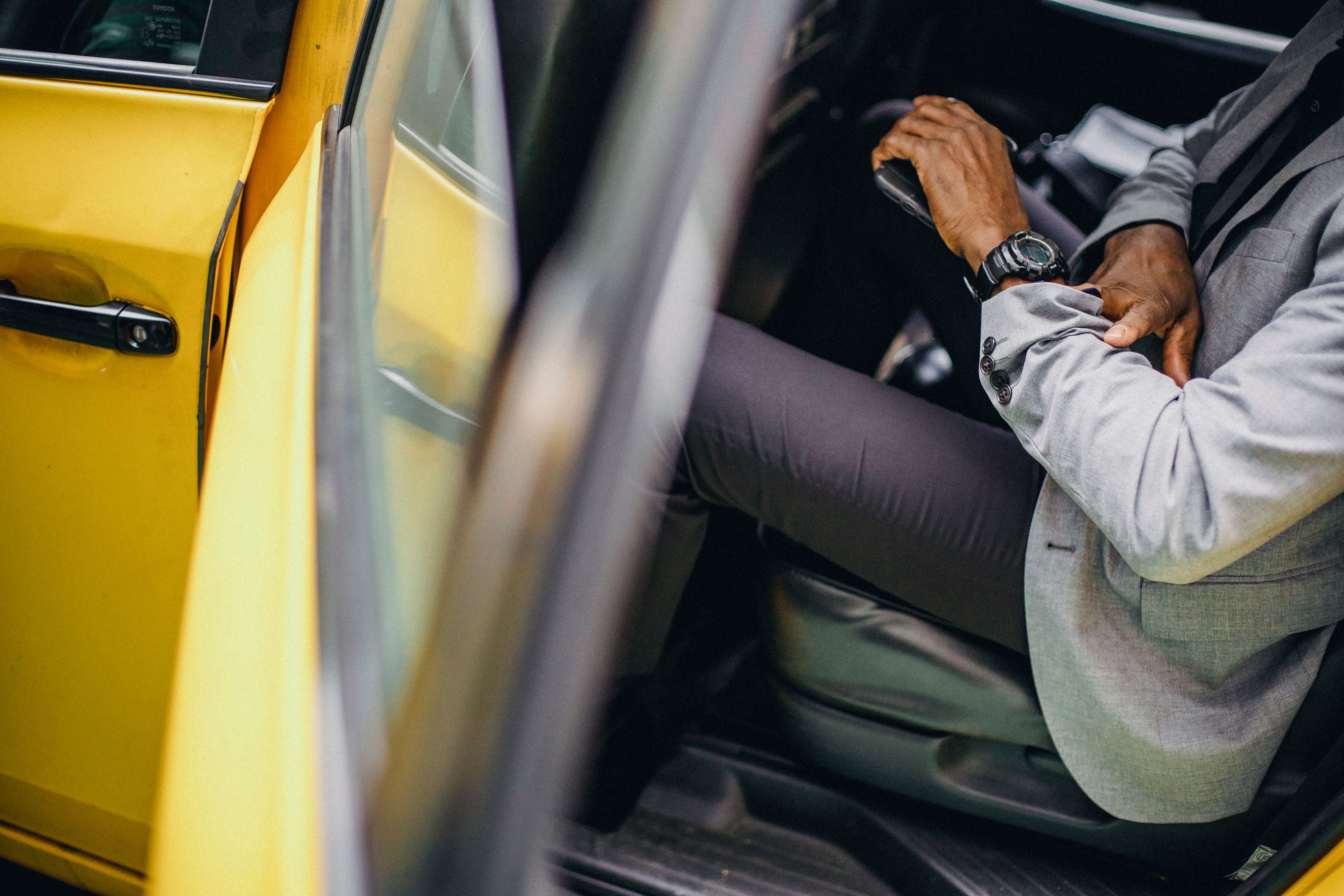
There is a safety and access argument too. The nearside rear door opens onto the pavement rather than into traffic, which is why a chauffeur will position the car that way and open that door. On a busy street it is the only sensible place to get in and out, and it is why the convention settled where it did rather than anywhere else.
The seat behind the front passenger
Where two rear seats are available, the traditional position is the one behind the front passenger seat — the nearside, in British terms. It is the door that faces the kerb, it is furthest from passing traffic, and it gives the best diagonal sightline to the driver if you want to speak to them. In a car with a front seat that slides forward, it is also where the legroom is at its most generous.
None of this is enforced and nobody keeps score. If you prefer the offside seat because you like the view, or because you always sit behind the driver, take it. A chauffeur will simply open whichever door you move towards, and on a quiet residential street either is fine. The only time it genuinely matters is on a busy road, where the kerbside door is the safe one.

When the front seat makes better sense
There are perfectly good reasons to sit in the front, and choosing to does not embarrass anyone. The most common are practical: travel sickness, which is nearly always worse in the back; a long journey where you want conversation to stay awake; or a car full of colleagues where the front seat is the only one left. None of these needs justifying and none of them will be remarked upon.
There is also the local-knowledge case. On a day of many stops in an unfamiliar area, or when you are navigating to a property the mapping software does not know, sitting up front makes the conversation about turnings much easier. Say what you are doing and why, and the chauffeur will move anything from the front seat before you arrive.
- You are prone to travel sickness and do better with a forward view
- It is a long journey and you would rather have company than solitude
- The party is larger than the rear seats can comfortably take
- You are guiding the chauffeur to a hard-to-find address
- You have a mobility reason for preferring a higher, more accessible seat
- You simply find the back seat too formal for the kind of day it is
Two, three and four passengers
Two passengers travelling together almost always take the rear bench, which is comfortable in any executive saloon and generous in a flagship. Three is where it gets tighter: the middle rear seat in a saloon is a short-journey proposition at best, and for anything over about half an hour a luxury MPV is a far more civilised answer. The middle seat is the one nobody volunteers for, which tells you most of what you need to know.
With four or more, the vehicle choice does the deciding. An MPV gives everyone their own seat and their own space, and there is no debate about who takes the middle. If you know your party size at the point of booking, the seating question tends to resolve itself before anyone gets to the kerb. Getting the vehicle right removes the seating question rather than answering it.
- One or two passengers: an executive or flagship saloon
- Two passengers with several large cases: a saloon with a generous boot
- Three passengers over a short distance: a saloon, with the host in the middle
- Three passengers over any real distance: a luxury MPV
- Four or more: an MPV, or two vehicles if the party splits later
- Any party including a child seat: check the layout before the day
Seniority, guests and who sits where
In business settings there is a loose convention that the most senior person or the guest takes the nearside rear seat, since it is the one the chauffeur opens and the easiest to get into. It is a courtesy rather than a rule, and in practice it is usually resolved by whoever reaches the car first stepping back. Nobody in this trade has ever thought less of a passenger for taking the wrong seat.
If you are hosting, the simplest approach is to say something rather than to choreograph it silently. Offering the rear seat to a client and taking the front yourself is a clear, generous signal and removes the shuffling entirely. In a car with three passengers it also settles the middle seat question without anyone having to lose gracefully. It reads as hosting rather than rank, which is usually the impression you want.
Children, seats and the back row
Children travel in the rear as a matter of law and sense, in the appropriate seat for their age and weight. Where a child seat is fitted, it goes in the rear and the remaining space shapes where everyone else sits — which is worth thinking about before the day if two adults and two children are travelling in a saloon.
Tell whoever arranges the car the ages and weights involved rather than just the number of children. That determines the type of seat, how many will fit across the rear bench, and whether a larger vehicle is the sensible answer. It is a two-line question at booking and it saves a genuinely difficult conversation at the kerb. Chauffeurs cannot carry seats for every eventuality, so the detail has to come from you.