







London City rewards people who understand it. The terminal is small, the walk from the kerb to the gate is short, and the whole building can be crossed in a couple of minutes, which means the time you need inside is genuinely less than at Heathrow or Gatwick. Many travellers choose the airport for exactly that reason.
What people underestimate is the drive. The airport sits in the Royal Docks and the roads leading to it are not fast roads. A morning that should take twenty-five minutes from the City can take fifty if the Limehouse Link is blocked. The collection time therefore hangs on the route far more than on the airport.
Why the terminal needs less of your time
There are no long internal walks here, no inter-terminal transit and no sprawling departure piers. From the drop-off to bag drop is a short distance, and from bag drop to the gate is another short one. That compactness is the airport's central proposition and it is real.
It does not, however, remove the airline's own requirements. Carriers publish their own guidance on how early to arrive and set their own bag drop and gate closing times, and these differ from airline to airline. We confirm what applies to your specific flight when we quote rather than assuming the airport's compactness covers it. The building being quick does not entitle you to arrive late.
The roads that decide the morning
From the City and Canary Wharf the airport is close, often twenty minutes or less outside the rush. From the West End it is usually thirty to fifty minutes depending on traffic, running east through the City or down to the Limehouse Link and along the A13. From south of the river, the Blackwall Tunnel is the obvious crossing and the obvious risk.
The trouble with this corner of London is that the alternatives are poor. If the Blackwall Tunnel closes, traffic redistributes onto roads that cannot absorb it, and the effect spreads quickly. The Limehouse Link is much the same. There is no elegant diversion, only a slower one, so the margin in the collection time is doing real work rather than sitting idle.
Peak hours here are pronounced. Weekday mornings from about half past seven and weekday evenings from about half past four both slow considerably, and Canary Wharf traffic adds its own pressure. Outside those windows, east London moves quite well and the drive is often quicker than people expect.
How we set the time
We start with the airline requirement for your flight, add the realistic drive from your actual address at that hour, add a short allowance for the terminal, and then add a margin sized to the route rather than to habit. A collection from Canary Wharf and a collection from Chelsea for the same flight are not remotely the same booking.
For most City departures this produces a noticeably earlier morning than passengers expect from a small airport, and a noticeably later one than they would need for Heathrow. Both of those are correct. The airport is quick and the road is not, and a sensible time reflects that balance rather than one side of it.
- Airline arrival guidance for your specific flight, confirmed at booking
- Your actual starting address, not a general part of London
- The hour of travel and the state of the Blackwall and Limehouse routes
- Whether you have hold bags or are travelling with cabin baggage only
- A margin sized to a route with poor alternatives
Early flights and the first departure bank
London City operates a strong early morning business departure bank, and collections before six are entirely routine. The roads at that hour are close to empty and the drive from most of central and east London is quick, which makes these the most predictable departures of the day.
The terminal at that hour is busier than the roads, though rarely difficult. As a matter of habit we still build in a margin, because a very early flight leaves no room to recover from an unexpected closure and there is no later option to fall back on.
On the day
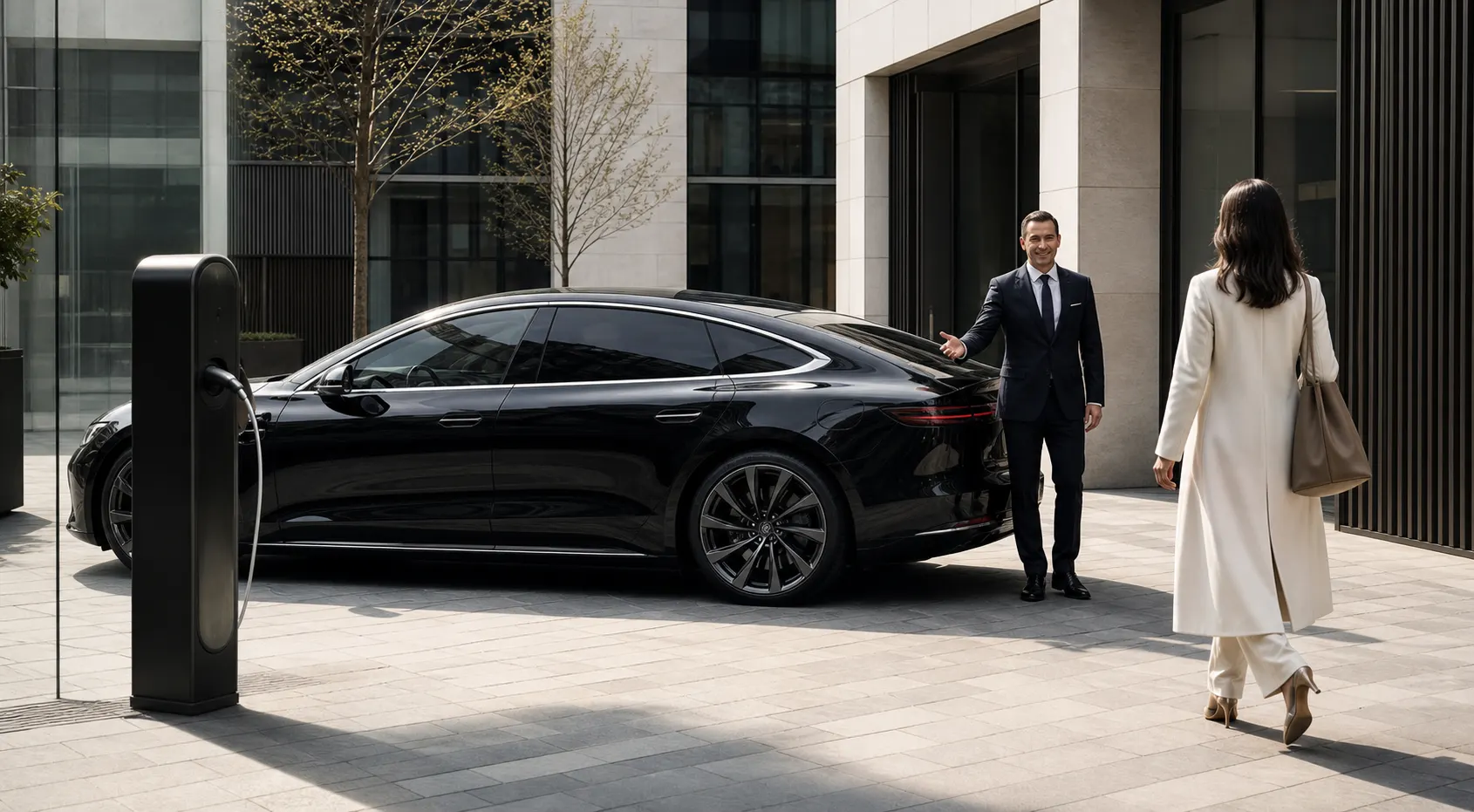
Your chauffeur is outside your address before the agreed time, with the route already checked for closures on the eastern approaches. Cases go into the boot, and if the run is going to be slower than usual you will hear it from the chauffeur rather than work it out from the window.
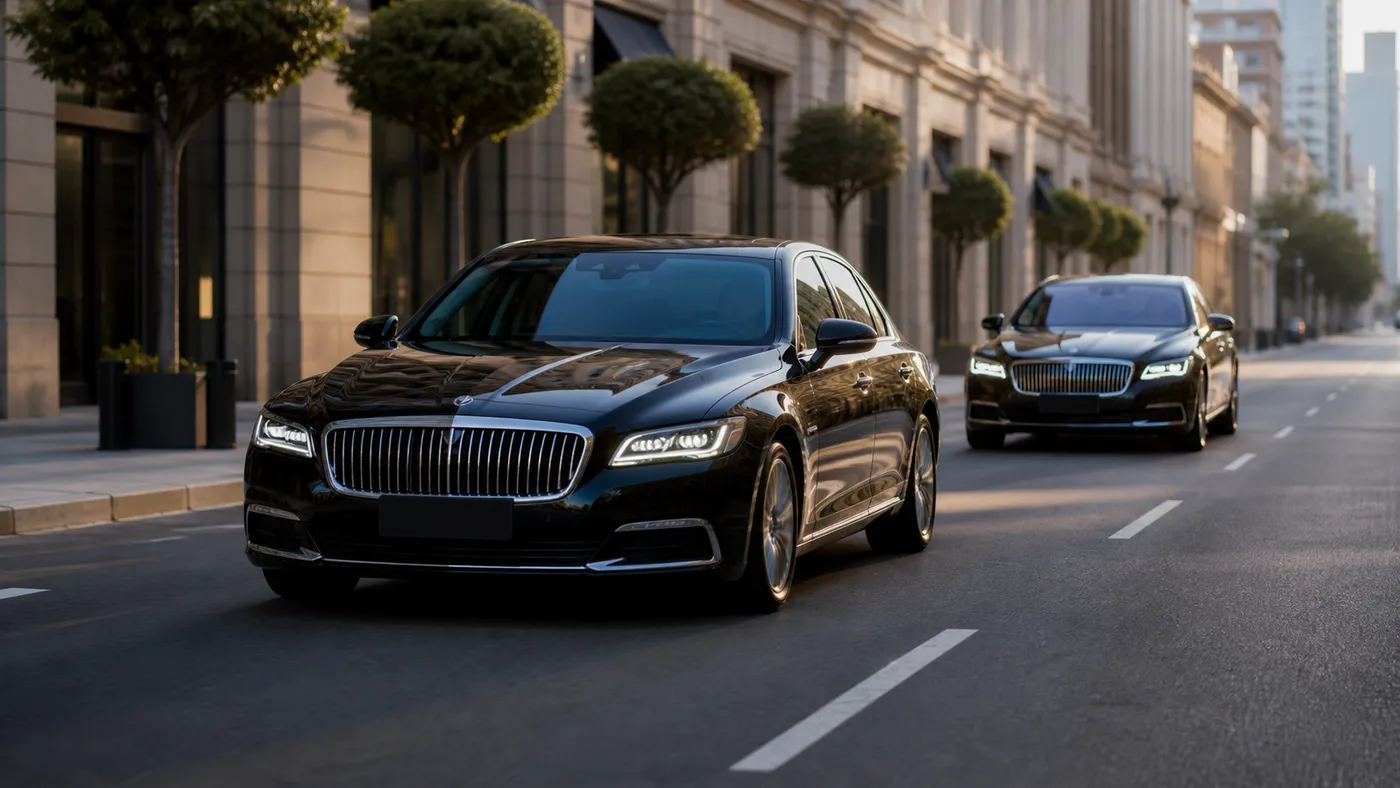
At the airport, the drop-off is close to the terminal doors and the walk is short. Forecourt arrangements are the airport's own and are chargeable; we handle them and include them in the written quotation. Vehicles come from our own cars and from a vetted network of professional chauffeur operators, and the car and chauffeur are confirmed to you in advance.