




Long days in a car do not pause for meals, and passengers are often working through the only window they have. So the practical question arrives quickly: is it acceptable to eat in the back, and if so, what can you reasonably manage without turning a clean cabin into a problem for whoever cleans it next?
The short version is that drinking is entirely normal and eating is usually fine, with sensible limits. Water is in the door of most chauffeur cars for exactly this reason. What causes difficulty is not food in principle but particular kinds of food, and knowing which is which makes the difference between a discreet lunch on the M4 and forty minutes of quiet regret.
Drinks: what works and what does not
Bottled water is provided as standard and is the least troublesome thing you can have in a moving car. Anything with a screw cap behaves well. The real difficulty is hot coffee in a takeaway cup with a push-through lid, which will find its way onto upholstery given a roundabout and enough time. If you are carrying one, ask the chauffeur to take corners gently and put it in the cupholder between sips rather than balancing it.
Alcohol is a different matter and depends on the vehicle and the booking. Where a car is licensed as private hire, there may be conditions attached to what can be consumed in it, and open containers can also raise questions in some settings. If drinks in the car matter for your occasion, raise it before you book rather than at the kerb, and it can be confirmed either way in writing.
Food that travels well
The rule of thumb is anything that stays in one hand, does not shed and does not smell for hours afterwards. Sandwiches in their wrapper, a pastry from a bag, cold food from a lidded box eaten with the lid used as a tray. Fruit is fine as long as you have somewhere to put the remains. None of this requires an announcement and none of it causes anyone any difficulty.
What causes trouble is the opposite: hot food in soft packaging, anything with a sauce, anything that flakes across dark upholstery, and strongly aromatic food that will linger for the next passenger. Curries, fish, and anything from a foil tray belong outside the car. A chauffeur will not stop you, but they will spend their break dealing with the aftermath.
- Good: bottled water, canned or capped drinks, sandwiches, pastries, cold boxed food
- Manageable with care: hot drinks in a lidded cup, fruit, biscuits
- Difficult: anything with sauce, dressing or loose fillings
- Difficult: flaky pastry, crisps and anything that scatters
- Best avoided: strongly aromatic hot food that will linger in the cabin
- Always: take the wrappers and containers with you when you leave

Why a proper stop is often better
On a long journey, eating in the back is rarely as pleasant as it sounds. The seat is not a table, the light is not great, and you finish faster and enjoy it less. A ten-minute stop at a service area or a village bakery costs less time than most people assume, particularly on a route where the schedule already has margin built into it.
Chauffeurs will usually suggest this if you mention food, because they know where the tolerable stops are on any given route and which ones to avoid. Say early in the day that you will want to eat, and the stop can be planned into the timings rather than improvised at the point where everyone is already hungry. Fifteen minutes taken deliberately is nearly always better than thirty taken badly.
Children, snacks and the reality of family journeys
Families travelling any distance will be eating in the car, and everybody involved understands that. Nobody expects a two-hour run to Cornwall to happen without snacks. The practical advice is simply to bring the containment with you: a lidded pot rather than an open packet, a small bag for rubbish, and wipes for the inevitable. A rolled-up carrier bag in a door pocket has rescued more journeys than anything else.
If children are travelling, say so at booking. It changes nothing about whether food is allowed, but it means the chauffeur can have the cabin set up sensibly and will not be surprised by a request to stop somewhere with a lavatory forty minutes in. Knowing the party includes children also shapes the route, because the useful stops on a motorway are not always the nearest ones.
- Lidded pots rather than open packets or bags
- One bag for rubbish, kept in a door pocket
- Wipes within reach rather than in the boot
- Drinks with screw caps rather than cartons and straws
- A planned stop roughly every couple of hours on a long run
If something spills
Say so straight away. Chauffeurs carry cloths and are entirely used to it, and a spill dealt with in the first minute is a wipe rather than a valet. What causes actual damage is a drink absorbed quietly into a seat for the remaining hour of the journey because nobody wanted to mention it. By then it has reached the foam beneath the cover, which is a different job entirely.
There will be no fuss, no lecture and no ceremony about it. The cabin is cleaned between journeys as a matter of routine, and dealing with the occasional accident is part of maintaining a car that arrives spotless for the next passenger. Mentioning it is the only thing asked of you. If it happened on the way to something important, say so and the chauffeur will help you sort yourself out before you arrive.
Business meals and confidential lunches
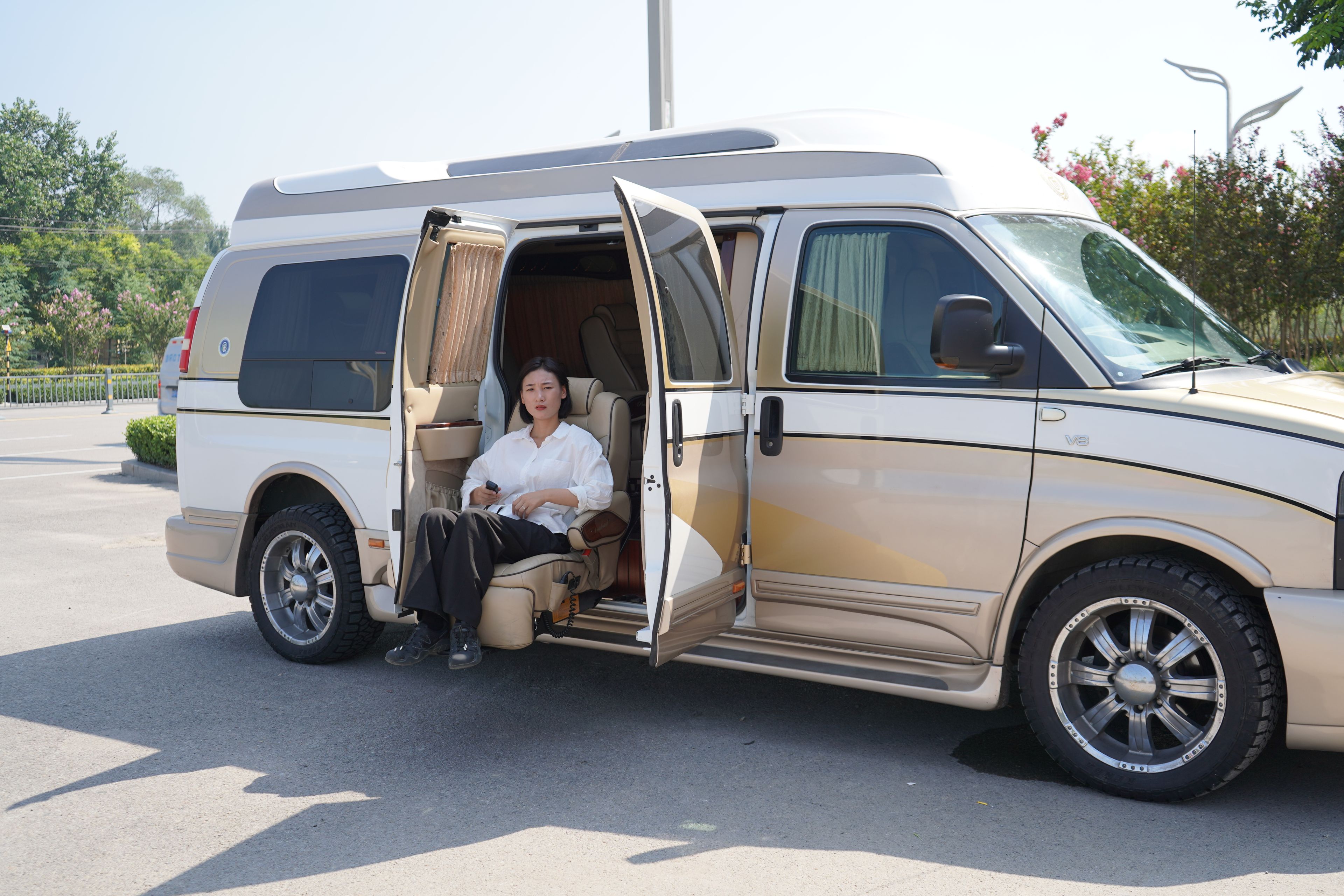
Occasionally the car is the only meeting room available, and a working lunch happens between two appointments. That works better than you would expect in a larger vehicle, where the rear seats face into more usable space and there is somewhere to put a laptop and a cup at the same time. Parked somewhere quiet for half an hour, an MPV is a more usable meeting room than most hotel lobbies.
If that is the shape of your day, describe it when booking rather than the bare route. Knowing that you need a stationary half hour somewhere quiet, with food collected on the way, changes the vehicle suggestion and the route in ways that a simple list of addresses would not. It also determines where the car waits, which matters if the only sensible stopping place is ten minutes from where you are eating.