




This is one of the few questions in chauffeur travel with a genuinely fixed answer. Smoking is not permitted in a chauffeur vehicle, anywhere in the United Kingdom, under any circumstances. That is not a house rule that varies between operators or something that can be negotiated for a particular booking. It is the law that applies to vehicles used for work.
Vaping sits alongside it. The legal position for e-cigarettes is different in detail, but the practical position across the trade is not: chauffeur vehicles are vape-free as well. This page explains what the rules actually cover, why the vaping answer is what it is, and how a long journey works if you smoke. None of it is intended to be preachy; it is simply how the vehicles operate.
The legal position, briefly
Legislation across the United Kingdom prohibits smoking in enclosed workplaces, and a vehicle used for work by more than one person counts as one. A chauffeur car is a workplace for the chauffeur and is used by many passengers, which places it squarely within the rules. Signage to that effect is a requirement in licensed vehicles and you will see it in the rear.
There is a second layer on top. Vehicles licensed for private hire carry conditions set by the licensing authority, and smoke-free operation is invariably among them. Breaching it puts the driver's licence and the vehicle's licence at risk, which is why no professional will treat it as flexible regardless of how the request is made. It is one of the very few things in this trade that is genuinely not negotiable.
Why vaping is treated the same way
E-cigarettes are not covered by smoke-free legislation in the same terms, so this part is a trade convention rather than a statute. Operators apply it consistently for practical reasons: vapour condenses on glass and interior surfaces, the scent lingers in upholstery and headlining, and the next passenger notices immediately. A car that arrives smelling of anything at all has failed a basic standard.
There is also a fairness argument. The passenger after you booked a clean cabin, and there is rarely a full valet between journeys on a busy day. Holding a single clear line — nothing is smoked, heated or vaped inside the vehicle — is the only version that reliably delivers that. Partial rules produce partial results, and in an enclosed cabin the result is always noticeable.
- Cigarettes, cigars and pipes: not permitted in any circumstances
- Heated tobacco products: treated exactly as smoking
- E-cigarettes and vapes: not permitted, as a consistent trade standard
- Cannabis in any form: not permitted, including in vaporised form
- Scented sprays used to mask smoke: unhelpful, and not a workaround

How long journeys work if you smoke
The practical answer is stops, and they are easy to build in if mentioned early. On a motorway route the chauffeur will know which services are usable and roughly how far apart they are, and can plan a break at a sensible interval rather than at the first place someone becomes uncomfortable. On most trunk routes that means a stop roughly every hour and a half, which fits comfortably into a schedule.
Say when you book that you will want to stop, and give a rough sense of how often. It changes nothing about the vehicle or the arrangement, but it means the timings are drawn up with the stops in them and you arrive when you expected to rather than late. It also spares everyone the slow negotiation that otherwise happens somewhere around junction fourteen.
- Say at booking that you will want stops, and roughly how often
- Let the timings be drawn up with the breaks already in them
- Motorway services are the reliable option on trunk routes
- Rural routes have fewer usable stops, so plan them further ahead
- Allow a few minutes at each stop rather than treating it as a pause
Before you get in, and at the kerb
Smoke carries into the cabin on clothing more than people realise, particularly in winter with the heating running. Finishing a cigarette a few minutes before collection rather than as the car pulls up makes a noticeable difference to the cabin for the rest of the journey. Wool coats hold it longest, which is why it is most noticeable on exactly the journeys where people are most smartly dressed.
Chauffeurs will not ask you to do this and would find it uncomfortable to raise. It is offered here as something worth knowing rather than as a requirement, and it is the kind of small consideration that regular passengers tend to work out for themselves. The same goes for the reverse courtesy: if you would like a moment outside before getting in, the chauffeur will simply wait, and no explanation is needed.
What happens if the rule is broken
A chauffeur will ask, once, politely, for it to stop. That is an uncomfortable moment for them and they will make it as brief as possible. If it continues, they are obliged to act, because the licence at risk is theirs personally rather than the company's abstractly, and the vehicle can be taken off the road for cleaning. That is lost work for them as well as an inconvenience for you.
Any consequences beyond that sit within the written terms confirmed at the point of booking, which set out how such matters are handled. That is deliberately where they live rather than being invented at the roadside, and it is worth reading the terms if the question is likely to arise for your party. Nothing about it is improvised, and nothing is decided by the chauffeur at the roadside.
Group bookings and the awkward conversation
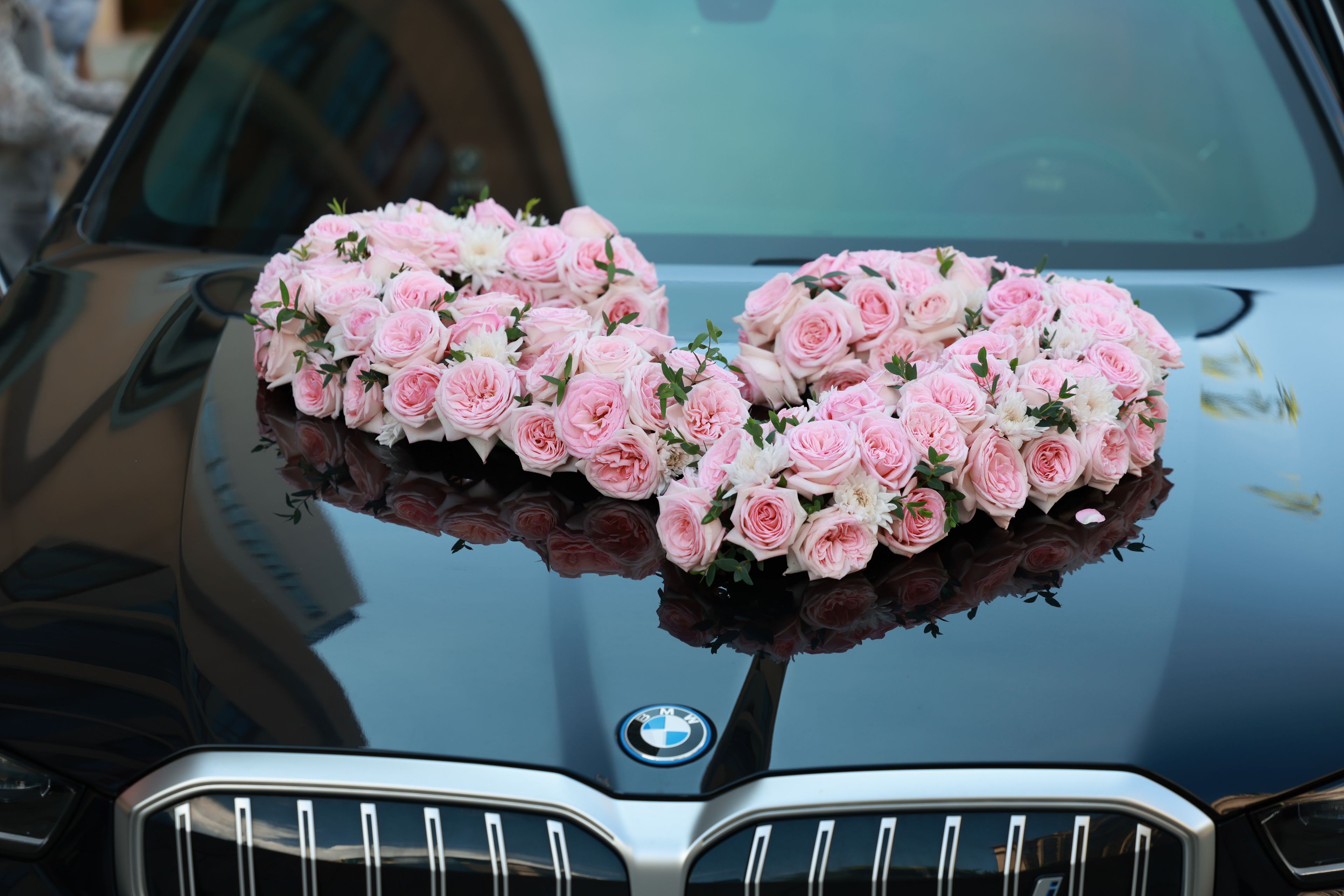
The commonest difficulty is not the person who booked the car but a guest who did not read anything. Weddings, race days and stag or hen parties are where this arises, usually late in the evening when goodwill is thinner. Telling the group before they get in is far easier than the driver doing it afterwards. A sentence from the host carries authority that a sentence from a stranger does not.
If you are organising travel for a group where this is likely, mention it when you book. The chauffeur can then be given a clear brief on where and when stops will happen, which removes the negotiation entirely and turns a potential confrontation into a scheduled ten minutes at a service area. Everyone gets what they need and nobody has to be the person who says no.