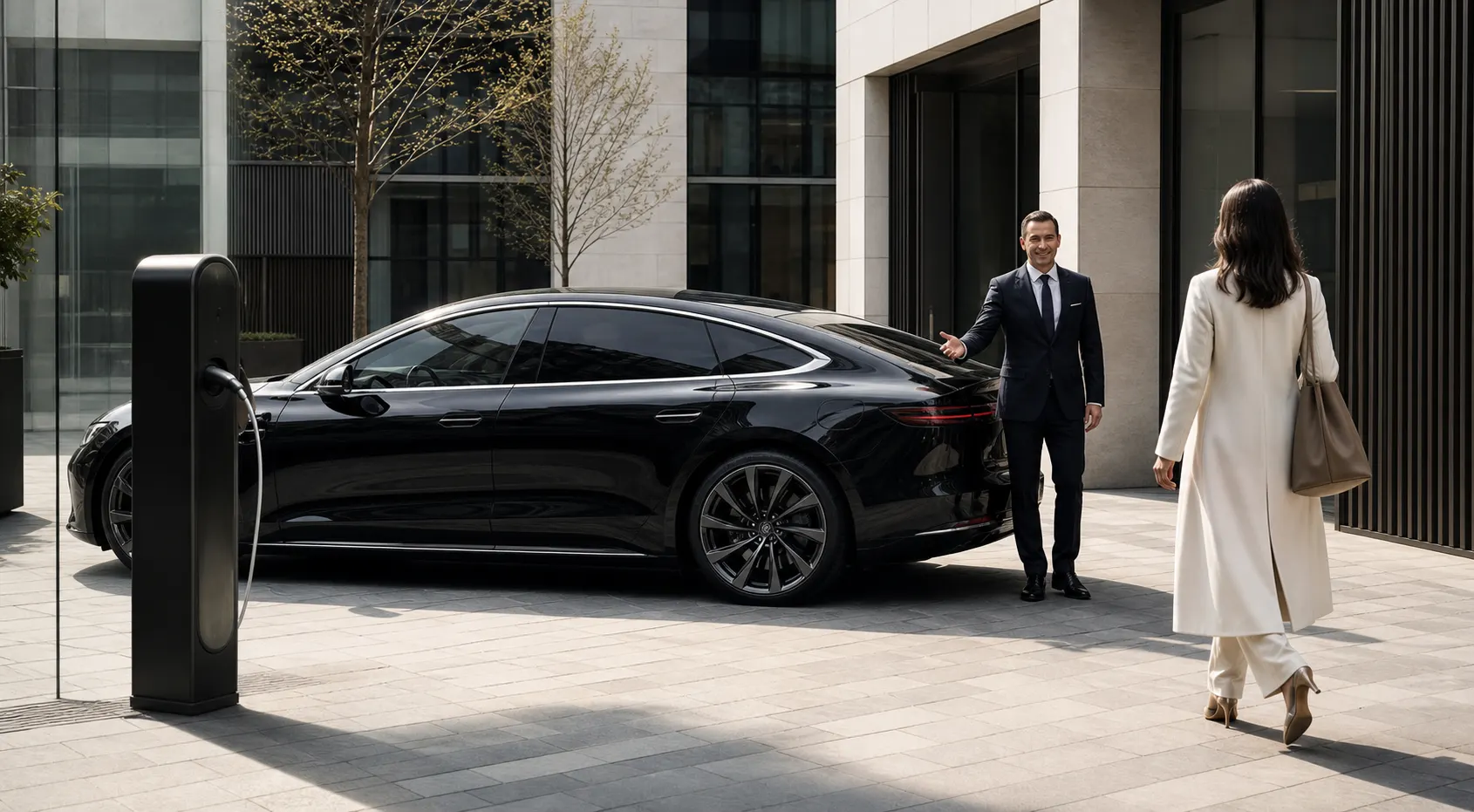

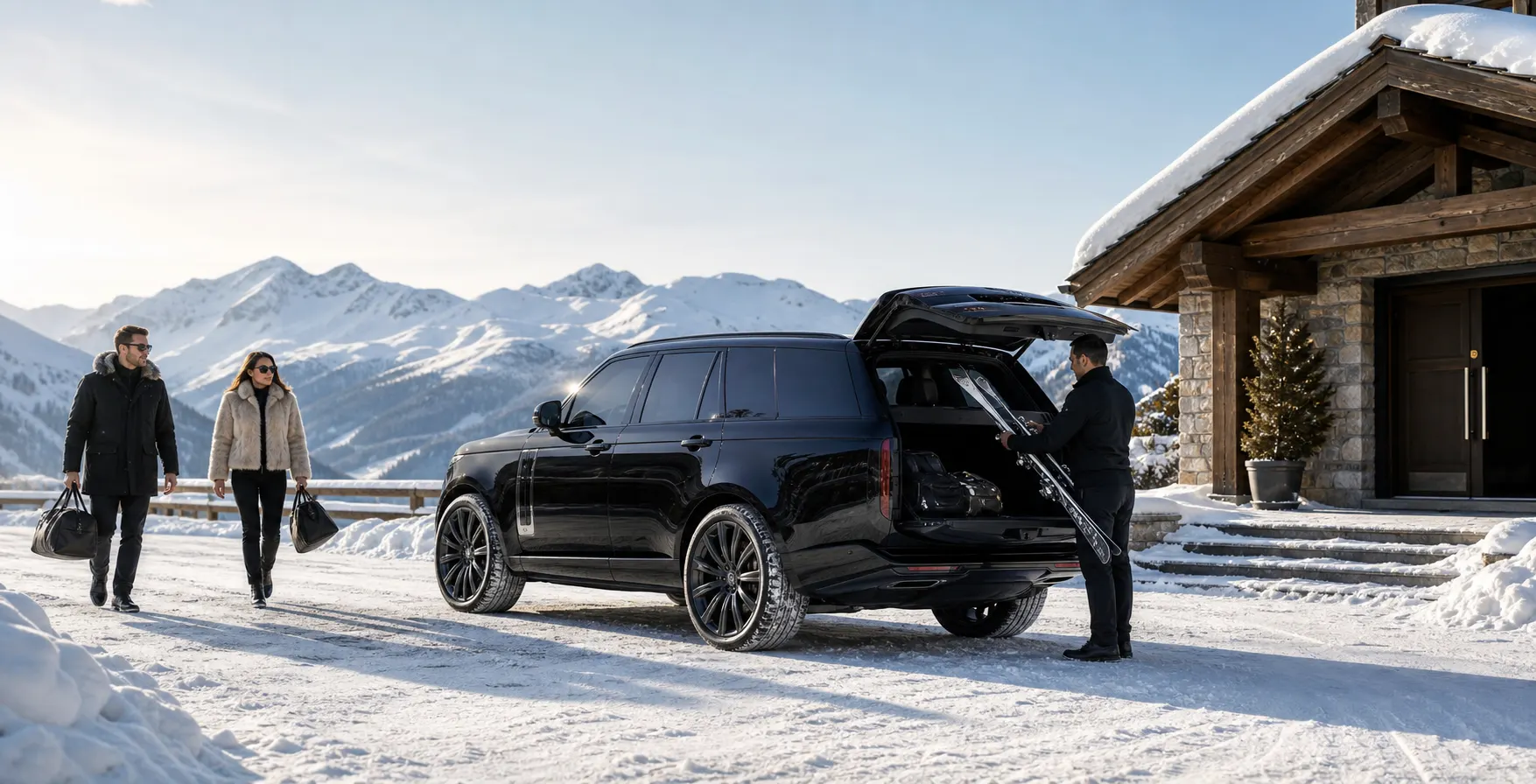



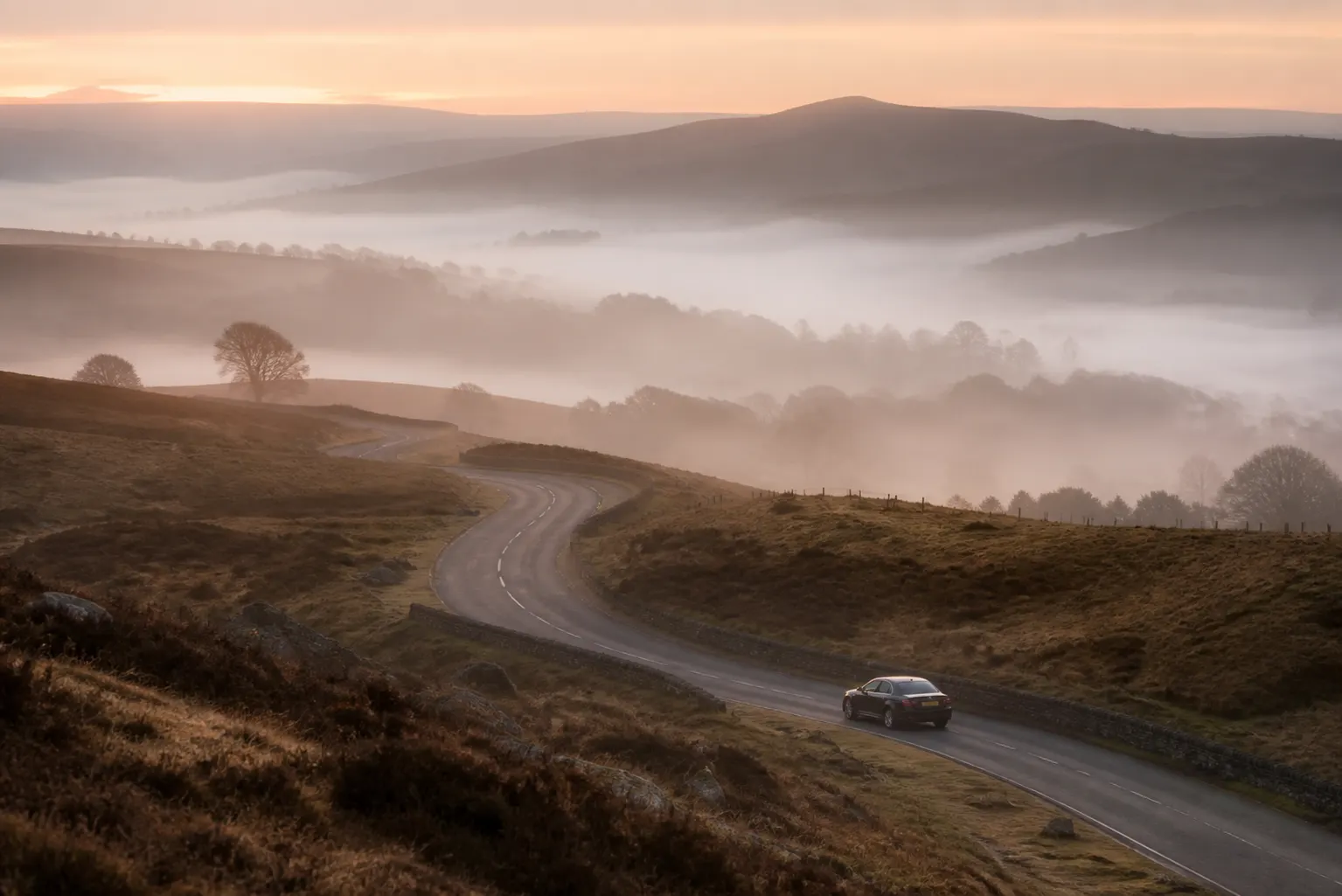


From the passenger's side, a chauffeur booking has two visible moments: the written confirmation, and a car appearing at the appointed time. Everything between them is invisible by design, which is exactly as it should be. It is also, in terms of hours, the overwhelming majority of the work. Very little of it involves driving, and almost none of it happens on the day itself.
This page walks through that sequence, partly because it is genuinely interesting and partly because knowing it makes you a better client. Several of the steps depend on information only you have, and understanding where they sit explains why certain questions get asked at booking and why late changes cost more than they appear to.
Allocation: matching the job to the car
Once a booking is confirmed, it has to be matched to a specific vehicle and a specific chauffeur. That is a scheduling problem with more constraints than it looks: the car must be free for the whole window including the return, the chauffeur must have legal driving hours available, and the vehicle must suit the passengers, the luggage and any emission zones on the route.
Chauffeur suitability matters as much as the car. Someone who knows the destination area, or who has driven for you before, or who is comfortable with a particular kind of day, is not interchangeable with anyone else holding the same licence. Where a booking has specific requirements, the allocation is made deliberately rather than by proximity. That is the largest single difference between this and an app.
- The vehicle free for the whole window, including any return
- Legal driving hours available to the chauffeur across the day
- Passenger numbers, luggage and any child seat requirement
- Emission and charging zones on the intended route
- Local knowledge of the destination area where it matters
- Continuity, where you have travelled with someone before
The vehicle, the day before
Preparation is not a wash. The exterior is cleaned, but so are the door shuts, the glass inside and out, and the areas passengers touch without noticing. The interior is vacuumed, the seat pockets checked, the rear footwells looked at properly, and anything left by a previous passenger removed and logged. A chauffeur car should smell of nothing at all, which takes more effort than making it smell pleasant.
Alongside that runs a mechanical check that is closer to a routine than an inspection: tyres, fluids, lights, wipers, screenwash. On top go the consumables — water in the doors, tissues, phone charging leads for the common connectors, an umbrella in the boot. None of it is remarkable and all of it is noticed when it is missing. A dead phone and no lead is the small failure passengers remember longest.
- Exterior wash, including wheels, glass and door shuts
- Interior vacuum, seat pockets emptied, footwells checked
- Any lost property found, logged and set aside
- Tyres, lights, fluids and wipers checked before the shift
- Water, tissues, charging leads and an umbrella restocked
- Climate set so the cabin is right when the passenger gets in

Route study the night before
The route is looked at properly before the day, not on the morning. That means checking closures and works, understanding what the relevant hour does to each pinch point, identifying an alternative for the fragile section, and working out exactly where the car can legally and safely stop at both ends. It takes twenty minutes at a desk and it is the difference between a journey that runs and one that improvises.
For unfamiliar destinations the study goes further. Satellite imagery of the approach, the position of the entrance relative to the postcode, whether there is a gate and whether it needs a code. Rural addresses and large sites are where this pays off most, because the difference between arriving and arriving at the right place can be a mile of single-track lane.
The approach and the wait
Chauffeurs leave for a collection considerably earlier than the drive requires. The aim is to be in the area with time in hand, resolve any surprise about parking or access while it is still cheap to resolve, and then wait. Waiting is not dead time; it is the mechanism by which every risk on the approach is neutralised before it can matter.
In that window the car is positioned so the rear nearside door opens onto the pavement, the cabin is brought to temperature, the engine is off, and the chauffeur is out of the car and visible. If you appear ten minutes early, someone is already standing there. That is the point of the whole sequence. Nothing about it should look like effort from where you are standing.
What we are watching while you travel
Once the journey is under way, attention moves to what has changed since the plan was made. Incidents on the route ahead, weather closing in, whether the margin is intact or being eaten. If a decision needs making about a diversion, it is made early, at the last junction where it is still a choice. A diversion taken early is a minor adjustment; the same one taken late is a queue.
There is also the far end to think about. Where the car will go once you are dropped, whether a return leg is holding, and whether the next collection point has any complication that needs resolving now rather than later. A day with several movements is planned continuously rather than once. Each drop is also the beginning of the approach to the next collection.
Why late changes cost more than they look
Understanding the sequence explains a common frustration. A change requested the evening before is straightforward, because most of the preparation has not happened. The same change requested an hour beforehand may mean a different vehicle that is not prepared, a chauffeur whose hours no longer work, or a route that has not been studied. It is not reluctance so much as the sequence having already run.
None of that means late changes are refused. They are absorbed all the time. But it is worth knowing that the earlier a change lands, the more completely it disappears into the plan, and that a message the night before is worth several on the morning. If something is uncertain when you book, say that too, because a flagged uncertainty is planned for and an unflagged one is a surprise.