







The word is used constantly by airport staff and almost never explained to passengers, who tend to work it out by context somewhere around the second or third flight. It is worth knowing properly, because it draws a hard line across the terminal that determines exactly where anybody meeting you is permitted to stand.
This entry sets out what falls inside the boundary, who may cross it and on what basis, and what the restriction means for a chauffeur collection. It also covers the narrow set of circumstances in which a vehicle is permitted airside at all, which is not the arrangement most people imagine.
What falls inside the boundary
Airside begins at the security search and, for international departures, continues past passport control. It takes in the departure lounges, retail areas beyond the search, the gates, the air bridges, and the whole of the operational airfield: aprons where aircraft park, taxiways, runways, and the service roads that connect them.
The boundary exists to create a controlled zone in which everybody and everything has been screened. That is why the shops sit where they do, why liquid restrictions apply before the search and not after, and why a wrong turn through the wrong door triggers a serious response rather than a polite redirection.
Who is allowed through
Passengers cross with a valid boarding pass, having been screened. Everybody else needs an airport identity pass issued after background checking, held for a specific operational reason and displayed at all times. Passes are granted by the airport rather than by employers, and they are zoned, so a pass valid in one area is not valid everywhere.
Vehicles are governed separately again. Any car operating on the airfield needs its own permit, distinctive markings and an appropriately qualified driver, and movements are directed by air traffic control or ground movement control. This is why an ordinary chauffeur car cannot simply be waved through a gate towards a stand.

What it means for your collection
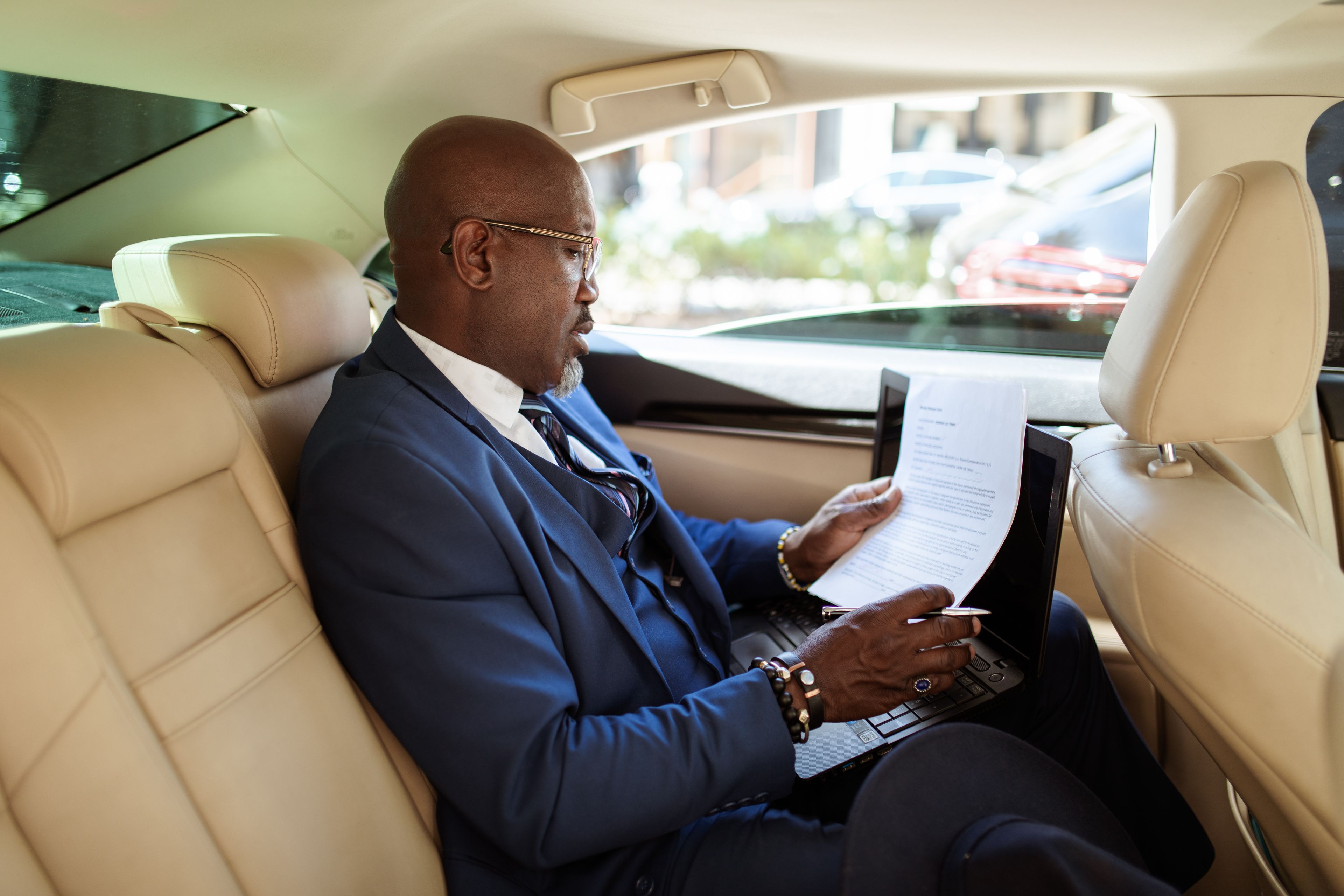
Your chauffeur waits landside. On a meet and greet they stand in the public arrivals hall, which is the first point past customs at which anyone without a pass may be, and that is where the name board appears. Nothing before that point is theirs to arrange, and any operator promising otherwise for a scheduled flight is overpromising.
- The chauffeur meets you in the arrivals hall, not before customs
- Assistance airside is arranged through the airline or the airport
- Fast track and lounge access are airline or airport products
- Wheelchair and mobility assistance is provided by the airport
- Luggage is collected by you in the baggage hall, then handed over
- For private flights, the handling agent controls any airside movement
The private aviation exception
Business aviation is where airside vehicle access genuinely arises. At some airports, and by prior arrangement with the handling agent, a car may be escorted onto the apron to draw up beside the aircraft. This depends on the airport, the operator, the permits held and the agreement in place for that specific movement.
It is never automatic and never something to assume. If apron access has been arranged for your flight, tell us when you book and we will plan the collection around what the handling agent has agreed. Where it has not, the collection happens at the FBO entrance, which for most passengers is a walk of a few steps.