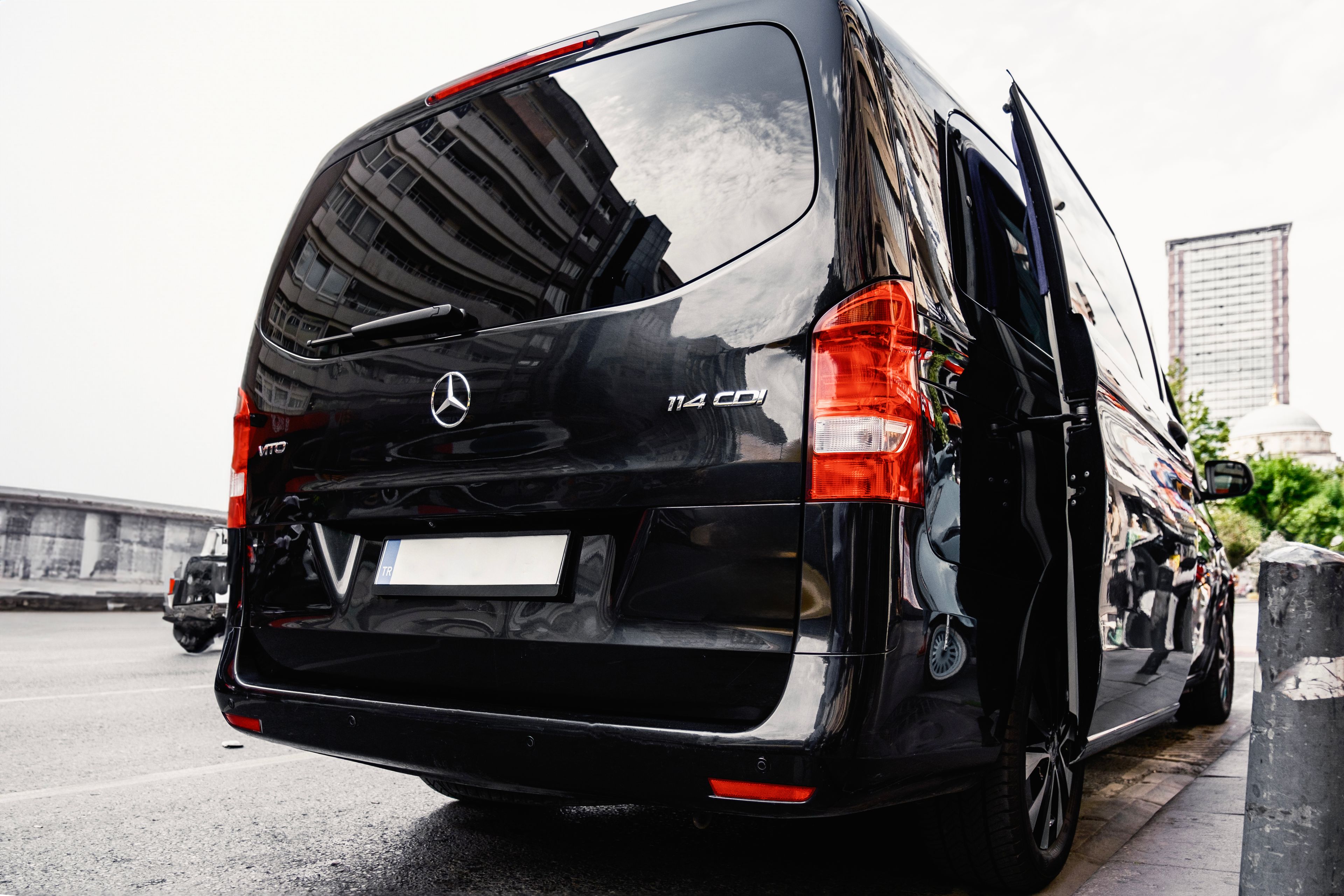





MPV stands for multi-purpose vehicle, a category invented for families and adopted almost wholesale by the chauffeur industry because it solves a problem no saloon can. Once a party passes three people, or once the luggage passes a couple of large cases, the geometry of a car with a boot stops working and something built around interior volume takes over.
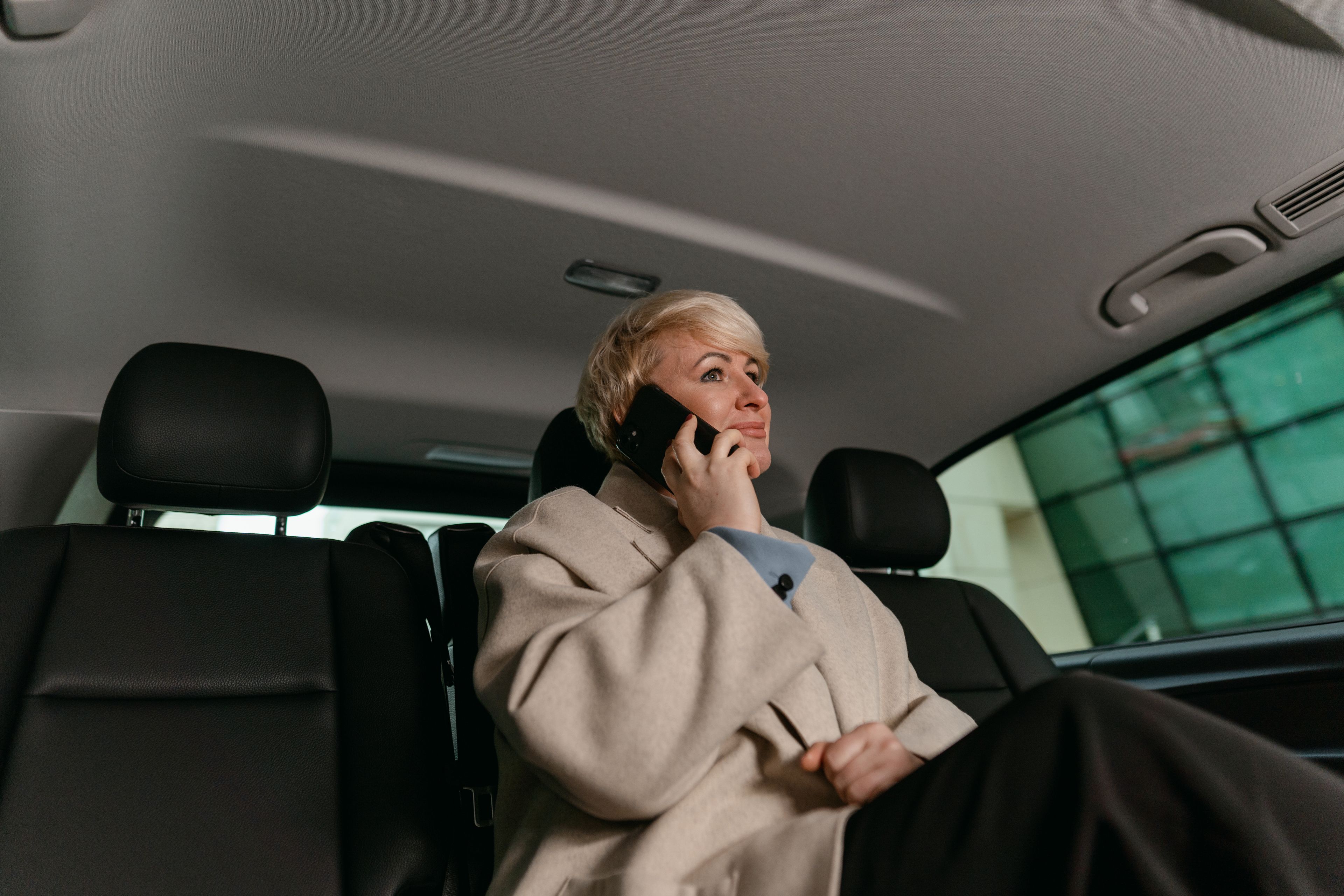
The word luxury in front of it is doing real work. A standard MPV is a practical box; a luxury MPV is finished to the standard of an executive car, with leather trim, a quiet cabin, individual seats and often a table or rear climate zone. It is a business vehicle that happens to be shaped like a van, and it travels far better than most people expect.
Where the class sits in a fleet
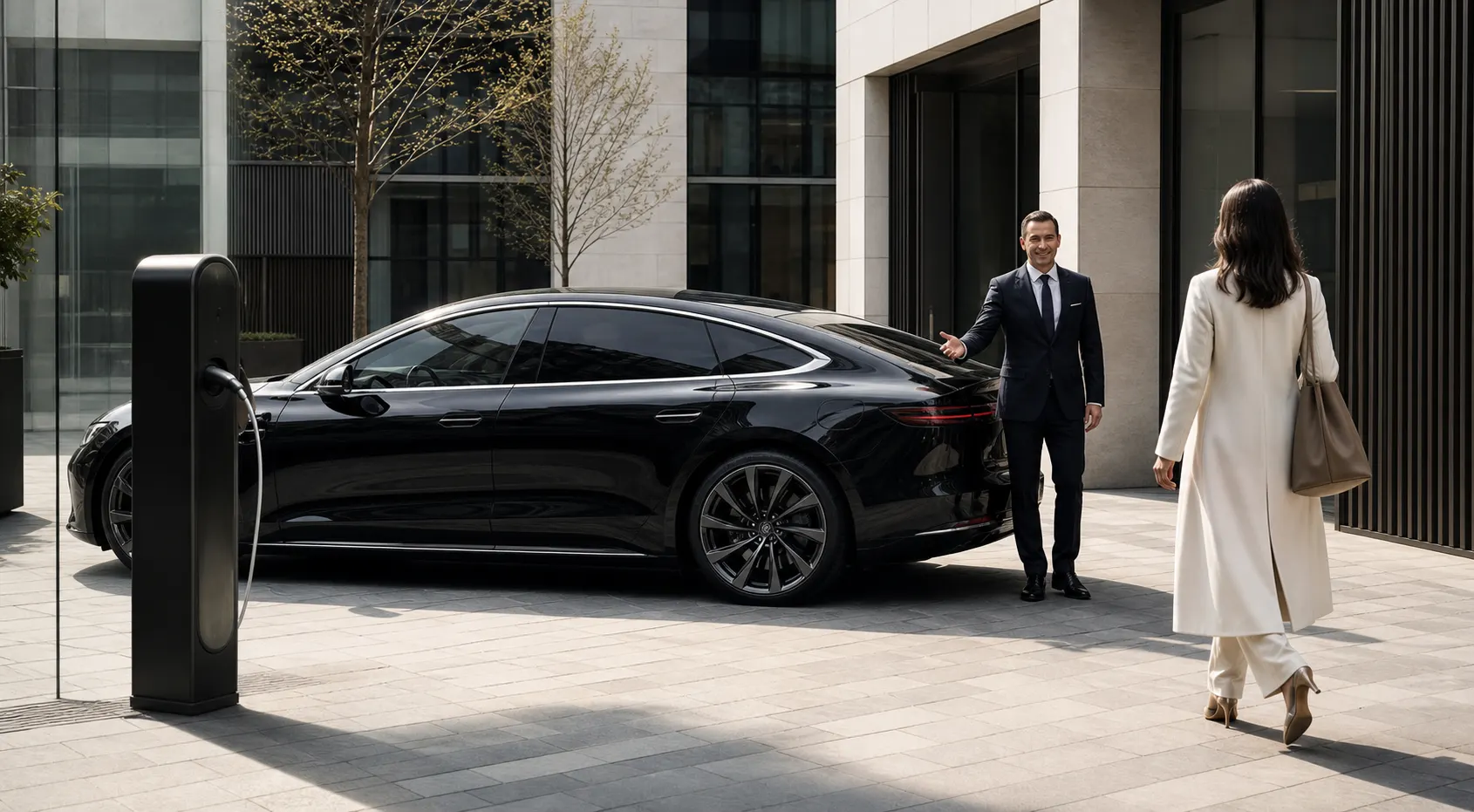
In practice a luxury MPV occupies the tier alongside the flagship saloons rather than beneath them. It is not a downgrade for groups; it is a different solution to a different problem. Where a saloon offers one excellent rear bench, an MPV offers four to six proper seats, each with its own armrests and its own view, and nobody has to sit in the middle over the transmission tunnel.
The other advantage is access. Sliding doors open in a narrow bay where a hinged door cannot, the floor sits higher, and the step in is shallower than lowering yourself into a saloon. For older passengers, for anyone with a stiff hip or a knee replacement, and for parents wrestling a child seat, that geometry matters more than any amount of veneer.
- Individual rear seats rather than a shared bench
- Sliding side doors that open in tight kerbside bays
- Standing or near-standing headroom in the cabin
- A boot compartment separate from the passenger area
- Rear climate control and, on many, a fold-out table
- Higher seating position with a shallower step in
Reading the seat and case figures
Quotations for an MPV normally carry two numbers: the seat count and the case count. The important thing to know is that the two are usually alternatives rather than a promise you can have both at once. A vehicle listed for seven passengers will not also carry seven large suitcases, because the rear row occupies the space the cases would need.
Give us the honest total when you enquire - passengers, large cases, cabin bags, pushchairs, golf bags, instrument cases - and the recommendation follows automatically. If the numbers are tight, the usual answer is either a second vehicle or an MPV with the rear row folded and fewer seats in use, and it is far better to plan that in advance than to improvise at the terminal.

Not the same as a minibus
The most frequent confusion is between a luxury MPV and an eight-seat minibus. They look related and they are not. A minibus is licensed and constructed differently, it usually seats more people at a lower level of finish, and the driving experience for passengers is more utilitarian. An MPV is closer to a large executive car in the way it rides and sounds.
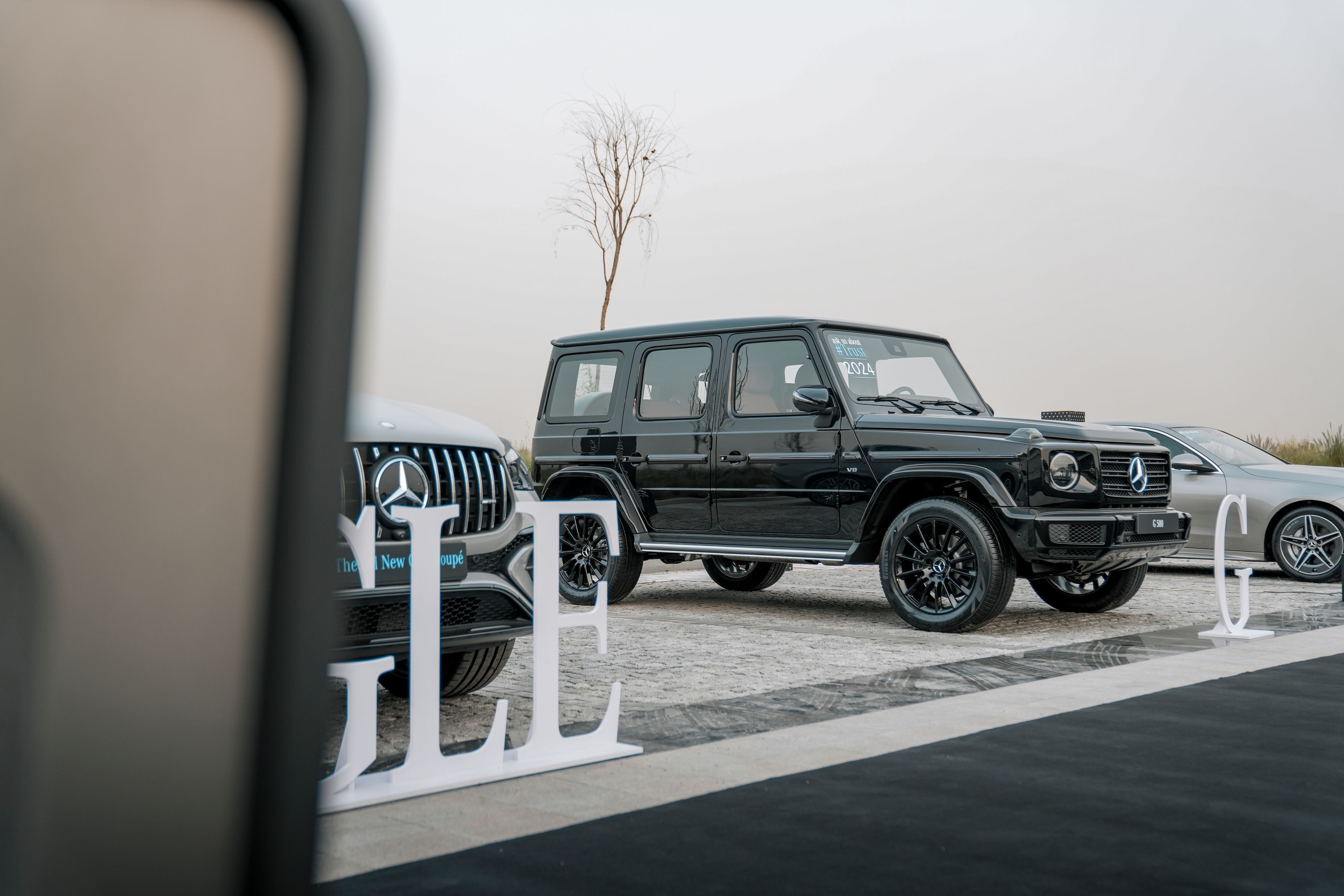
It is also distinct from an SUV, which seats fewer people, sits higher still and generally offers less usable luggage volume behind the third row. If your priority is passengers plus cases with a civilised cabin, the MPV is the class to ask for. If your priority is ground clearance and a commanding driving position, the SUV is a different conversation.