




Bath occupies a bowl in the hills, and everything about arriving here follows from the topography. The approaches climb and descend steeply, the Georgian streets were built for carriages rather than for parked cars, and the centre has been progressively closed to traffic to protect both the stone and the people walking on it. It is one of the most beautiful cities in Britain and one of the least convenient to drive in.
The good news is that the distances are tiny. From a well-chosen set-down point, the Roman Baths, the Abbey, the Pump Room, Milsom Street and the Royal Crescent are all a short walk apart. The skill is in choosing the point, understanding the gradient, and knowing which streets will be closed on the day you happen to be visiting.
Coming down into the bowl
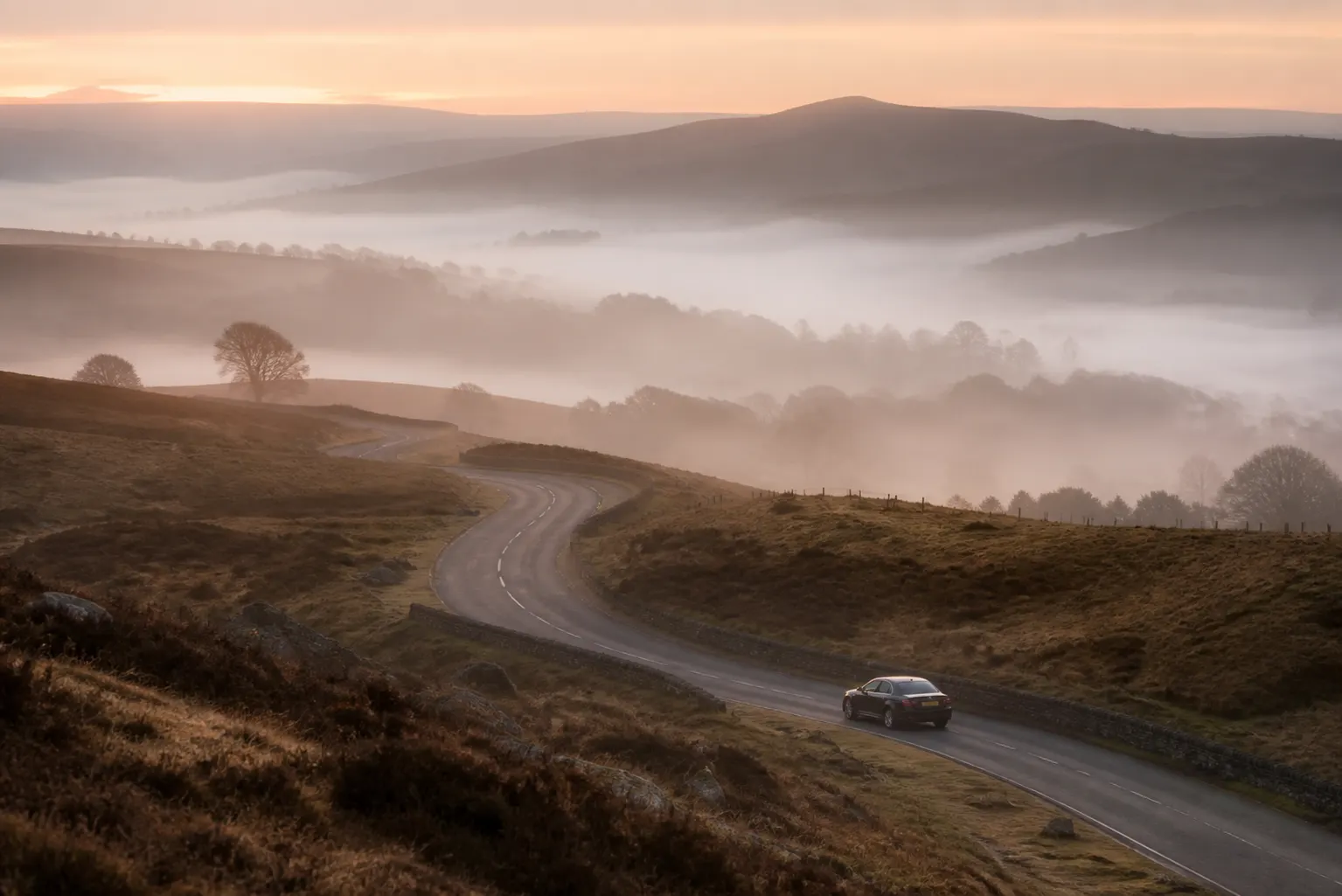
The usual approach from London and the east is the M4 to junction 18, then the A46 south. That last stretch is a single carriageway road over the hills with limited overtaking and a long descent into the city, and it is commonly around twenty to thirty minutes from the motorway. It queues at peak times and it is the part of the journey most likely to run over.
From Bristol, the A4 runs east through Saltford and Keynsham and is generally around thirty to forty five minutes. From the south, the A36 comes up from Warminster and Salisbury. All of these arrive at the edge of a valley and drop steeply, which is worth knowing in ice or heavy rain.
The park and ride sites at Lansdown, Newbridge and Odd Down sit on the main approaches and can be sensible meeting points on a busy weekend. For most guests, though, the useful arrangement is a set-down close to the hotel and a car that repositions rather than tries to stay nearby.
The pedestrian centre and the clean air scheme
The heart of Bath is closed to traffic. Stall Street, Union Street, Abbey Churchyard and the streets around the Pump Room are pedestrian, with security bollards controlling access. Milsom Street and the surrounding shopping area are heavily restricted, and the lanes off them are too narrow for a car to wait on without blocking everything behind it.
Bath also operates a clean air scheme covering the central area. The standards, the vehicle categories and the arrangements are set by the council and can be revised, so we confirm the position for the vehicle on your booking at the time you book. Where a charge applies to your journey it is included in the written quotation.
The Royal Crescent and The Circus are open to traffic but tightly controlled for parking, and the cobbled and gravelled areas in front of the Crescent are not places to leave a car standing. We set down and collect there rather than wait, which is both the rule and, on a Sunday afternoon, the only practical option.
- Abbey Churchyard and Stall Street: pedestrian with bollard control
- Milsom Street and the shopping core: heavily restricted access
- Royal Crescent and The Circus: set-down only, no waiting
- Central clean air requirements confirmed for your vehicle at booking
- Pulteney Bridge and Great Pulteney Street: narrow and slow at peak
- Park and ride sites on the main approaches as meeting points
Bath Spa station and arriving by train
Bath Spa sits on the southern edge of the centre near the river, with a compact forecourt area that handles taxis and short waiting. It is tighter than it looks, and at busy times the approach along Dorchester Street and Manvers Street backs up. We confirm the collection point beforehand and hold there rather than circling a one-way system.
The station is a genuinely short walk from the Abbey and the Baths, and for a guest with light luggage that walk is a pleasure. For anyone with cases, or arriving in poor weather, the set-down point matters more, and we will choose it with the hotel entrance rather than the map in mind.
Trains from London Paddington are frequent and quick, and many guests find the best arrangement is rail into Bath with a chauffeur meeting the train and staying for the day. That combination avoids the M4 entirely and puts a car at your disposal for the parts of a Bath itinerary that genuinely need one.
Weddings, rugby and the Christmas market
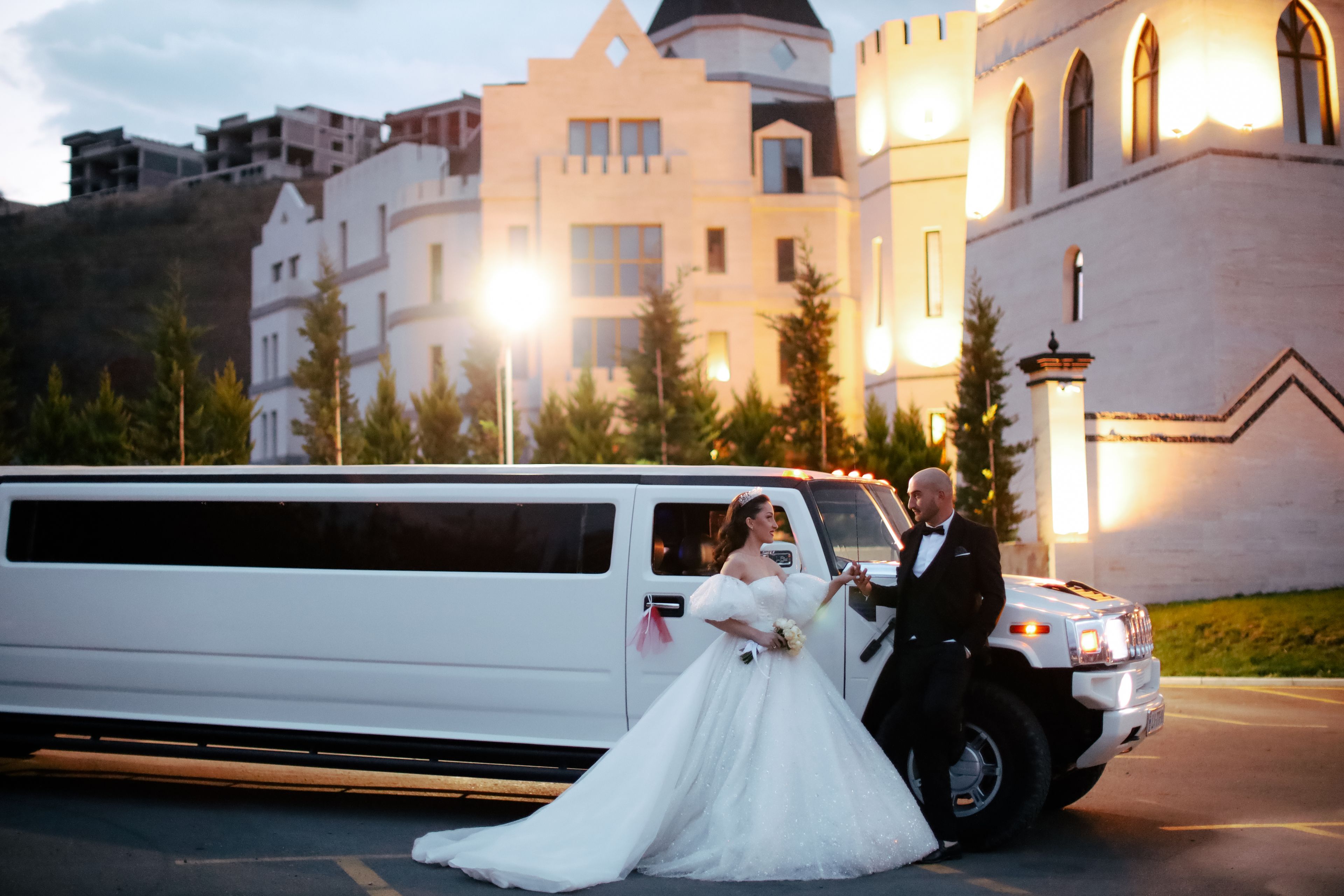
Bath is a wedding city, and the venues are almost all in constrained locations: the Guildhall, the Assembly Rooms area, the Abbey and the hotels along the terraces. Arrival timing for a wedding car here is a matter of minutes rather than a rough window, and we plan the approach direction, the set-down and the departure route in advance as a matter of course.
The rugby ground sits on the Recreation Ground in the middle of the city, which is unusual and highly consequential. On a match day the roads around Pulteney Bridge and Great Pulteney Street slow considerably, and the whole centre feels the effect for several hours.
The Christmas market, running through the weeks before Christmas, is the single busiest period in the Bath calendar. Streets close, the pedestrian area expands, hotel access changes and the approaches fill from mid-morning. For a December visit we build in significantly more time and set down further out than we would in March.
Airports and the country around Bath
Bristol Airport is the nearest, commonly forty five minutes to an hour depending on the route and the season, though the A38 approach adds variability. Heathrow is generally around an hour and three quarters to two and a quarter hours via the A46 and M4, with the final stretch the unpredictable part. Cardiff is around an hour and a quarter across the Severn.
The surrounding country is exceptional and easily reached. Castle Combe and the southern Cotswolds sit within about thirty to forty five minutes, Lacock is around twenty five minutes, and Stonehenge and Salisbury are commonly an hour to an hour and a quarter south. Longleat, Stourhead and the Wiltshire houses all make comfortable half days.
These are the journeys where the car unambiguously earns its keep. Inside Bath itself we are frequently more useful as a fixed base holding coats and shopping while you walk, and we would rather say that than drive you four hundred yards through a one-way system.
- Centre to Bristol Airport: usually forty five minutes to an hour
- Centre to Heathrow: generally an hour and three quarters to two and a quarter hours
- Centre to Castle Combe: commonly around thirty minutes
- Centre to Stonehenge: usually an hour to an hour and a quarter
- Centre to Bristol: commonly thirty to forty five minutes