




The first hour in a country is the one nobody can rehearse. You are tired, the layout is unfamiliar, and every sign assumes a knowledge of the process you do not yet have. It is also the hour most likely to generate a problem, because luggage, paperwork and a transport arrangement all have to line up at once, inside a building designed for volume rather than for comfort.
This is a walk through that hour in order, at a British airport. It covers what each stage involves, how long each tends to take, what determines whether you are through quickly or slowly, and where the car will actually be waiting. None of the timings are promises. The honest answer at every stage is a range, and knowing the range is a great deal more useful than a number would be.
The walk, and passport control
The first surprise is often the distance. Major British terminals are large, and at Heathrow a satellite pier may involve an underground transit train before you reach the immigration hall at all. Fifteen minutes of walking from a far gate is entirely ordinary, and if you need assistance it should be arranged with the airline in advance rather than requested on the day, since it cannot be organised at short notice.
Passport control follows. The arrangements, the eligible routes and the requirements differ by nationality, by document and by circumstance, and have changed for many travellers in recent years. We do not attempt to describe them, because they are not ours to describe: check the official UK government guidance for your own passport and situation well before you fly, and again shortly before departure.
Baggage reclaim, the unpredictable stage
Reclaim is the least controllable part of the arrival. Bags can be on the belt before you reach it or take a considerable while to appear, and there is nothing you or anybody else can do to influence which. On a wide-bodied aircraft the last case can arrive a long time after the first, and priority tags help but do not guarantee very much at all on a busy evening with several arrivals sharing a belt.
Trolleys are generally available and worth taking even for a moderate amount of luggage, since the walk out through customs and across the arrivals hall is longer than it looks. If a bag does not appear, the airline desk sits inside the reclaim area and you must report it before leaving, which takes time. Message us on WhatsApp if that happens and the plan adjusts around it.
Customs, and the channels
After reclaim you pass through customs, where different channels apply depending on what you are carrying and where you have travelled from. Allowances, restrictions and declaration requirements vary and are revised periodically, particularly around goods, currency, food and plant products, so check the official UK government guidance for your own circumstances before you travel rather than trying to decide anything in the hall itself.
Most travellers walk straight through in well under a minute. Some are stopped for a routine check, which is unremarkable and usually brief. It is worth knowing simply so that it does not feel like a problem if it happens to you, and so that your onward plan carries enough slack to absorb an extra ten minutes without anybody starting to worry about the schedule.
The arrivals hall and your car
The doors from customs open into a public hall with a barrier and a crowd of people waiting behind it. This is the meeting point for everybody, and it is where your chauffeur will be, holding a name board. Nobody without an airport pass can come through to the secure side, so no service can meet you at the aircraft, at passport control or in reclaim, whatever the wording elsewhere might suggest.
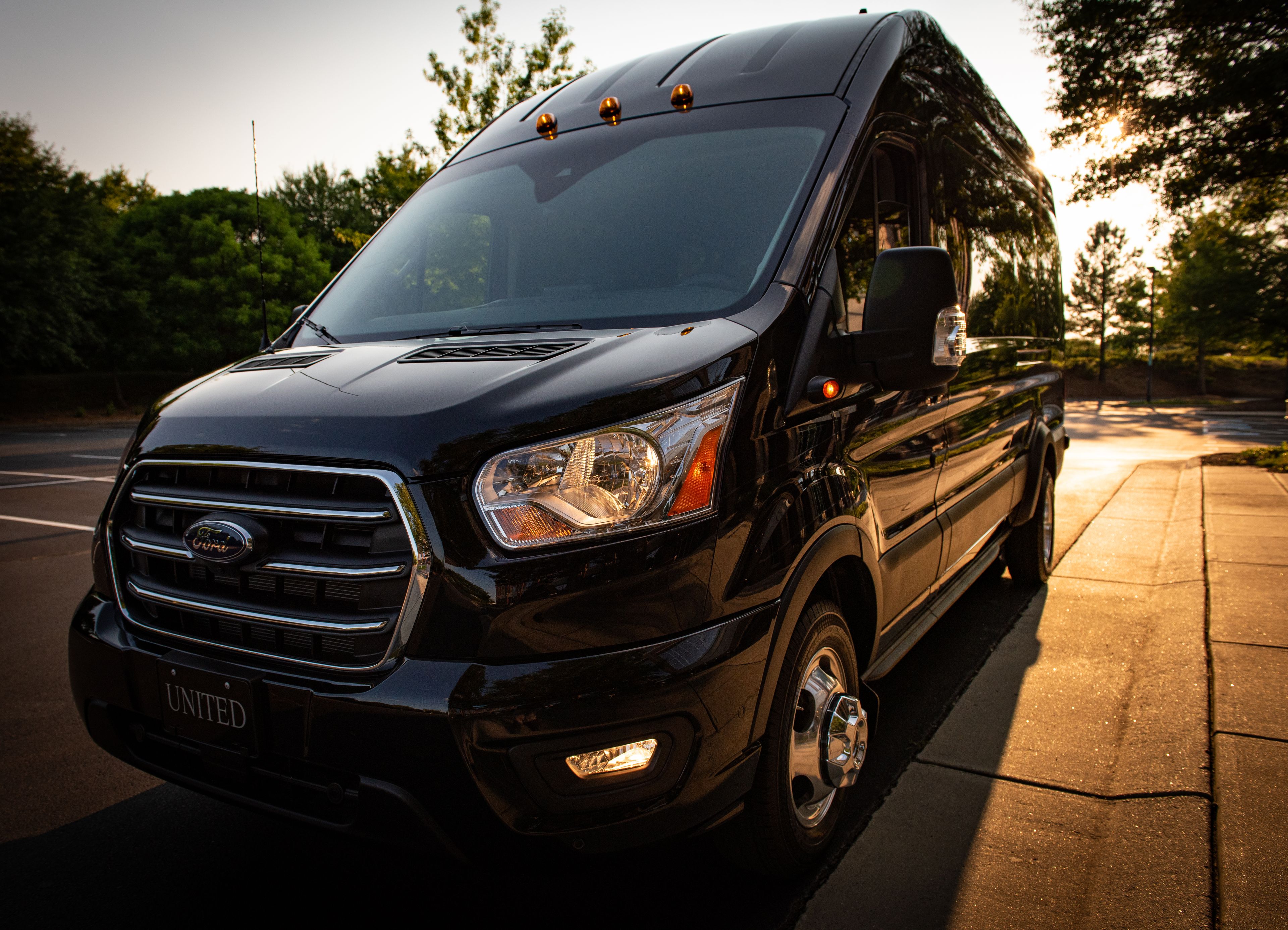
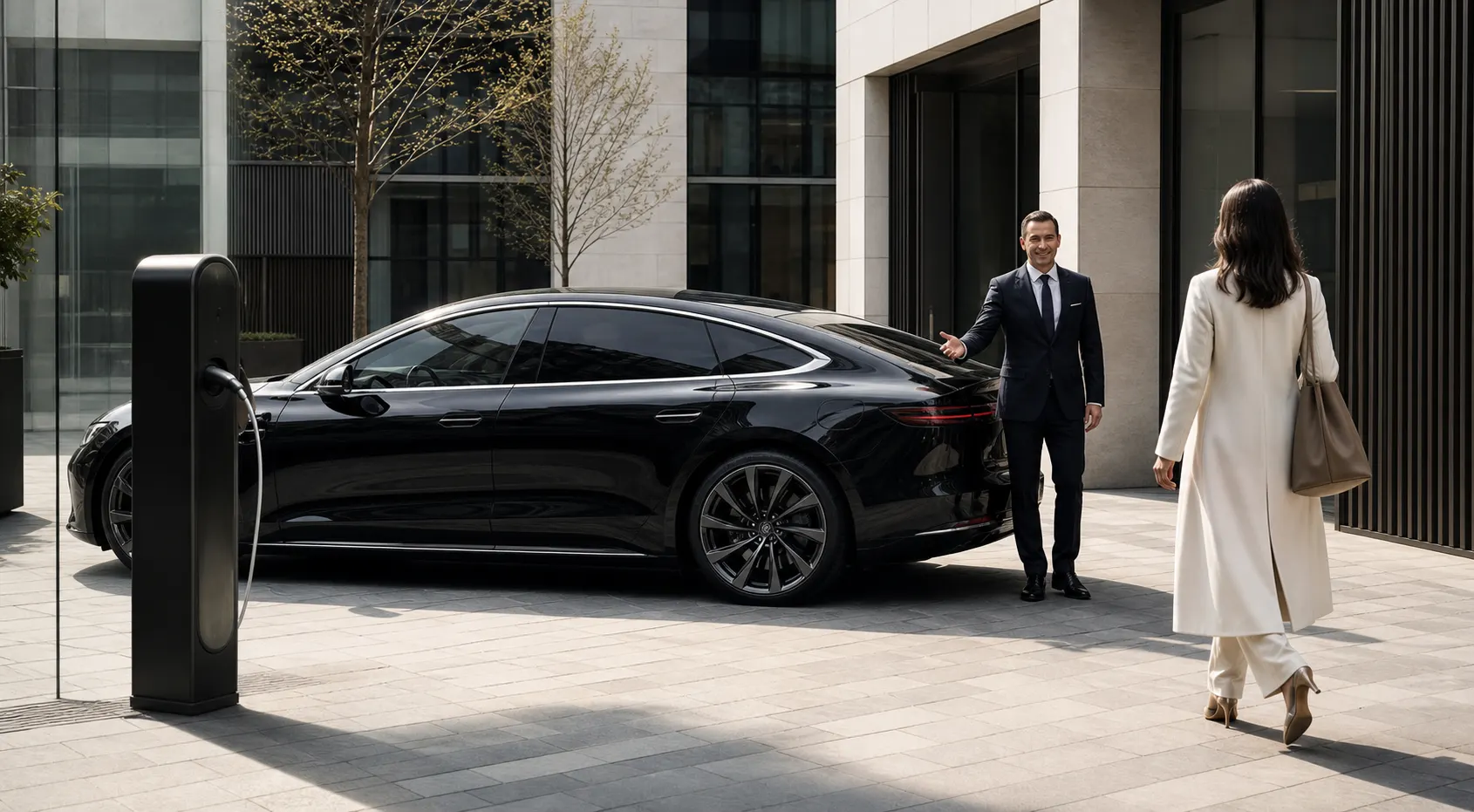
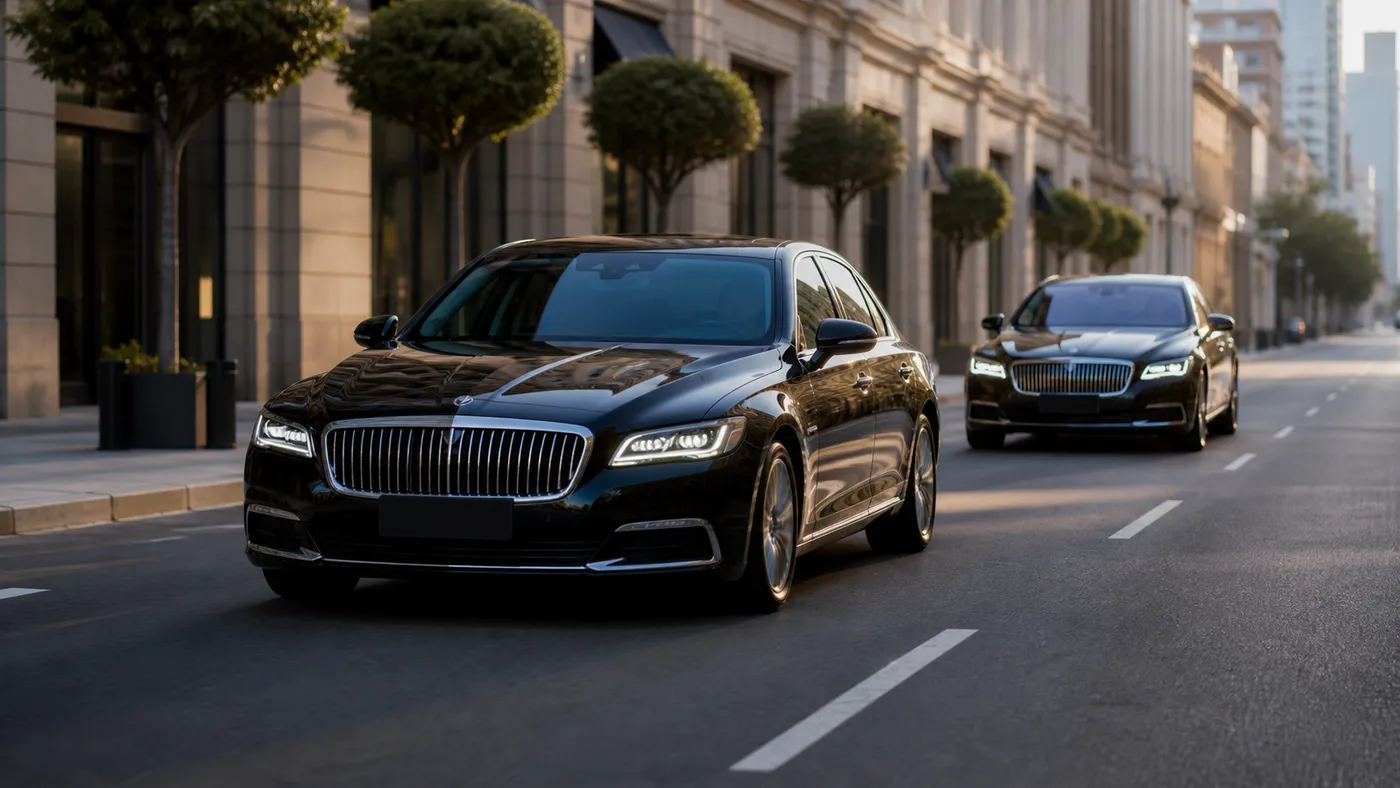
What happens next is straightforward: the chauffeur greets you, takes the luggage and walks you to the car, which will be in a designated short-stay area a few minutes away rather than immediately outside the doors. At most British airports there is no kerbside waiting for pre-booked cars, so a short walk or a lift ride is entirely normal and nothing has gone wrong.
Luggage and the right vehicle
The commonest failure in airport transfers is not timing but capacity. Passenger numbers are easy to guess and case numbers are not, and a saloon that comfortably seats three adults will not also take three large cases and three cabin bags. Discovering that at a kerb at six in the morning helps nobody, and it is entirely avoidable with one short exchange of messages before the day.
The information that actually determines the vehicle is short, specific and worth sending in full. Once we have it, the recommendation follows automatically and the car that turns up is the right one. Everything is confirmed in writing beforehand, including the meeting point, which we restate close to the date because terminal layouts do occasionally change. This is what we need:
- Number of large hold cases, counted individually rather than estimated
- Number of cabin bags, which take real boot space once everyone has one
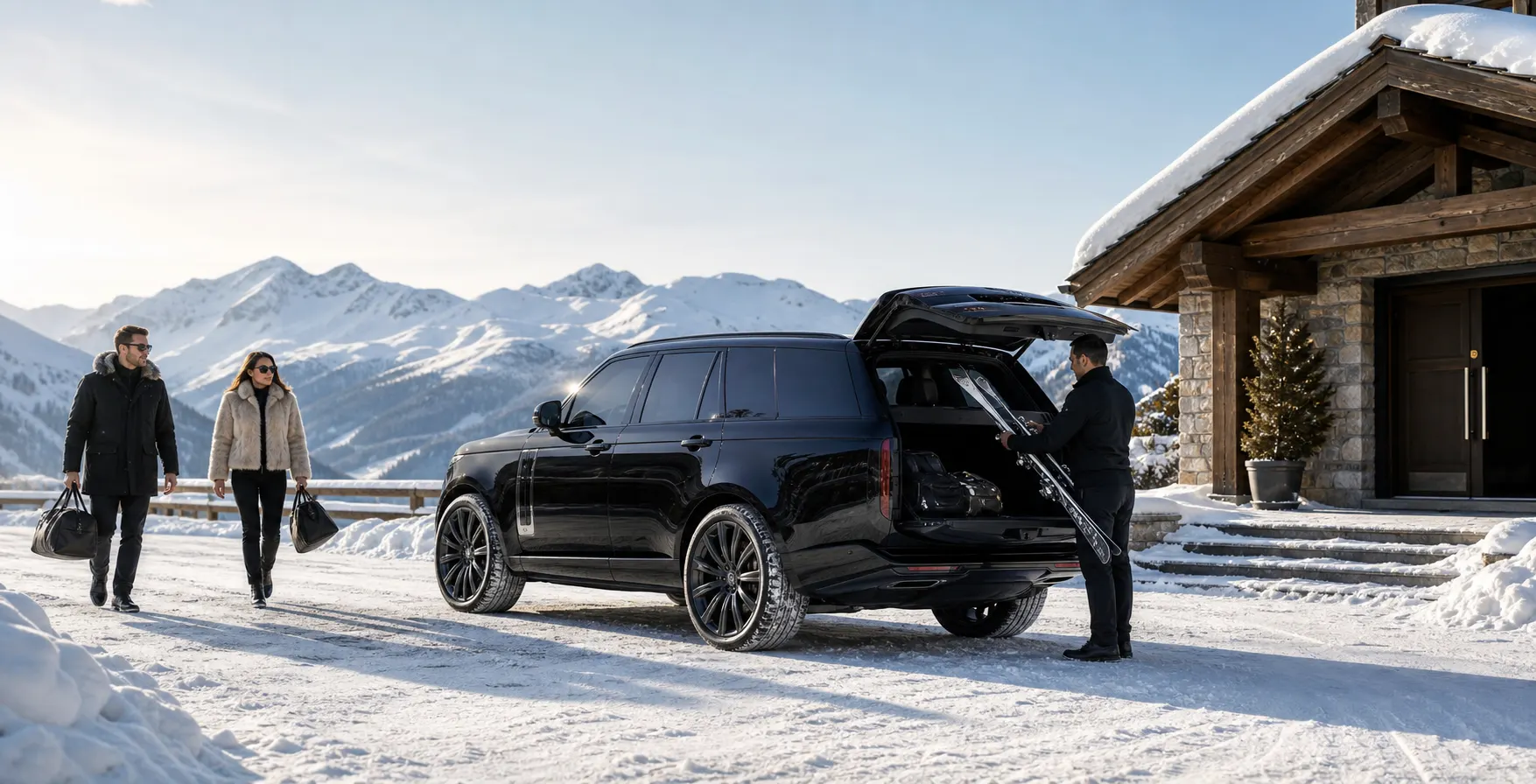
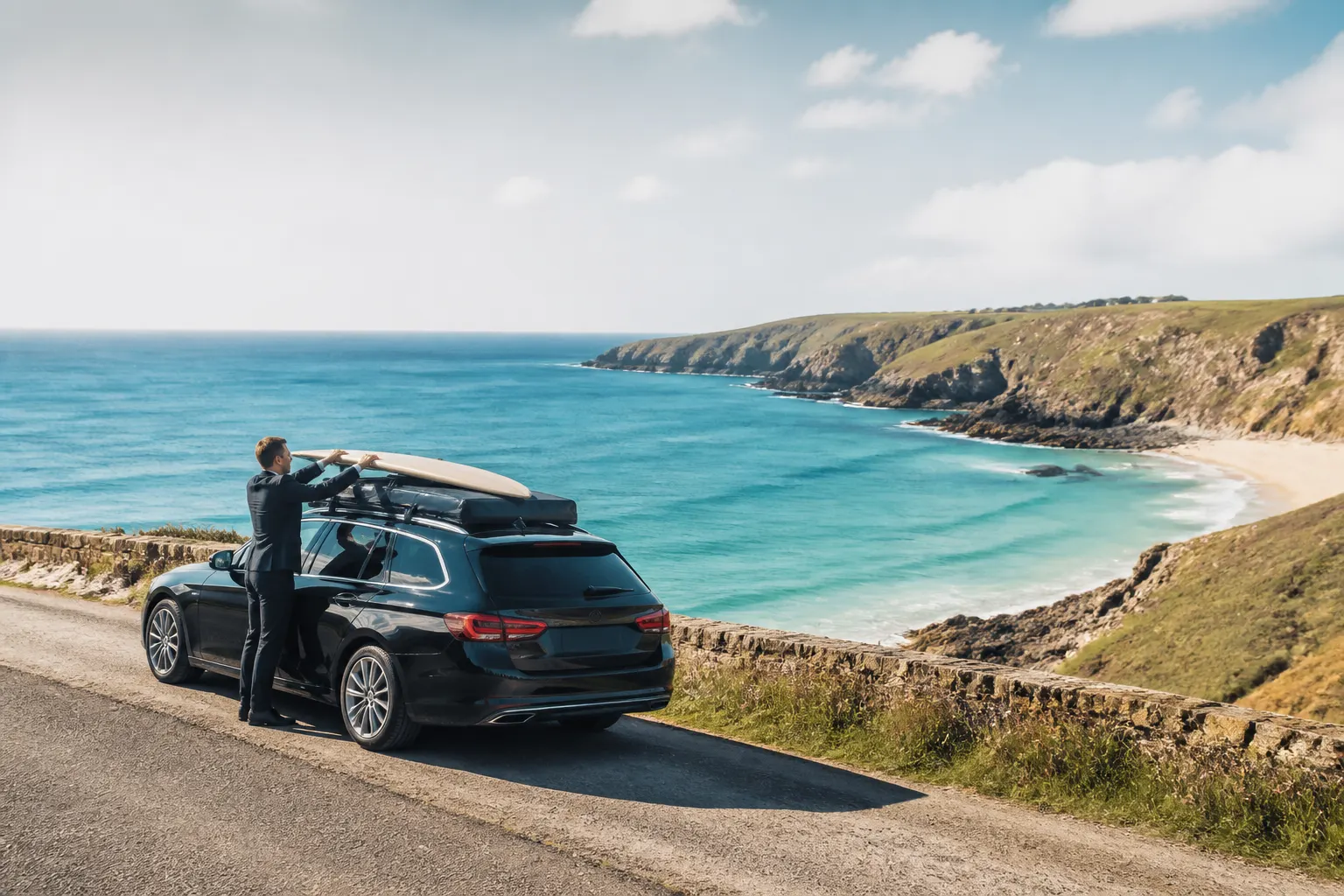
- Any oversized items: golf clubs, skis, pushchairs, instruments, sports kit
- Child seats required, with the age and weight of each child
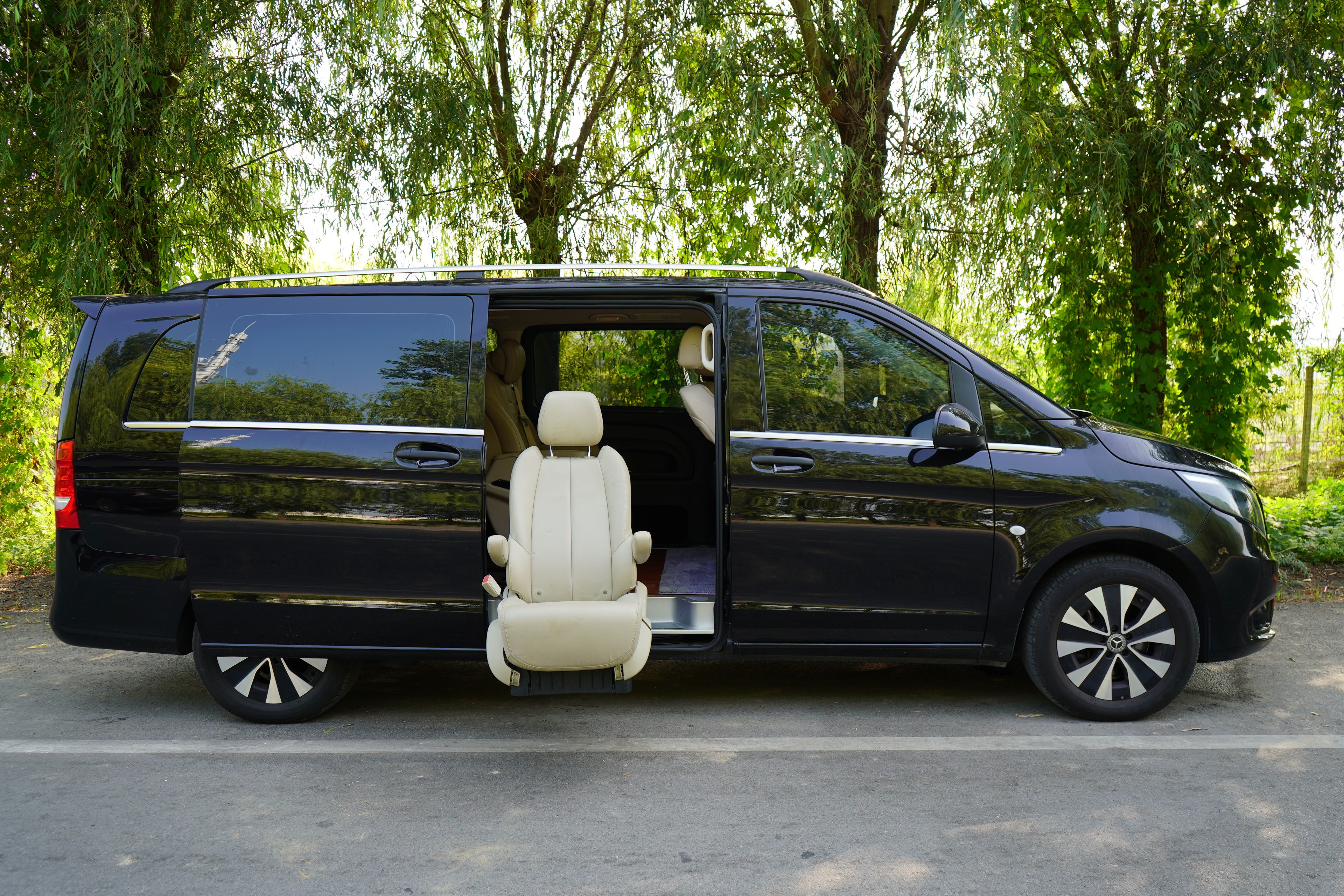
- Whether anyone needs a lower step, a higher seat or a hand getting in
- Whether the luggage is going to a different address from the passengers
The drive away
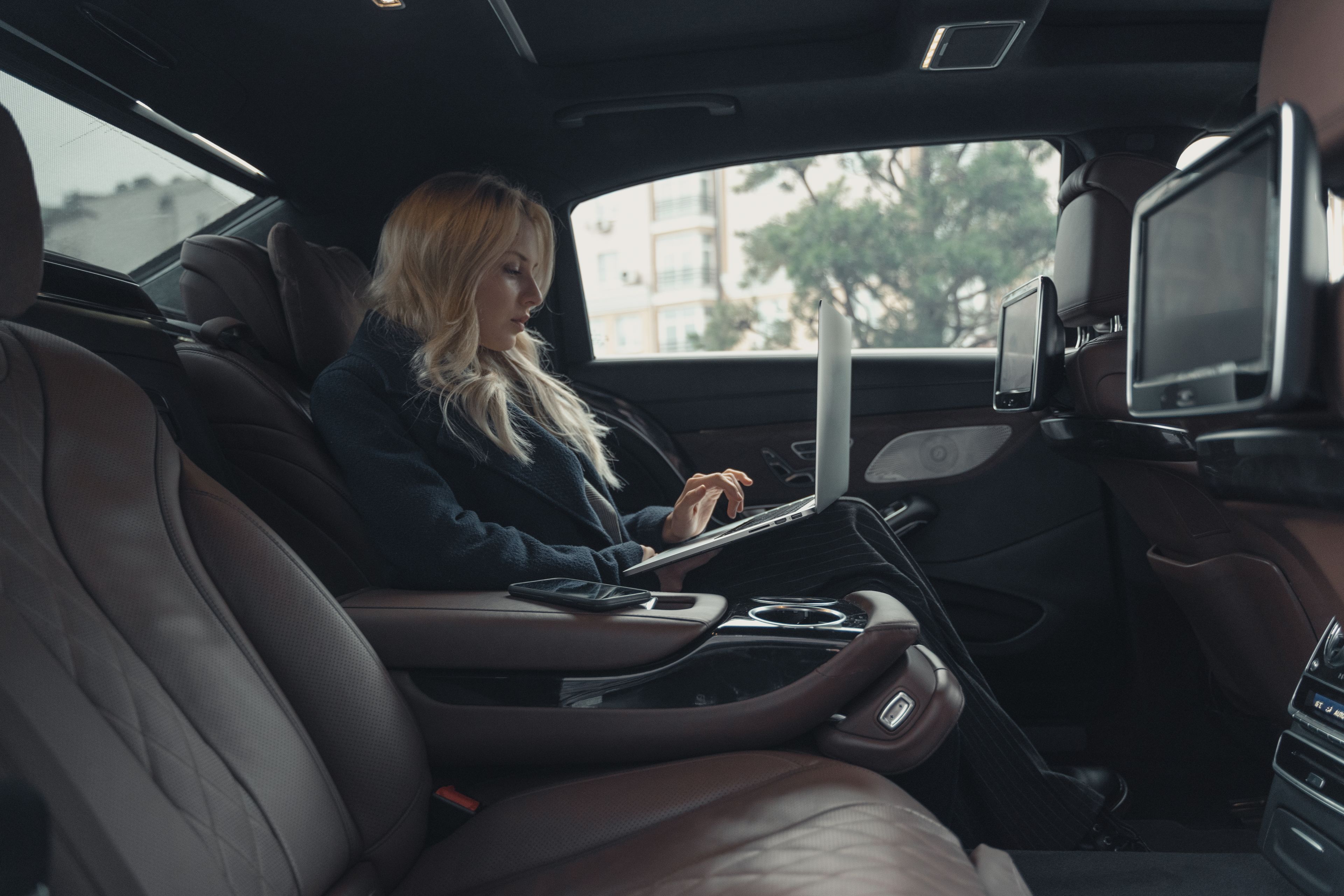
Once you are in the car the difficult part is over, though not necessarily the long part. Roads around the major British airports carry heavy traffic through much of the day, and a transfer into central London can take a good deal longer in the late afternoon than the same journey at dawn. We quote against the hour you are travelling rather than an average, and would rather be honest about that upfront.
There will be still water in the door, the temperature will be set sensibly and adjusted whenever you ask, and the conversation is entirely yours to start or leave alone. If you want a stop for a pharmacy or a coffee on the way in, simply say so. Most first-hour requests are considerably easier to accommodate than visitors tend to assume they will be.
- Say early if you want a stop on the way into the city
- Tell the chauffeur if you would rather sleep than talk
- Mention the hotel entrance you prefer if the building has several
- Ask for the temperature you want rather than enduring the default
- Flag anything fragile so it is stowed rather than stacked
- Message us if plans change while you are still in the terminal