




Attending a wedding in Britain as an overseas guest involves a set of logistics the invitation rarely mentions, because everybody local already knows them. The venue is often deep in the countryside. The day is long, frequently twelve hours or more. It usually ends late, and it ends somewhere with no taxis, no public transport and a car park full of people who have been drinking since lunchtime.
None of that is a problem when it has been planned for. It becomes a problem when guests arrive expecting the transport to be solvable on the day. This covers the shape of a British wedding, what it means for getting to and from the venue, how guests travelling together can share an arrangement, and the details worth confirming with your hosts before you book anything at all.
The shape of a British wedding
The traditional structure is a ceremony in the early afternoon, followed by drinks, a formal meal in the late afternoon or early evening, speeches and then dancing well into the night. Many weddings finish somewhere between late evening and the small hours, and evening guests often arrive partway through, after the meal, which is a British convention that regularly surprises overseas visitors on their first invitation.
The ceremony and the reception are frequently in different places. A church in one village and a reception at a house, hotel or marquee some distance away is entirely normal, which creates a short transfer in the middle of the afternoon that guests must arrange themselves unless the hosts have laid something on. Scottish weddings often include a ceilidh, which tends to extend the evening considerably.
Why the venue is the problem
British wedding venues are disproportionately rural, because the country has a great many beautiful old houses, barns and estates and comparatively few urban alternatives at the right scale. That is lovely, and it is logistically demanding. Many sit at the end of a single-track lane. Some have gravel drives, limited turning space and no lighting of any kind once the sun has gone down, which matters at midnight.
Taxis in rural Britain are scarce, often operate on advance booking only, and on a Saturday night in summer are frequently unavailable at any notice whatsoever. Ride-hailing coverage outside the cities is patchy to non-existent, and rural public transport largely stops in the evening. If the venue is not walkable from your accommodation, the transport has to be arranged in advance, because there is no fallback.
What to confirm before booking
A short conversation with your hosts or the wedding coordinator answers almost everything, and is worth having before you commit to any arrangement at all. Couples generally expect these questions and have already answered them a dozen times, so there is nothing awkward about asking. The answers change which vehicle makes sense, how long it is needed and whether you need one at all.
It is also worth asking whether anything is happening the following day, since a brunch or a walk the morning after is common and turns a single evening into a two-day arrangement. Where guests are spread across more than one town, it helps to know which hotel most of them have chosen, because a shared vehicle is far easier to arrange from a single address. These are the details worth establishing early:
- Whether coaches or shuttles are provided, and from which hotels
- Whether the ceremony and the reception share an address
- The ceremony start time and the expected end of the evening
- Whether the venue allows cars on the drive or requires a set-down point
- Whether accommodation is on site or in a town some distance away
- Whether the dress code involves anything bulky, such as hats
- Whether a second event follows the next morning
Arranging the car around a long day
There are two sensible arrangements. The first is a pair of journeys: out to the venue in the afternoon, back at an agreed time in the evening. This suits guests who know roughly when they intend to leave and are content to commit to it. The return time can usually be adjusted with notice, but the further into the night and the more remote the venue, the less flexible it becomes.
The second is a car held for the day, which suits anyone with a ceremony and reception in different places, guests travelling with children, or a group who would rather not think about it at all. Whichever you choose, be specific about the return, because the commonest mistake is booking an optimistic time and then either leaving early to catch it or standing outside a barn in the dark.
Travelling as a group of guests
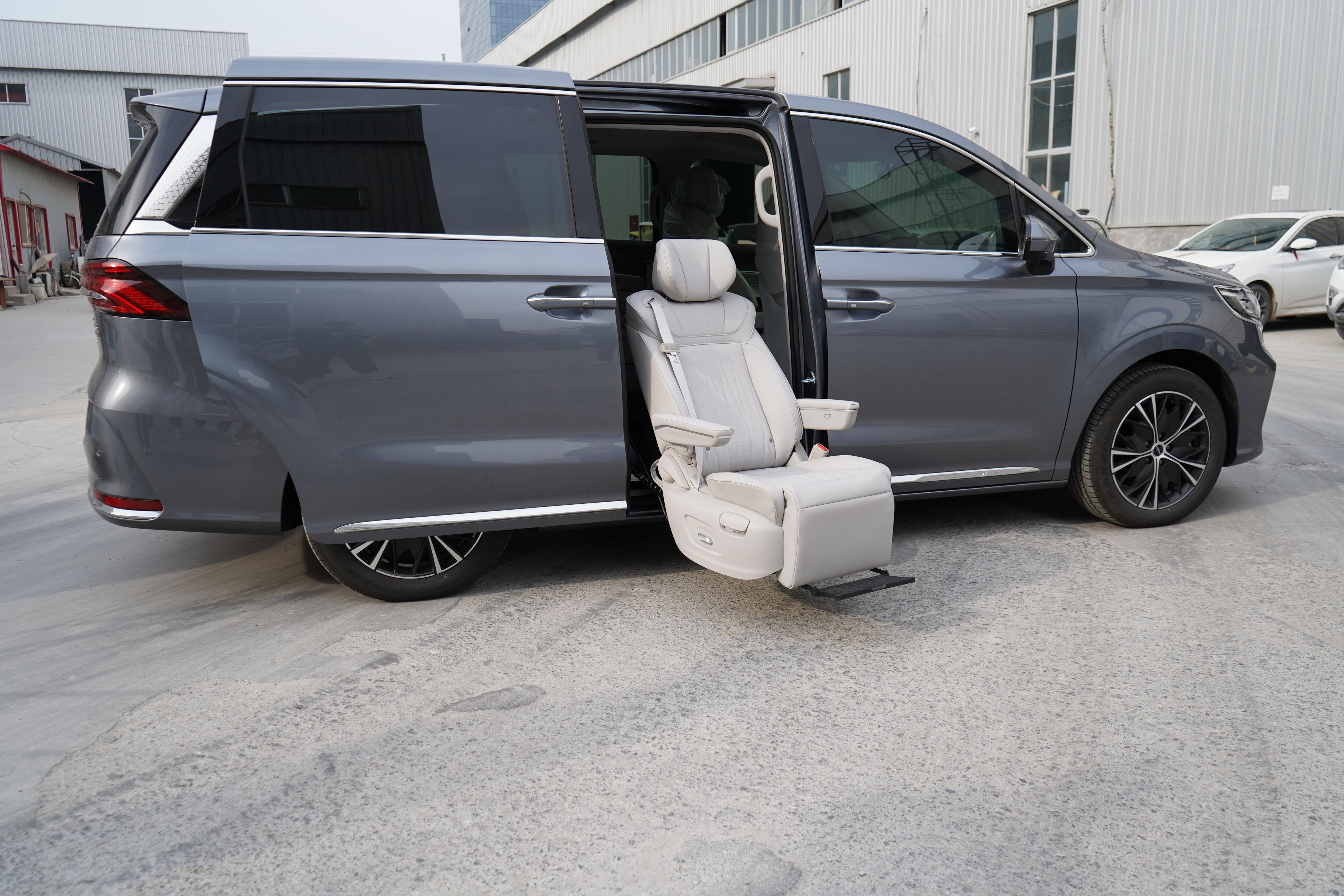
Where several guests are staying at the same hotel, sharing a vehicle is straightforward and considerably more civilised than four separate arrangements leaving at four different times from a lane with nowhere to turn round. A luxury MPV takes a group of six or seven comfortably, and the journey out becomes part of the day rather than a chore to be endured before it starts.
On the way home it matters more, because nobody is driving and everybody arrives back together. For larger contingents of overseas guests, a small fleet arranged as a single booking works well. If children are attending, give us ages and weights so seats are fitted beforehand; a tired child at eleven at night is not the moment to be adjusting a booster at the kerb.
- Group guests by hotel rather than by family when allocating vehicles
- Allow more time than the mapping suggests on a summer Saturday
- Confirm a return time in writing, and treat it as adjustable with notice
- Fit child seats in advance rather than at the venue after dark
- Expect a walk across grass at a marquee, whatever the forecast said
- Send the venue name, not just the postcode, so the approach is checked