




Every country has its own conventions around private cars and the people who drive them, and Britain's are quieter than most. Very little is said out loud, which is pleasant once you know the shape of it and slightly opaque before you do. Visitors often tell us afterwards that they spent the first journey unsure whether they were doing it right, which is a small waste of a comfortable car.
So this is the unwritten part written down. None of it is a rule and nobody will mind if you do it differently, because a good chauffeur adapts to the passenger rather than the other way round. But knowing the defaults means you can stop thinking about them entirely, which is rather the point of the service in the first place, and it takes about five minutes to learn.
Where to sit, and who opens the door
British cars are right-hand drive, so the chauffeur sits on the right and the seat diagonally behind them, on the near side, is the traditional passenger position. It is the easiest seat to reach from a kerb and usually the one with the most legroom. If you are travelling alone, that is where you will be shown. If there are two of you, the rear bench is yours and it makes no difference at all which way round you sit.
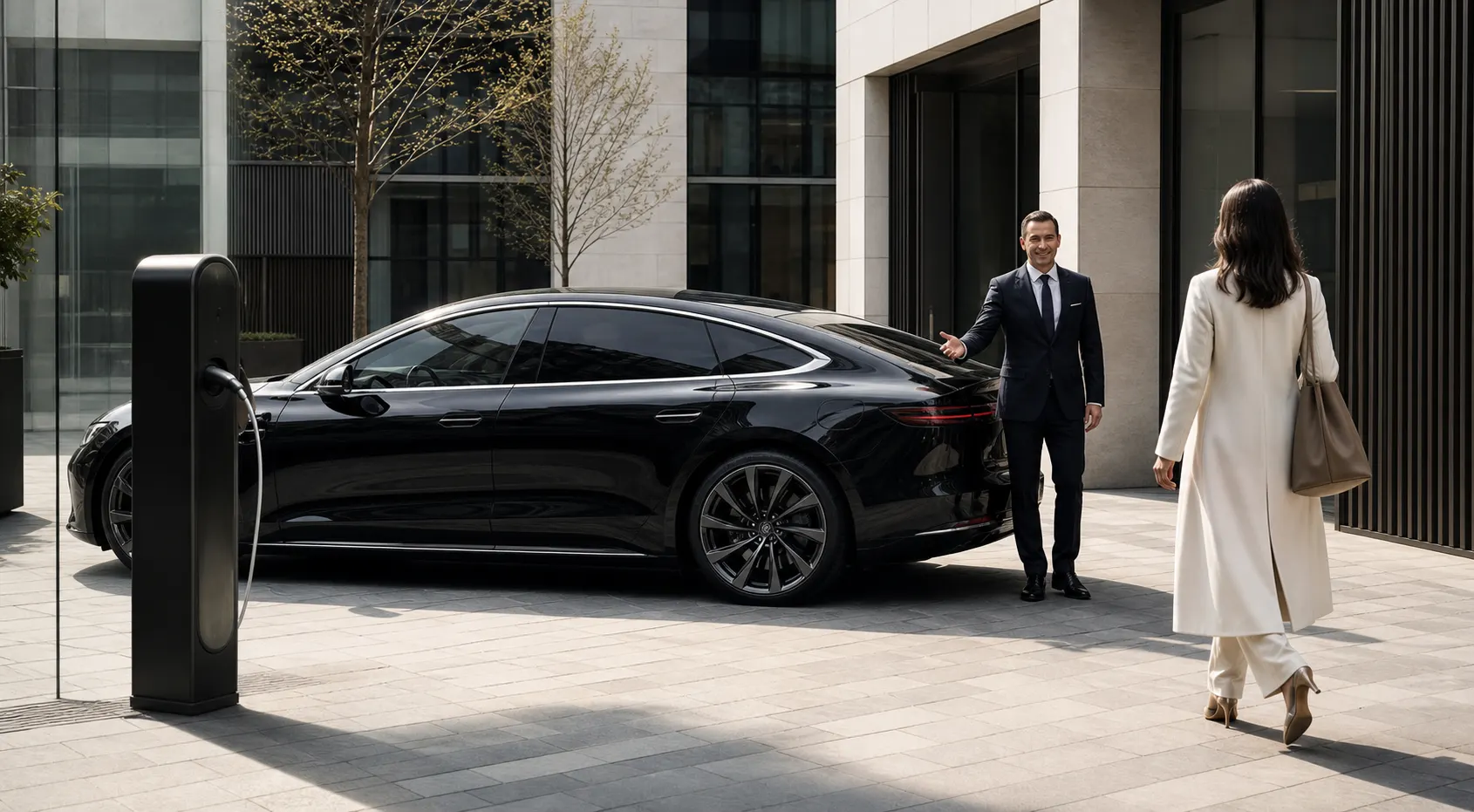
The chauffeur opens the door for you and closes it behind you, at collection and at every stop along the way. It is not a performance, and there is no need to hurry or apologise for it. Getting out, wait a moment rather than reaching for the handle, because on a busy street the chauffeur is also checking that it is safe to open on the traffic side. Sitting in the front is unusual here but perfectly fine if you say so.
Conversation, and the absence of it
The default in Britain is a warm greeting, a brief confirmation of the route and destination, and then quiet unless you open a conversation yourself. This is not coldness. A professional chauffeur is trained to read within the first half minute whether you want to talk, and to leave the choice entirely with you. Silence in the car here is companionable rather than awkward, and you are under no obligation whatsoever to fill it.
If you do want conversation it will be met, and chauffeurs who work London and the shires daily are often excellent on where to eat, which entrance to use and how long something will genuinely take. If you would rather work, sleep or take a call, that is equally normal and needs no explanation. Discretion is assumed rather than promised: what is said in the car stays there, and you should not have to ask for that.

The small things a chauffeur handles
A good deal of British chauffeur etiquette runs in the other direction, and consists of things quietly taken care of without ever being mentioned. Knowing what falls inside that means you can leave it alone rather than doing it yourself, which is where visitors most often create unnecessary work for themselves. Nothing on the following list needs asking for, and none of it will be announced when it happens.
The point of all of it is that the transport should be the part of the day you think about least. If at the end of an evening you cannot quite remember the journey home, the arrangement has worked exactly as intended. No single item below is dramatic on its own, and taken together they are the reason an unfamiliar city stops feeling like an obstacle course. These are the elements involved:
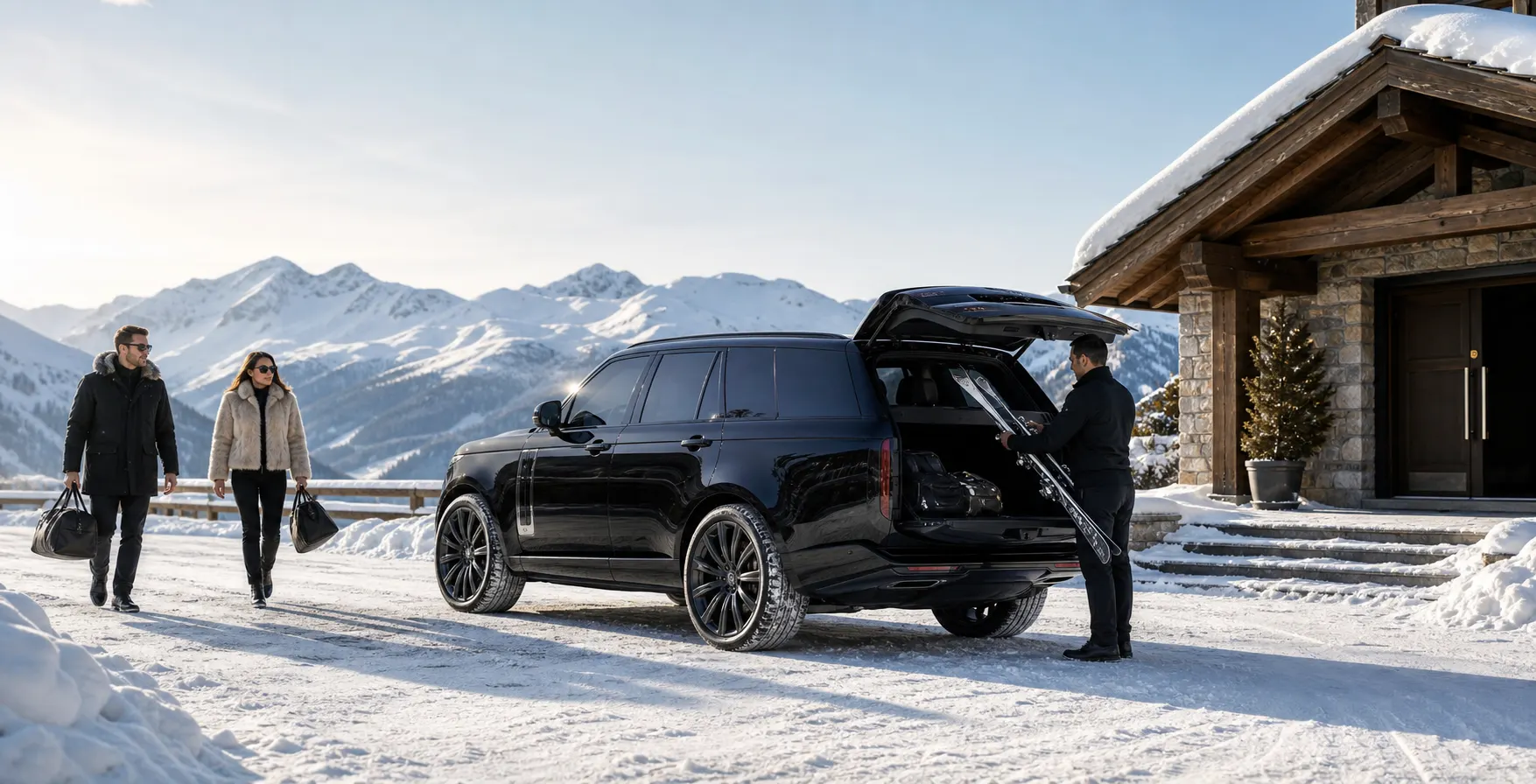
- Luggage into and out of the boot, at both ends of every journey
- Cabin temperature, set sensibly by default and adjusted whenever you ask
- Still water in the door pockets, replaced between journeys rather than topped up
- Parking, waiting and set-down logistics at each destination on the day
- Positioning the car so you step out onto the pavement rather than the road
- Route decisions, including diversions when the road ahead has closed
What to say, and when to say it
The most useful thing a passenger can do is flag changes early. If a meeting is running long, if you want to add a stop, if you would rather go straight back to the hotel than on to dinner, say so as soon as you know. A chauffeur can absorb almost anything with a little notice and very little without it, particularly in a city where the car may be waiting several streets away from where you are standing.
It is equally fine to ask for things, and British reserve leaves visitors under-asking more often than over-asking. A different temperature, a window open, the radio off, a slower pace on a winding road, a pharmacy on the way: none of these are impositions. A chauffeur would far rather be asked than have you sit quietly uncomfortable for an hour, which happens more than it should. The following are all worth mentioning:
- A change to the timing, as early as you know about it
- An extra stop, even a brief one, so the route can be adjusted
- Anything fragile or valuable travelling in the boot
- A preference for quiet, or for the radio and conversation
- Any discomfort at all with temperature, pace or seating position
- Where exactly you want to be set down at an unfamiliar address
On tipping, honestly
This is the question visitors ask most, and the honest British answer is that tipping a chauffeur is not expected. It is not built into the arrangement, nobody is watching for it, and declining carries no meaning at all. Whether you offer anything is completely at your discretion, and we deliberately do not suggest what that might look like, because naming anything would create precisely the expectation that does not exist here.
The wider British picture is gentler than in some countries. Restaurants often add a discretionary service charge to the bill, in which case nothing further is expected of you. Bars generally have no tipping culture at all. What does carry weight is a note afterwards saying the chauffeur handled a change of plan well; recognition of that kind is often more useful to them than anything else a passenger can offer.