







There is no single correct answer, and any company giving you one for every flight is not really answering. The collection time for a Heathrow departure is built from four things: what your airline asks of you, which terminal you are using, where you are starting from, and what the roads on that route tend to do at that particular hour on that particular day.
The method below is the one we use to set a time, and it is worth understanding even if somebody else is driving. Working backwards from the departure produces a much better answer than adding a fixed margin to a guess, and it is the difference between arriving composed and arriving at a jog with a bag in each hand.
Start with the airline, not the road
Every airline publishes its own guidance on how long before departure you should be at the airport, and it differs by carrier, by cabin, by terminal and by whether you are flying short-haul or long-haul. Bag drop and gate closing times are separate matters again and are set by the airline rather than by the airport. We confirm the window that applies to your specific flight when we quote, instead of applying one figure to everybody.
That published window is the fixed point. Everything else in the calculation hangs off it. Once we know what time you want to be standing in the terminal, the question becomes how long the drive takes at that hour, and how much slack a sensible person would add on top of it.
How the terminal changes the arithmetic
Terminal 5 sits at the western end of the airport, close to the M25, and is usually the quickest to reach from the west and the south. Terminals 2 and 3 are in the Central Terminal Area and are reached through the tunnel under the runways, which is generally straightforward but becomes a single point of congestion when it is busy. Terminal 4 is on the south side and is approached separately, so it deserves an extra allowance if you are coming from the north or the west.
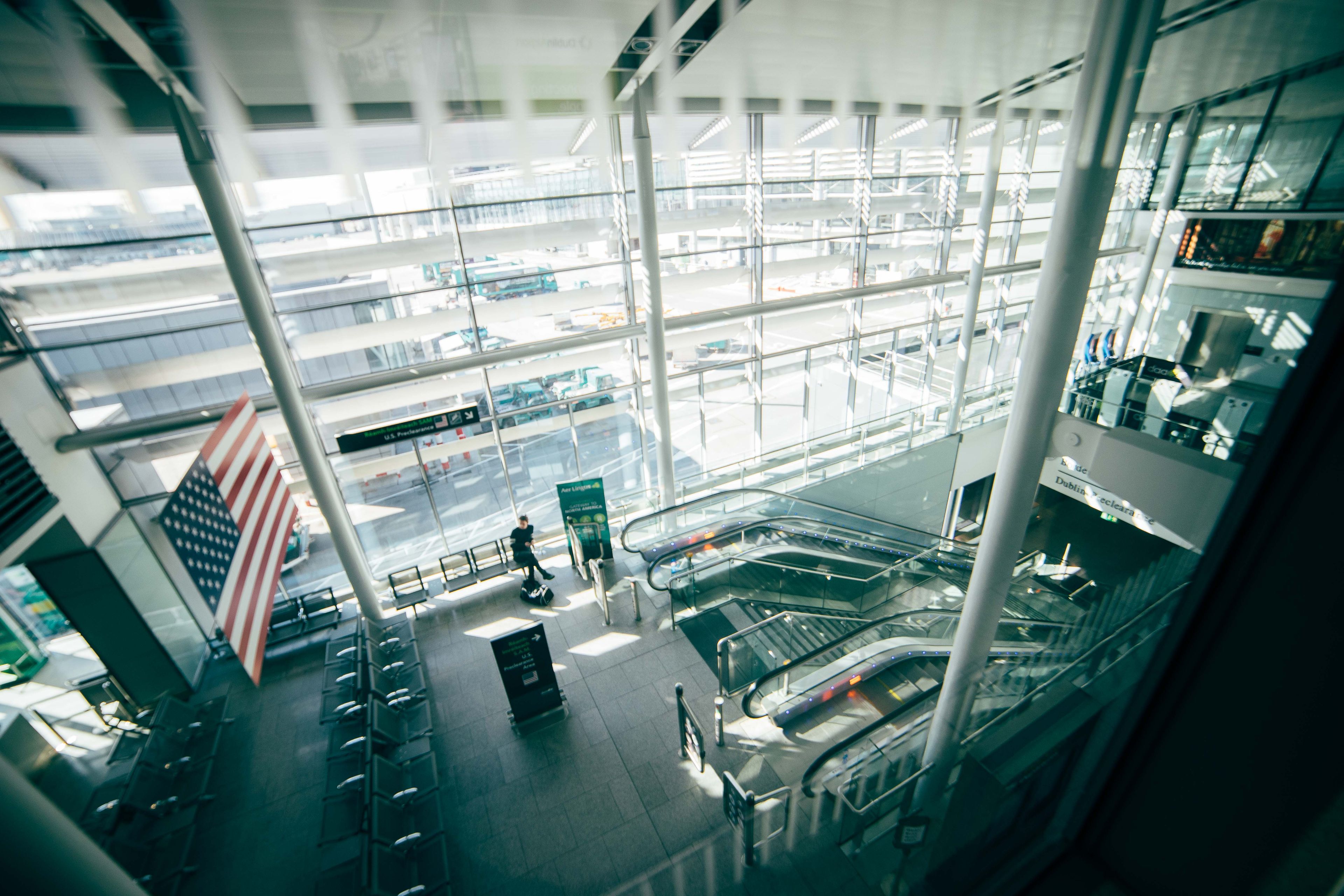
The other terminal effect is inside the building. Terminals 5 and 2 are large, and the walk from a drop-off point to a bag drop desk to a departure gate is not trivial. If you are travelling with children, with someone who walks slowly, or with more luggage than you can comfortably manage in one go, that internal time deserves a genuine allowance rather than an optimistic one.
The road, hour by hour
From central London the run to Heathrow typically takes somewhere between forty-five minutes and an hour and a quarter depending on traffic, though the honest range is wider than that at both ends. Before about six in the morning the roads are close to empty and the drive can be quick. Between roughly seven and half past nine on a weekday, the M4 and the A4 slow considerably, and a delay on either has very few useful alternatives.
Friday afternoons are their own category. The westbound exodus builds from early afternoon and the M4 and M25 can both be heavy well into the evening. Saturday mornings are usually kind. Sunday evenings are less predictable than people expect, because the M25 carries a great deal of returning weekend traffic. Roadworks on the M4 corridor and closures on the M25 between junctions 14 and 15 are the two events that reshape a journey most often.
None of this is a reason to leave absurdly early. It is a reason to set the time for the actual hour you are travelling. A collection at half past four in the morning and a collection at half past four in the afternoon are entirely different journeys to the same building, and treating them as the same is how people miss flights.
A worked example
Take a long-haul departure from Terminal 5 at eleven in the morning, starting from Mayfair, on a weekday. The airline window puts you in the terminal at a set time. The drive at that hour is realistically an hour or a little more. Add the walk from drop-off to bag drop, add a margin for the tunnel or an incident on the A4, and a collection somewhere in the region of two and a half hours before departure starts to look sensible rather than cautious.
Change one variable and the answer moves. The same flight with cabin baggage only and a boarding pass on your phone needs less inside the terminal. The same flight leaving from Kensington rather than Mayfair saves a little on the road. The same flight at six in the morning needs less road time but more of a buffer for the unfamiliar hour. This is why we ask about the shape of the day rather than only the flight time.
- Airline arrival window for that flight and cabin, confirmed at booking
- Terminal, and the walk inside it to bag drop and security
- Realistic drive time for the day and hour, not the best case
- Hold luggage or cabin only, and how many bags in total
- Any stop on the way, such as collecting a second passenger
- A margin for the one thing that will inevitably go wrong
What we do on the morning itself
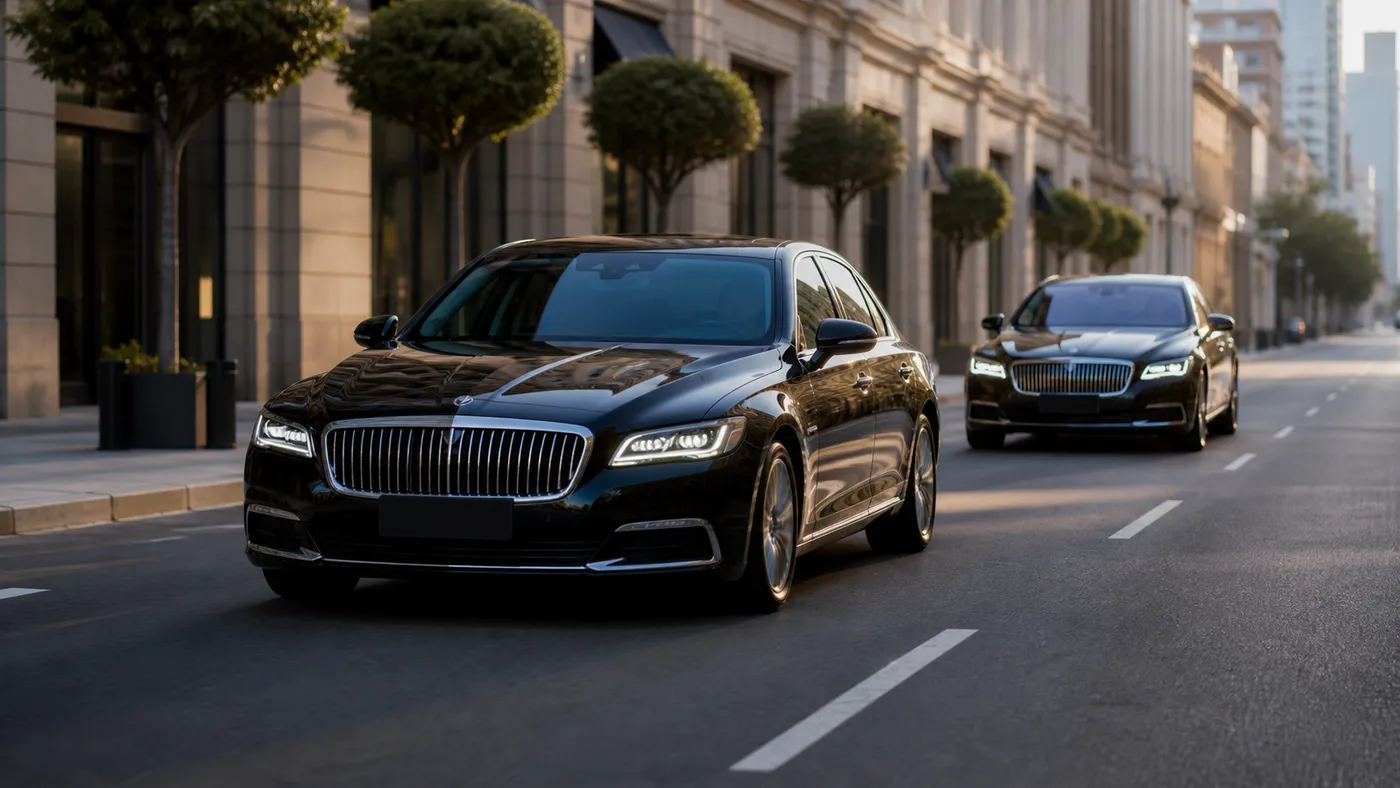
Your chauffeur arrives before the agreed time rather than at it, so the clock starts when you are ready rather than when the car appears. The route is checked that morning for closures and incidents, and if the sensible approach to your terminal has changed overnight, it changes without you needing to be consulted about it. Luggage goes into the boot while you get settled.
Vehicles come from our own cars and from a vetted network of professional chauffeur operators, which is how we cover very early departures across a wide area without thinning the standard. Whichever car is allocated, it is held for your booking alone, and you will know the chauffeur and the vehicle in advance rather than on the day.
Common mistakes worth avoiding
The most frequent is planning from the fastest drive anyone has ever managed on that route, usually at two in the morning, and treating it as normal. The second is forgetting that a family of four with six cases moves at a very different pace through a terminal than one traveller with a cabin bag. The third is booking the collection from an address you will not actually be at, which happens more often than you would think.
The last is quietly the worst: leaving no room at all, so that a single closed lane converts a comfortable morning into a scramble. A margin costs you a cup of coffee in the terminal. Not having one costs you the flight. We would always rather suggest the earlier time and be wrong about it.