


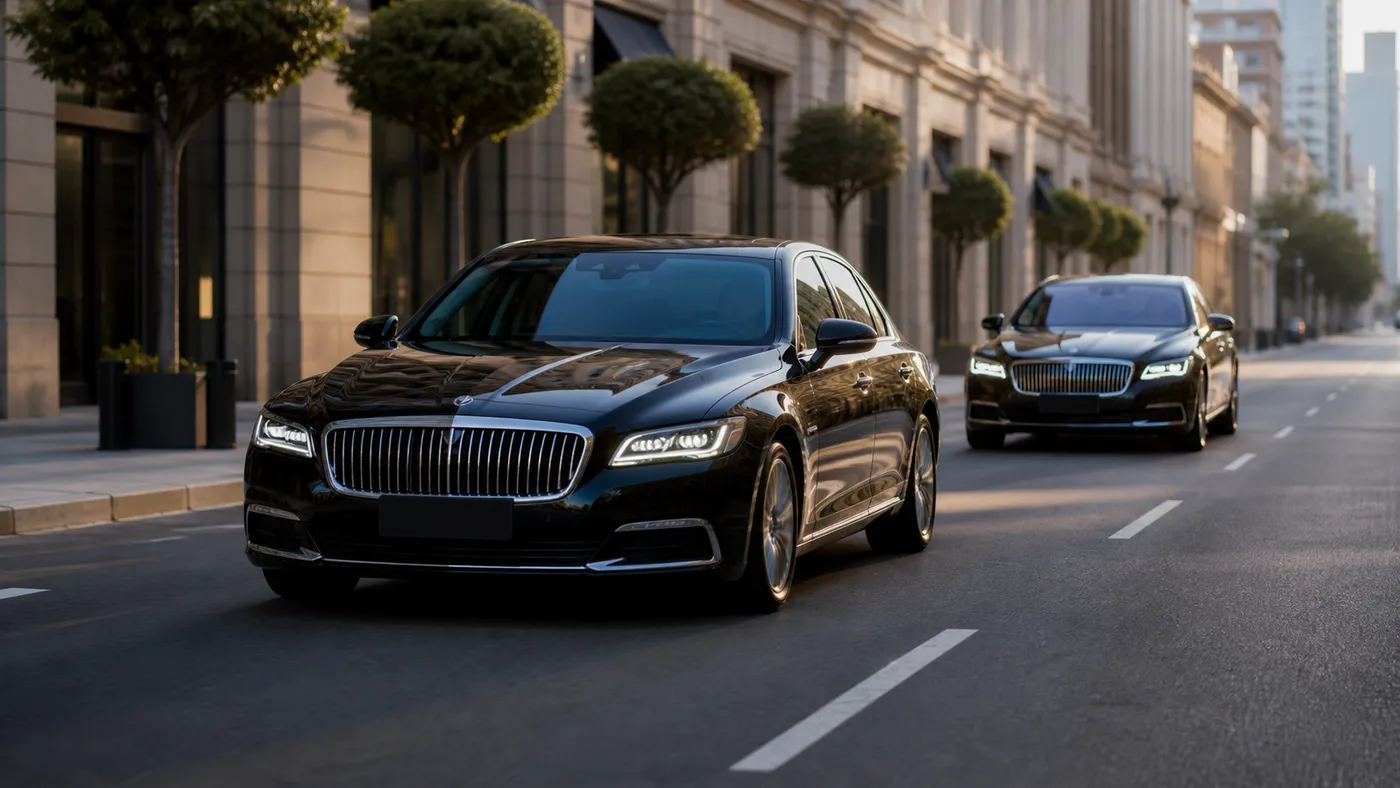


Luggage is the detail that most often goes wrong in chauffeur travel, and it goes wrong at the worst possible moment: on a pavement, in the dark, with a flight to catch. Passenger numbers are easy to state accurately. Case numbers get rounded down, holdalls get forgotten, and the golf bag standing in the hall is remembered somewhere around the front door.
This page sets out what an E-Class boot will genuinely swallow, using the sizes of suitcase people actually own rather than a capacity figure that means nothing when you are standing next to a loaded trolley. It also covers the shapes that defeat it, because a boot is not a bucket and volume tells only half the story.
Starting with what a case means
Luggage advice is useless without agreed terms, so these are the ones we use when recommending a vehicle. They map onto what the airlines and the major luggage brands sell, and onto what our chauffeurs load every day of the week.
- Large case: a checked suitcase around 75 to 80cm tall, the biggest most people own
- Medium case: around 65 to 70cm, roughly a week away for one person
- Cabin case: the hard-shell wheeled bag sized for an overhead locker
- Holdall: soft, compressible and far easier to place than any hard case
- Suit carrier: flat, light, and best laid over the top of everything else
- Rucksack or laptop bag: travels in the rear compartment with you, not the boot
The realistic capacity
Two large cases and two cabin bags is the figure we work to, and it is one we can honour rather than one requiring a talented chauffeur and a firm shove. Three medium cases and two cabin bags also fits, and is a common shape for a couple away for a fortnight. Add a suit carrier laid flat over the top and there is still room to close the lid without leaning on it.
Where it tips over is the third large case. The boot floor is long rather than deep, so cases lie flat and side by side instead of standing upright, and the third has nowhere to go except the rear seat. If somebody is sitting there, it does not go anywhere at all. That is the sentence that most often ends with a second vehicle being arranged at five in the morning.
How the boot is shaped
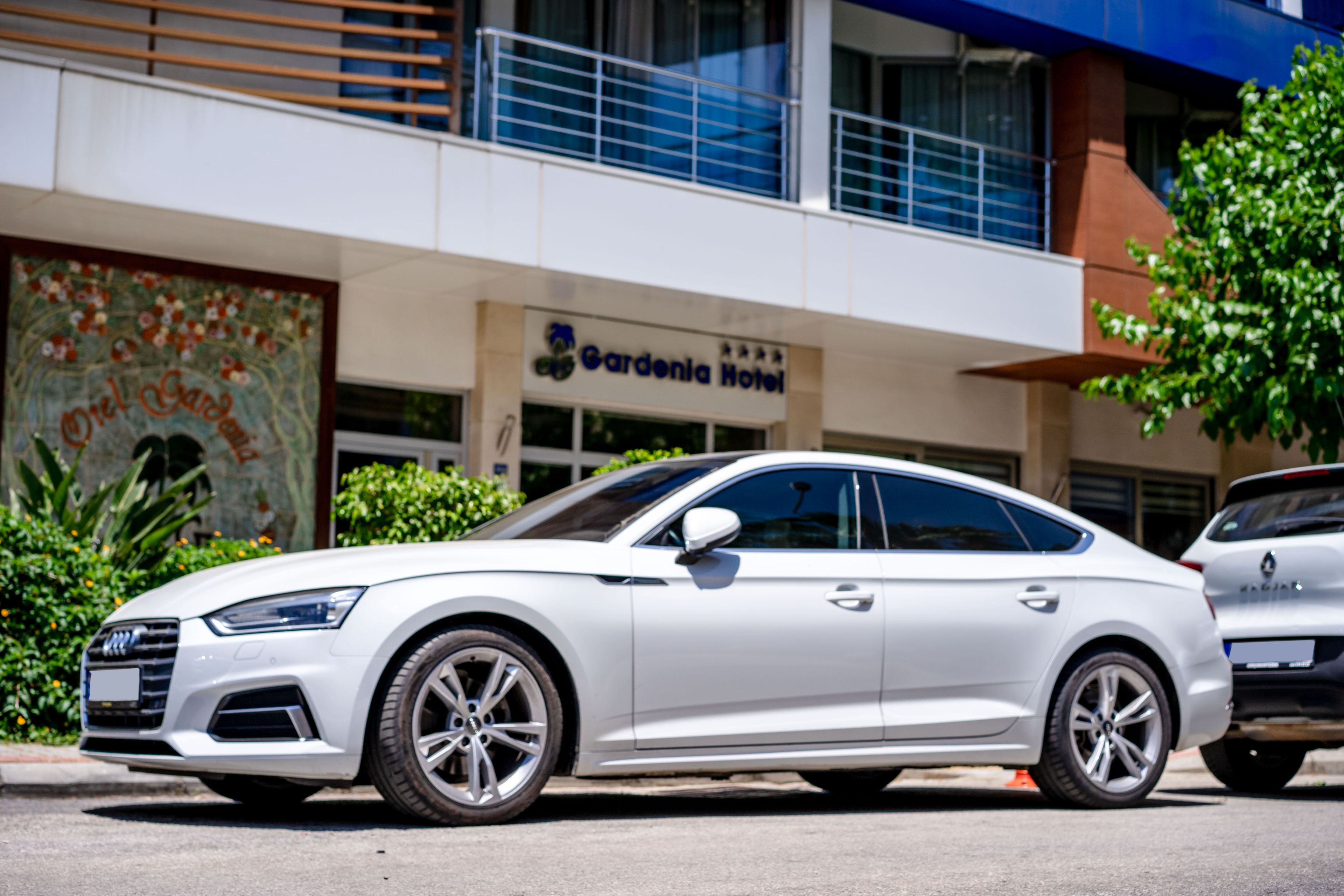
The opening is wide and the loading lip sits at a sensible height, so cases lift in without drama and nobody has to hoist a suitcase shoulder-high. The floor runs a long way forward under the parcel shelf, which is where the second and third cabin bags disappear to. What the space lacks is height, so a tall rigid item cannot simply be stood on its end.
One variation is worth knowing about. Plug-in hybrid versions carry a battery pack that raises part of the boot floor, which costs real space at the back of the load bay. It rarely changes the case count on its own, but it removes the margin you would otherwise have. If your luggage plan is already tight, tell us and we will make sure the car assigned is not a hybrid.
Combinations that work
These load-outs we see constantly and know to be fine. Anything beyond them deserves a message a day or two ahead rather than a discussion on the pavement while the engine runs.
- Two passengers, two large cases, two cabin bags: comfortable
- Two passengers, three medium cases, one holdall: comfortable
- One passenger, one large case, one cabin bag, one suit carrier: easy
- Two passengers, four cabin cases: easy, with room left over
- Three passengers, two cabin cases and no checked bags: fine for a short run
- Two passengers, one large case, one folded pushchair: usually fine, ask first
What catches people out
The awkward items are rarely suitcases. They are the things that are long, rigid or oddly shaped, and they defeat a saloon boot regardless of how much space is theoretically left in it. A golf bag will not go in an E-Class without folding a rear seat, and skis will not go in at all.
- Golf clubs, which need a folded rear seat or a different vehicle entirely
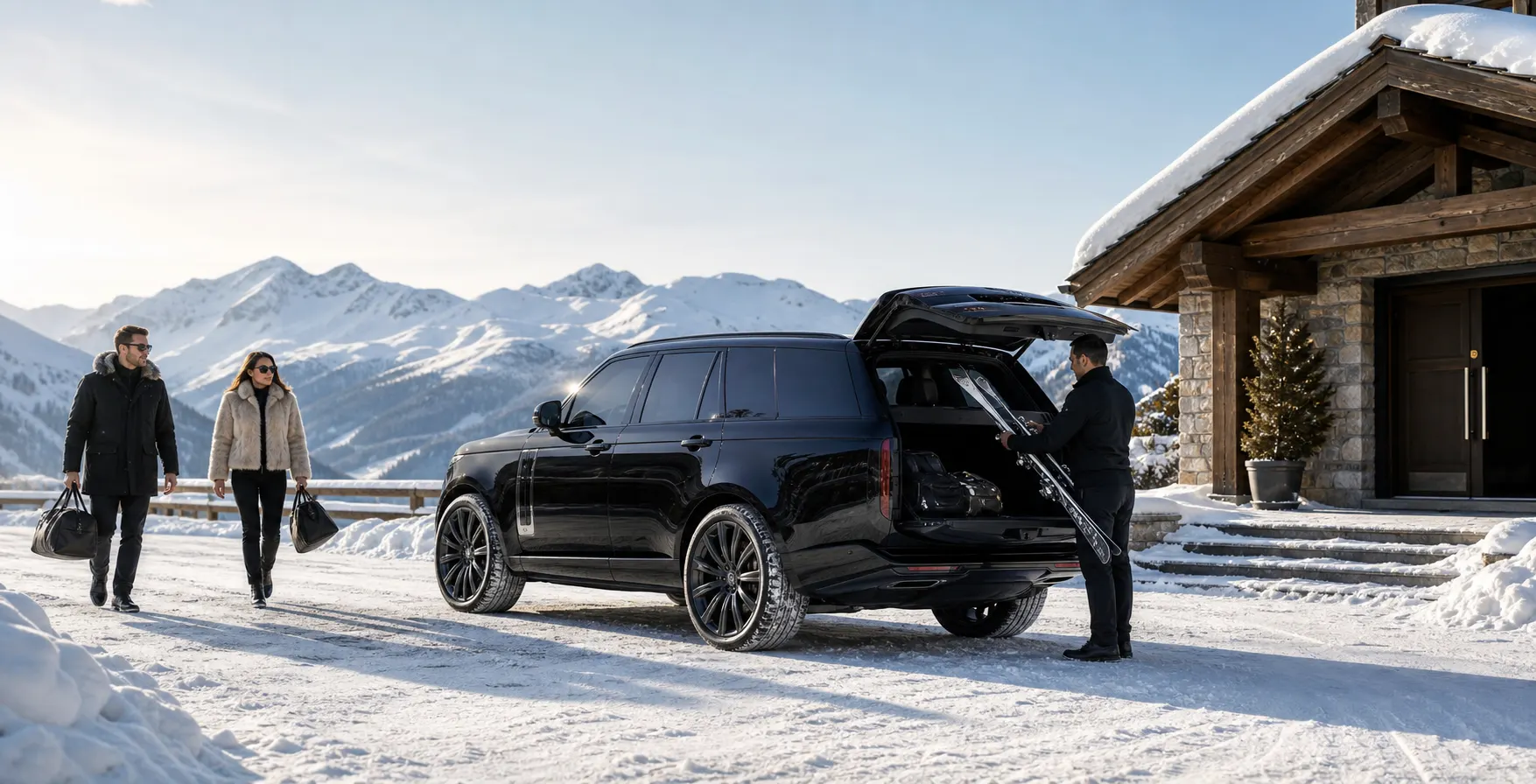
- Skis and snowboards, which do not fit in any saloon of this size
- Rigid travel cots and larger pushchairs, which need measuring folded
- Musical instruments in hard cases, particularly cellos and guitars
- Display materials, banners and pop-up stands for exhibitions
- Boxed purchases from a day of shopping, which nobody mentions when booking
Telling us before the day
When you enquire, count the large cases first and everything else second. That one number decides the vehicle more reliably than the passenger count does, and it takes a few seconds to check. If the answer is three or more large cases with three people, we will recommend a luxury MPV, which is usually the better arrangement as well as the simpler one compared with running two cars in convoy.
Our vehicles come from our own fleet and from a vetted network of professional chauffeur operators, and boot dimensions vary slightly with model year and specification. We confirm a class of vehicle at booking rather than promising a specific car, so if your load sits close to the limit, say so and we will build the margin in for you.