





Vehicle classes in chauffeur travel are a shorthand. Rather than promising one particular registration, an operator describes a category - a size, a level of finish, a passenger capacity - and supplies a car that meets it. The executive saloon sits at the foot of that ladder, and it quietly does far more of the work than its position suggests.
It is worth understanding properly, because the class is where most quotations begin. If an executive saloon suits the journey, everything above it becomes a matter of preference rather than necessity. If it does not - and the reason is almost always luggage rather than passengers - that is a conversation to have at the point of booking, not at the kerb.
What defines the class
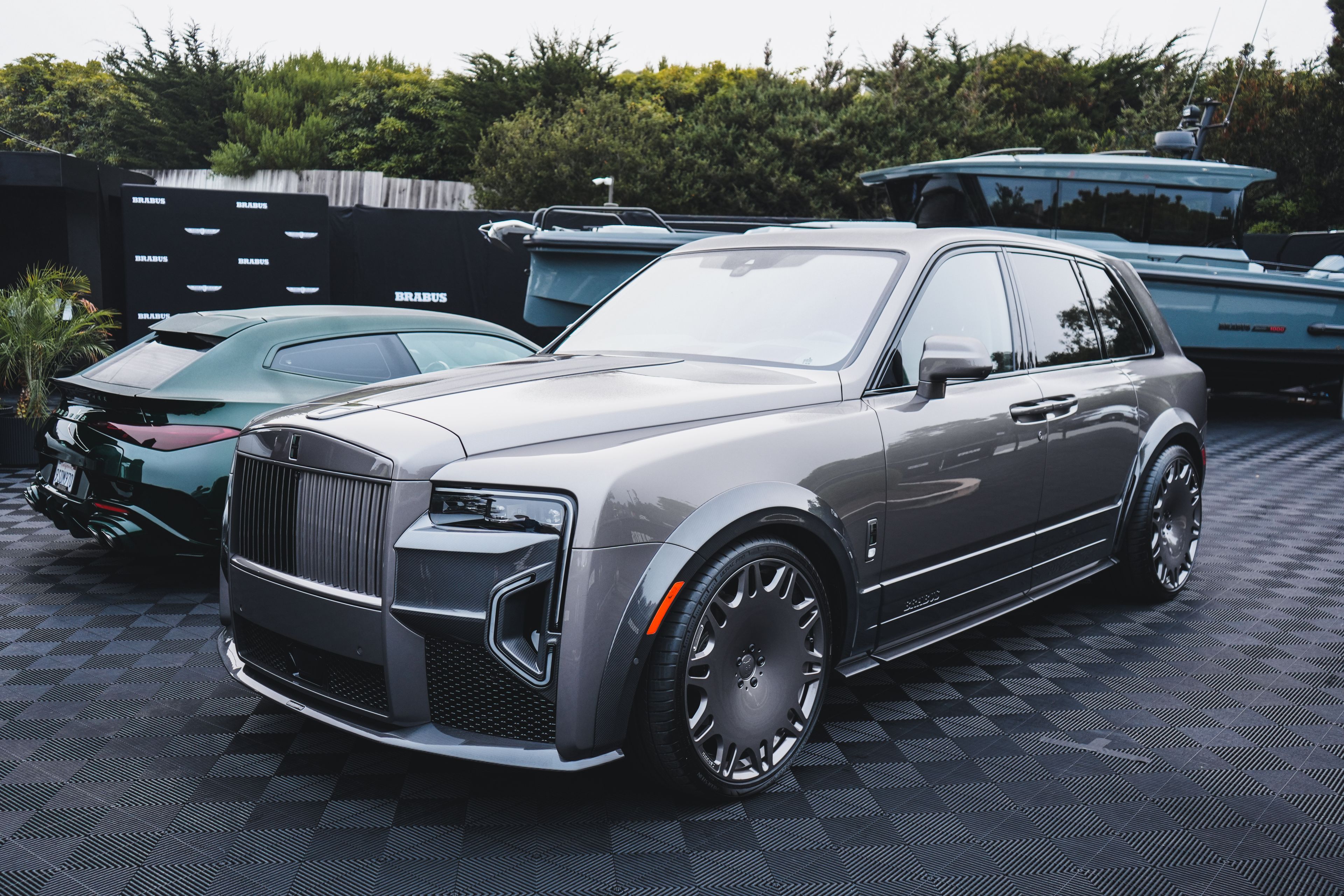
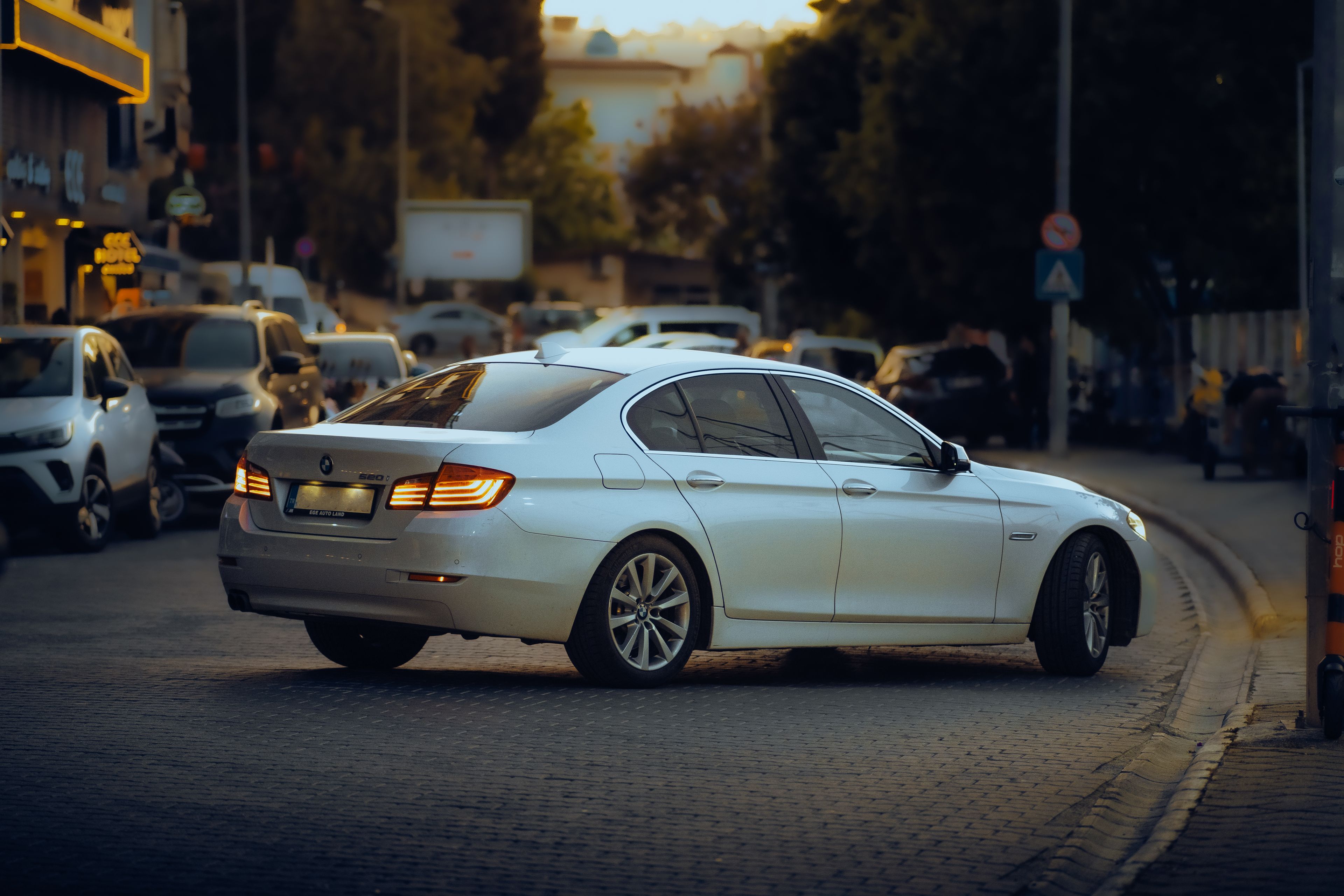
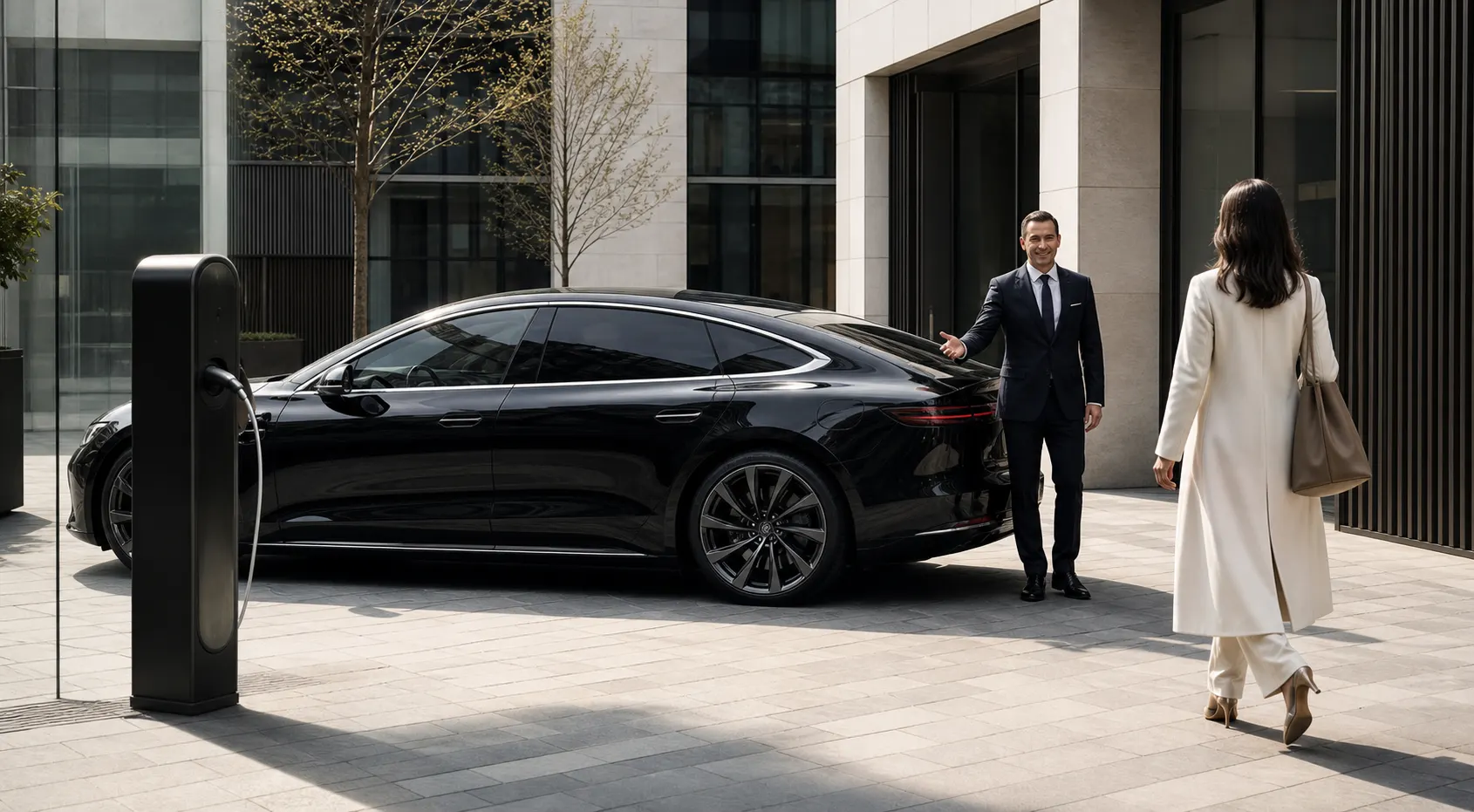
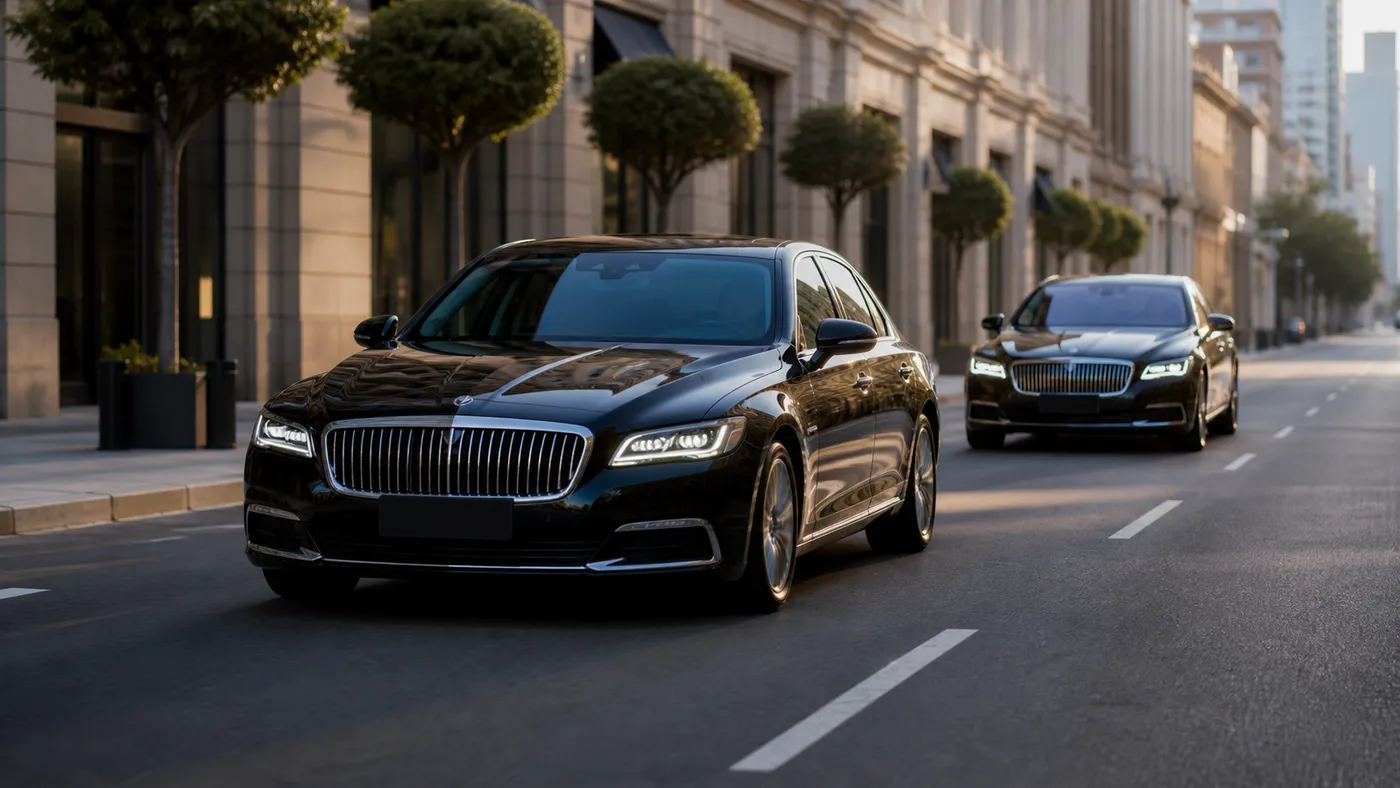
Three things mark a car as an executive saloon: a full-size four-door body, a rear cabin comfortable enough for an hour or more of travel, and a boot able to swallow a normal traveller's luggage. Below it sit compact and standard saloons that are perfectly good cars but shorter in the rear. Above it sit the flagship saloons, where the difference is legroom, insulation and rear climate control rather than any change in what the car is for.
The class is defined by capability rather than badge. Two cars from different manufacturers can sit in the same class and feel quite different inside, which is why a good operator will talk about what the journey needs before naming a model. Our vehicles come from our own cars and a vetted network of professional chauffeur operators, so model, colour and specification are always subject to availability on the day.
- Four full-size doors and a separate boot compartment
- Rear bench seating for up to three passengers
- Boot space for roughly two large cases and two cabin bags
- Rear climate control and quiet running at motorway speed
- Unbranded exterior, presented clean before every journey
- Automatic transmission and a professionally licensed chauffeur
How it appears on your quotation
On a written quotation the class usually appears as a line naming the category and a representative model, often with the phrase or similar attached. That wording is deliberate. It commits the operator to the standard rather than to one car, which is what allows a replacement of equal quality to be sent if a vehicle is taken off the road the night before your journey.
Read the passenger and luggage figures beside it rather than the model name. Those numbers are the part that governs whether your day works. If your party has three adults and three large cases, the saloon line is telling you politely that you need the next class up, and it is far cheaper in dignity to act on that when you read it than to discover it at five in the morning.

Commonly confused with
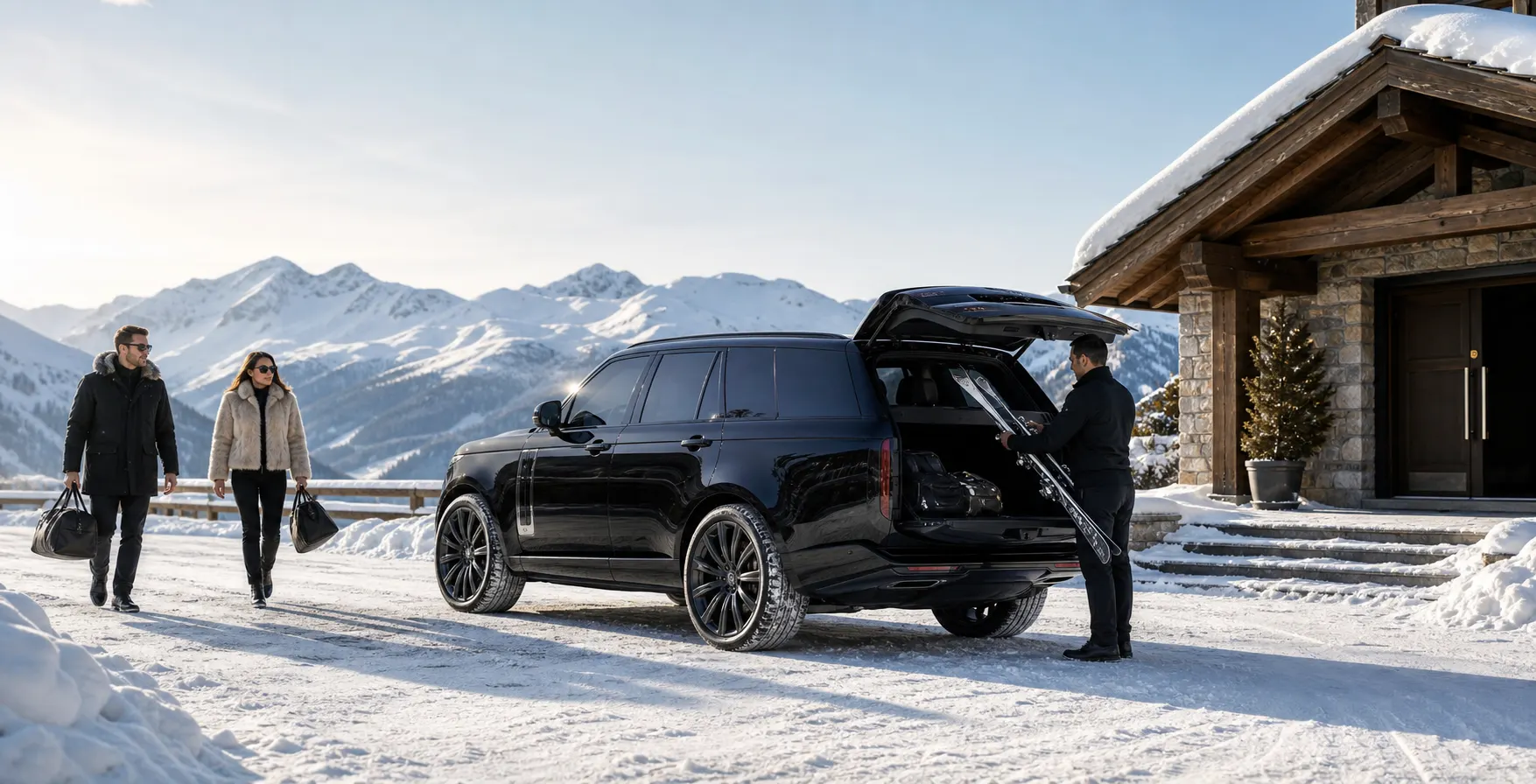
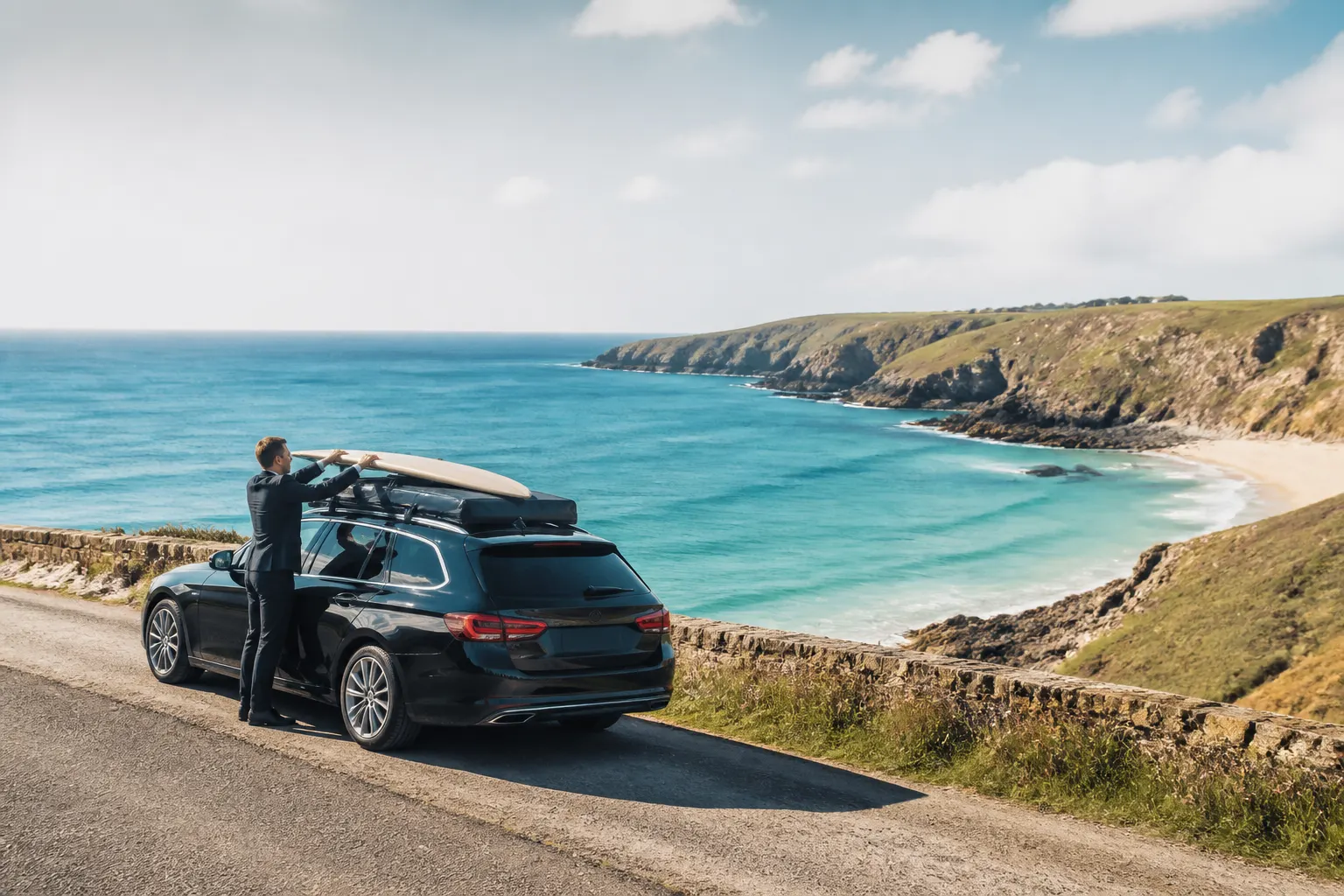
The executive saloon is most often confused with the executive estate, which shares the same platform and adds a longer load bay. The estate is the sensible answer for golf clubs, skis or a photography kit, and it is worth asking for by name rather than assuming a saloon will manage. It is also confused with the luxury MPV, which is an entirely different shape of vehicle built around individual seats.
A second confusion is with the term business class, which some operators use for the same tier and others use for something slightly below it. Because the labels are not standardised across the industry, ask for the passenger count, the case count and a representative model. Those three details describe the car far more reliably than any marketing name attached to the tier.