



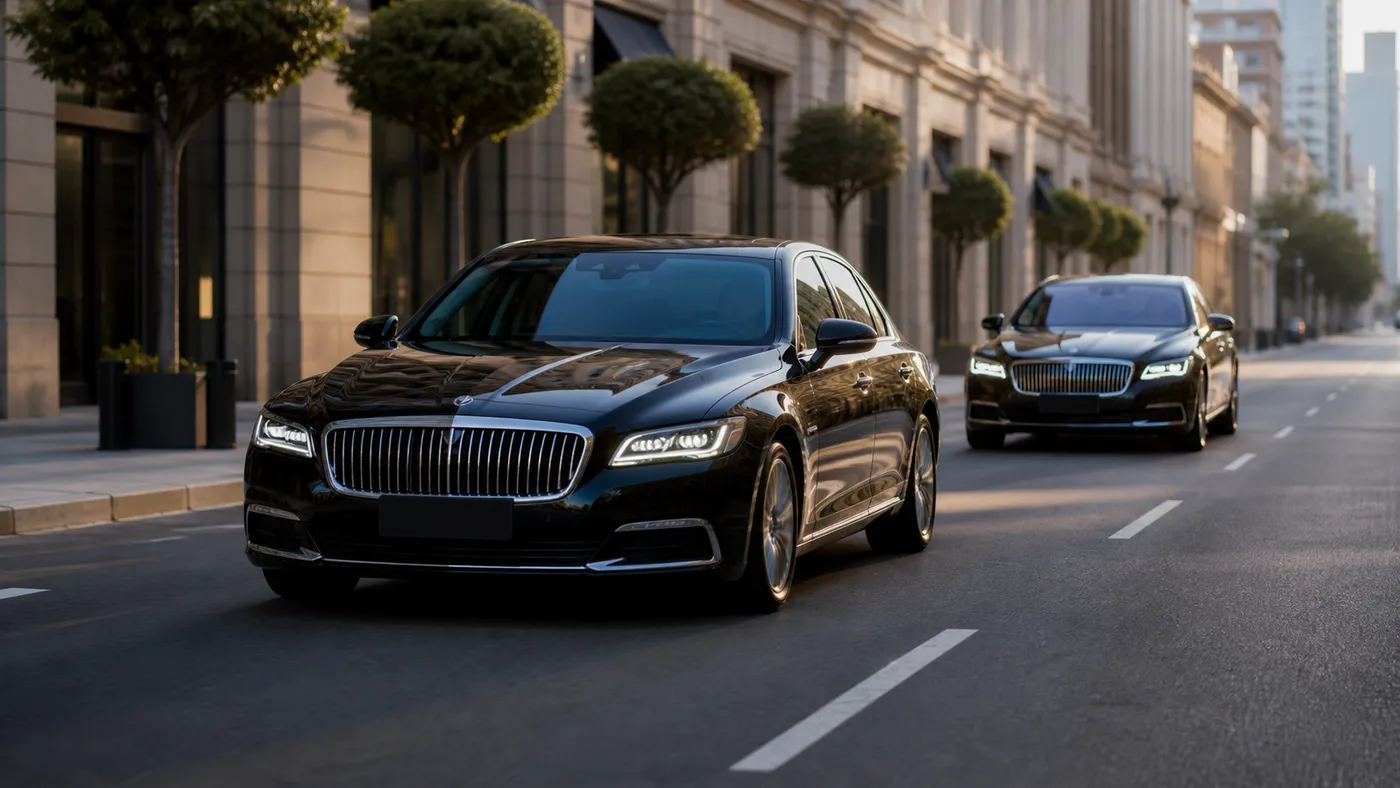




This is the restriction that most often explains why one car reaches a destination faster than another on the same road at the same moment. It is also one of the few places where the legal distinction between a taxi and a private hire vehicle produces a visible difference in the journey, which makes it worth understanding rather than resenting.
What follows covers what the restriction actually prohibits, how to read the sign that governs it, why the permitted list varies from one authority to the next, what the rule means for the time a journey takes, and the several similar-looking arrangements that are not bus lanes at all and carry different consequences again.
What the restriction covers
A bus lane is a lane of the carriageway marked out and signed for the use of specified vehicles only. The sign at the entry to the lane is the definitive statement of who may use it and when, and there is no general national list: one authority may admit motorcycles, another may not, and the same city can differ from one corridor to the next.
Enforcement is almost entirely automatic. Cameras capture a registration entering the lane during controlled hours, and a penalty follows without any interaction on the road. There is limited allowance for a vehicle that must cross a lane to turn or to reach a side road, but that is a manoeuvre rather than a licence to travel along it.
Reading the sign correctly
The blue plate at the start of the lane does the whole job. It states the vehicles permitted, usually as symbols, and the times of operation, and if no times are shown the lane operates at all hours. A chauffeur working an unfamiliar city reads that plate on the approach rather than assuming the arrangement matches the last town.
- Buses, always, and usually coaches where the sign shows them
- Cycles, permitted in the great majority of British bus lanes
- Licensed taxis, where the sign includes them, which is common
- Motorcycles, permitted in some authorities and not in others
- Private hire vehicles, admitted only where explicitly named
- Operating hours, or continuous operation if no times are given

What it means for your journey time
On congested urban corridors a permitted lane can be dramatically quicker than the general traffic beside it, which is precisely the point of building one. A chauffeur car that is not permitted queues with everybody else, and on certain routes at certain hours a black cab will genuinely arrive sooner. We would rather say that plainly than pretend otherwise.
It matters less than it first appears, because the corridors where bus lanes save real time are a small part of most journeys and because a chauffeur booking is planned around the whole day rather than a single leg. Where a route is badly affected, the useful response is to move the departure time rather than the lane.
Things that look similar but are not
A bus gate is a short section of road open only to permitted vehicles, often in a city centre, with no parallel lane to move into. Driving through one in error is a common and expensive mistake, because the layout gives very little warning and the camera sits immediately beyond it.
Bus-only streets, tram lanes and cycle lanes each carry their own rules and their own signage, and a lane marked for cycles alone admits no motor vehicle at any hour. None of these is a charging scheme: they restrict who may drive somewhere rather than asking for a daily payment to do so.