


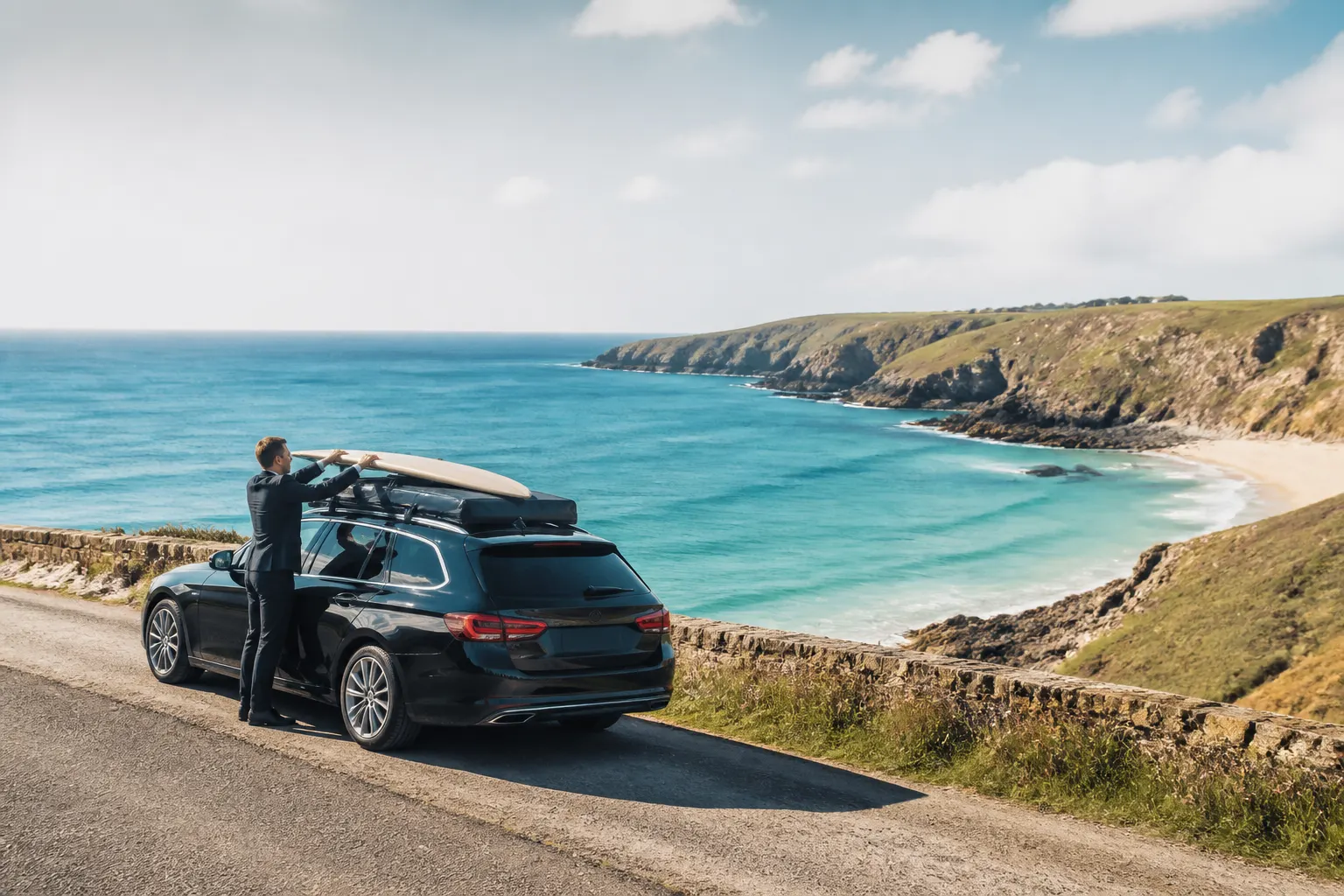


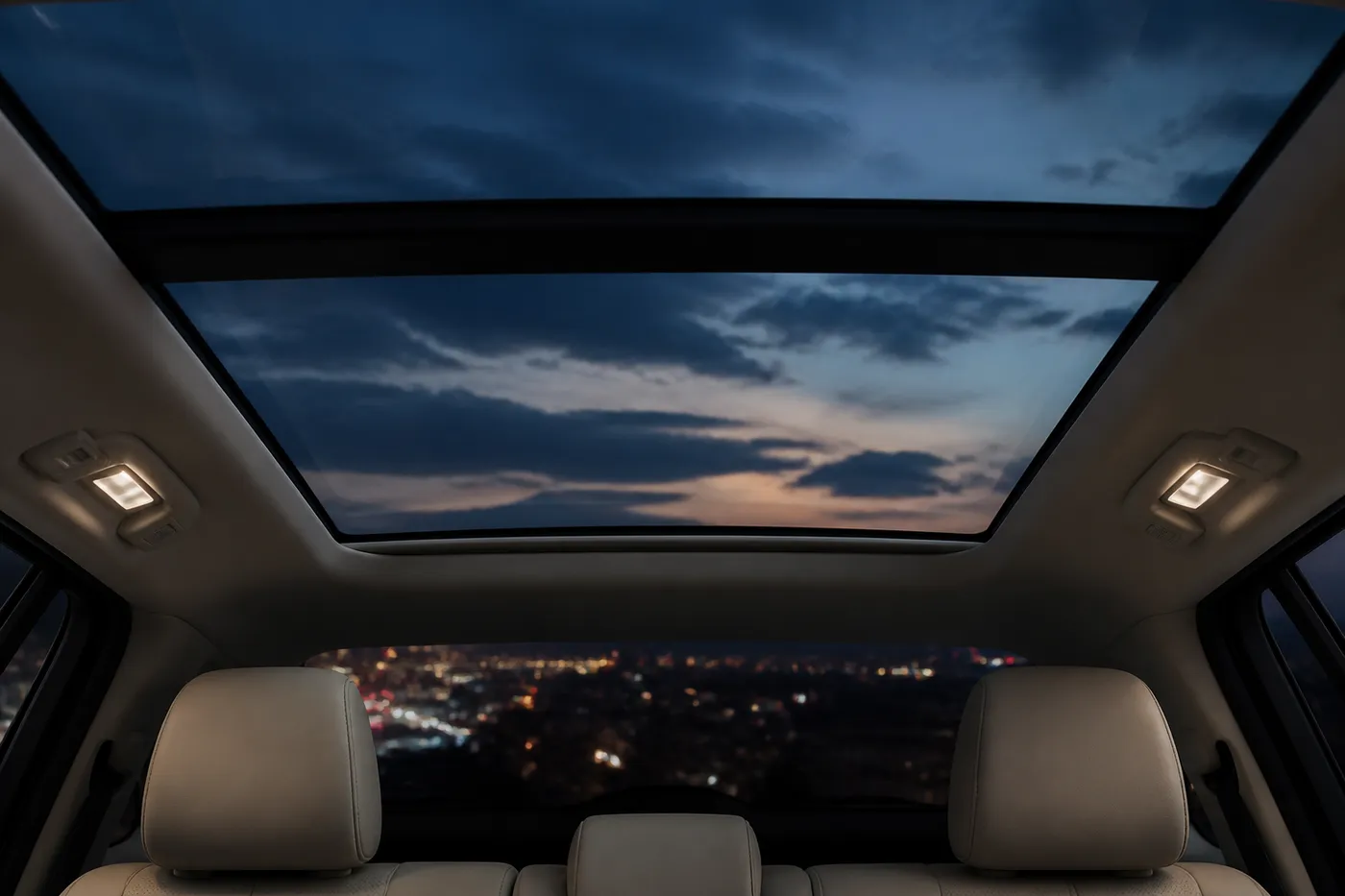



Everything anybody says about a shopping day by car focuses on the arrival. The part that actually changes the day is behind you: a boot that empties your hands after each stop, keeps a suit bag hanging rather than folded, and holds what you bought at eleven so that you are not still carrying it at four.
So this is a guide about load rather than route. What travels badly, what needs to be first in and last out, when to have something delivered instead, and the practical business of leaving things in a car across an afternoon. It is the least glamorous part of the day and the part that decides how it feels.
The boot as the working part of the day
A shopping day works in laps. You go out with nothing, come back to the car with something, and repeat that five or six times. Each lap is only pleasant if the previous one has been unloaded, which is the single mechanical fact behind why a chauffeured day feels different from the same day with a car in a garage.
It also means the boot fills in a particular order and has to be organised as it does. Large and rigid first, soft and crushable last, anything that must stay flat kept apart from everything else. That sounds fussy until you have put a hatbox in first and found nowhere to put anything at half past three.
Things that travel badly
Some purchases resent a boot. Tailoring and anything on a hanger want to hang rather than fold, and a suit bag laid flat under three other bags arrives home needing to be pressed. Millinery is worse: a structured hat will not tolerate anything on top of it and takes up more room alone than its size suggests it should.
Then there is the fragile category. Glassware, ceramics, a framed picture, bottles. These want to be upright, packed against something soft, and not moved once they are in. A boot being reorganised at every stop is exactly the wrong environment, which is why they go in last and come out first.
- Tailoring and garment bags that need to hang
- Hats and anything structured, which travel alone
- Glassware, ceramics and framed pieces, kept upright
- Wine and spirits, secured rather than loose
- Chilled or frozen items from a food hall
- Flowers, which last a great deal less than an afternoon

Packing order across an afternoon
The order matters more as the day goes on. Whatever went in first is buried by four o'clock, so anything you might want during the day should not be first. A coat, a change of shoes, a bag with a charger and whatever you carry between shops all belong within reach rather than under the day's purchases.
Tell your chauffeur what needs to stay accessible and it will. It is a small thing, and it prevents the most irritating version of the day, which is unloading half a boot on a Mayfair pavement to reach a pair of flat shoes that went in at eleven o'clock that morning.
Carry it or have it delivered
Most substantial purchases can be delivered, and a good many should be. Furniture, large art, anything genuinely heavy and anything needing specialist handling is better arranged with the shop than wedged into a car. The shops that sell such things do it constantly and will usually offer before you have asked.
What is worth carrying is what you want that evening, what you would rather not entrust to a courier, and what is small enough to be no trouble. Deciding at the counter rather than at the kerb is the useful habit; an assistant can arrange delivery in thirty seconds while you are standing there and cannot once you have left.
Food halls are the exception that catches people out. Chilled and frozen purchases have a short life in a boot on a warm afternoon, and they are usually bought at the end of the day for exactly that reason. If they are not, say so, and they can travel home separately rather than sitting for four hours.
Returns, exchanges and things going back
A shopping day frequently includes traffic in the other direction: an exchange, a repair, something collected from a tailor or a jeweller, or an item going back to a shop you visited last month. These are stops rather than purchases, easy to forget when planning the day and awkward to fit in afterwards.
List them at the start. Where something is being returned, it travels in the car from the beginning and should go somewhere it will not be buried. Where something is being collected, that stop belongs early in the day rather than late, since collections have opening hours and a queue behind them at five.
- Anything being returned, loaded before you set off
- Collections from a tailor, cobbler or jeweller, early on
- Repairs being dropped off rather than picked up
- Receipts and paperwork kept together and to hand
- Alterations to be arranged rather than carried away
Leaving things in the car
The vehicle is not left unattended in the ordinary sense: your chauffeur stays with it, and it is not parked in a public garage with your afternoon in the boot. That is worth stating plainly, because it is the question people are usually too polite to ask and the reason the arrangement works at all.
Even so, small valuables are better kept with you than left, as they would be anywhere. Everything else can stay with the car through the day and travel home with you at the end. Everything is arranged over WhatsApp or email, with a written quotation covering the held hours before anything is confirmed.