





Fashion week is not a destination but a fortnight of them, scattered across Mayfair, Soho, the South Bank, the East End and whichever unlikely building has been taken over for the season. Shows run to a published schedule that stays accurate until roughly the middle of the first morning. After that the day is managed by message, and the transport has to be capable of the same thing.
So this guide is less about routes than about elasticity. How to hold a vehicle rather than book a string of journeys, what a car is genuinely useful for between appointments, how samples and rails change the choice, and how to keep a team of four moving independently without four separate arrangements. It applies equally to buyers, press, stylists and anyone attending as a guest.
Why fixed bookings fail this week
A conventional booking assumes you know where you are going and when. During fashion week you know neither with any confidence beyond the next couple of hours. Shows start late, run long or move; an appointment appears; a fitting overruns; somebody decides the thing at four matters more than the other thing at four. A schedule of separate point-to-point journeys collapses the first time any of that happens.
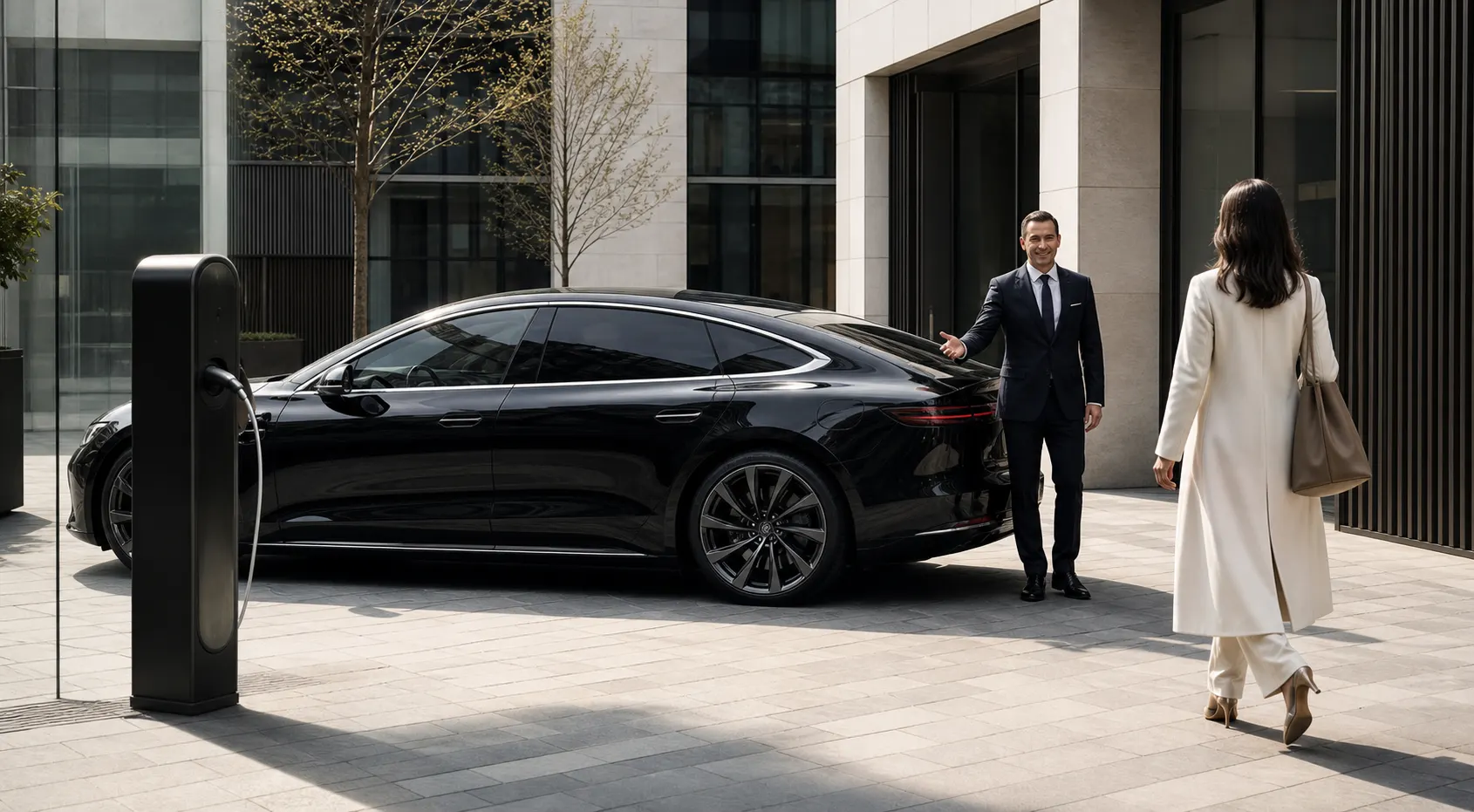
Holding a vehicle and a chauffeur for a block of hours solves it outright. The car is yours for the period, the order of the day is decided as the day happens, and nothing needs rebooking when it changes. It is the difference between a plan that has to be right and a plan that only has to be flexible.
The car as a base between shows
Between two shows there is often an hour and nowhere sensible to spend it. A held vehicle becomes the place you sit down, answer messages, change shoes, eat something and make a call without a room full of people listening. That is a large part of what clients actually use the car for, and it is worth planning around rather than treating as incidental.
It also means you stop carrying things. Coats, a second pair of shoes, a laptop, a garment bag and everything else can live in the vehicle and be reached when needed. Across a fortnight that is the difference between arriving at the last show of the day looking as you did at the first, and looking as though you have been carrying a bag since nine.

Samples, rails and what travels
Anyone working the week rather than attending it usually has something to move. A rail, a case of samples, lookbooks, a steamer, boxes going back to a showroom. None of that fits comfortably into a saloon boot alongside four passengers, and discovering as much at the kerb wastes the one thing the day cannot spare.
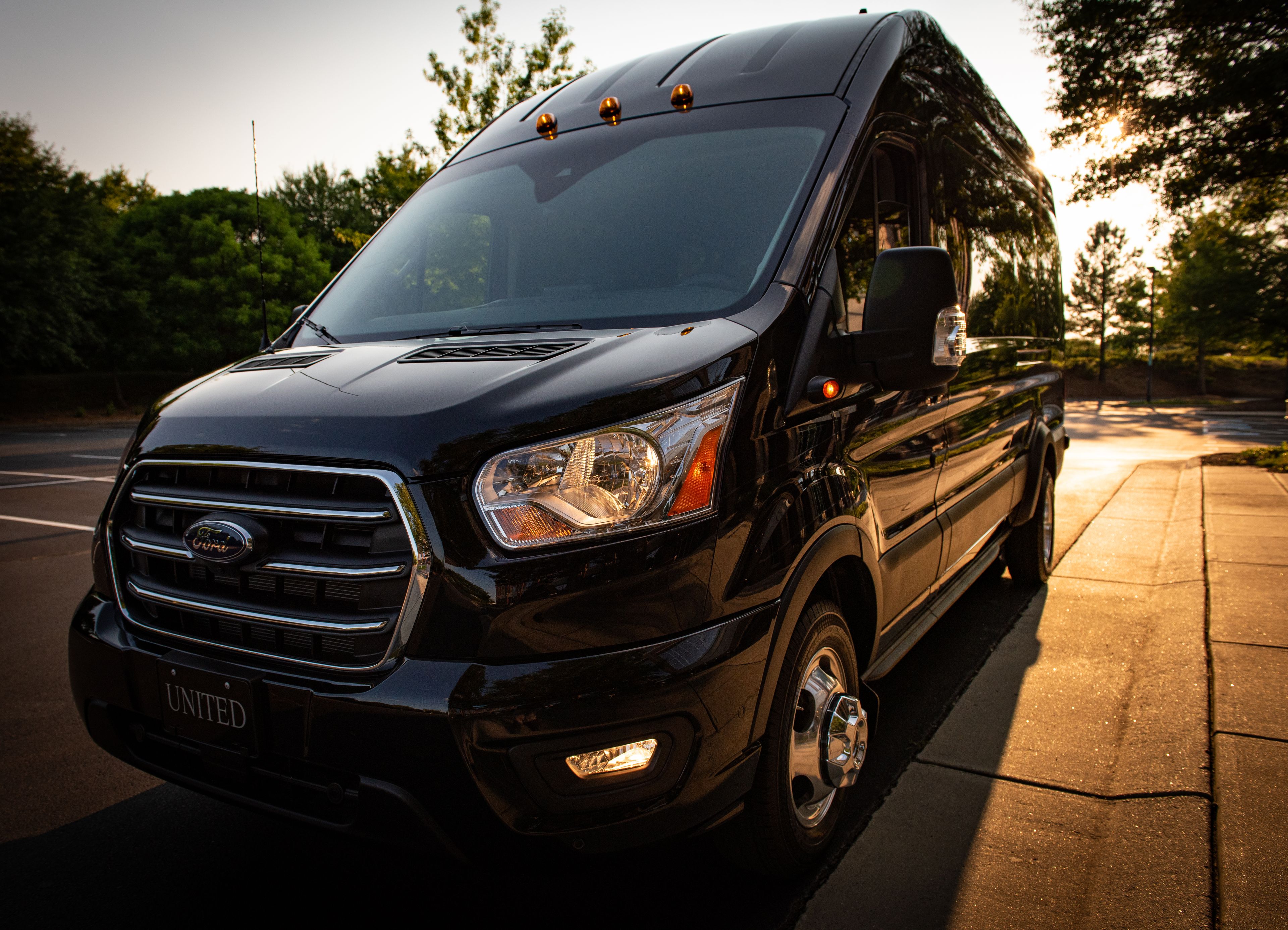
Describe the load honestly when you book, including whether anything needs to hang rather than lie flat. A van-bodied vehicle with proper luggage space is frequently the right answer for a working team, and a saloon the right answer for a guest attending three shows. They are different jobs, and there is no prize for choosing the elegant option and then repacking on Bond Street.
- Garment bags that must hang rather than fold
- Sample cases and boxes returning to a showroom
- A steamer, and somewhere it can sit upright
- Laptops, chargers and a working bag for the day
- Shoes, plural, and somewhere to change them
- A coat that has to survive until the evening
Teams, and who speaks to the driver
Where several people are working together, the arrangement holds if one person owns it. That person confirms the next movement, tells the chauffeur what has changed and decides who travels in which car. Everybody else gets on with their own day. Without it, a driver receives three contradictory instructions inside ten minutes and reasonably acts on none of them.
Where two or three vehicles are running, keep them on the same information rather than letting each develop its own version of the schedule. It is a small piece of co-ordination, and it makes the difference between a fleet and three cars that happen to be in the same city on the same afternoon.
The geography of a show day
Venues are deliberately scattered, and the distances between them are short in miles and long in minutes. Mayfair to the South Bank at five in the afternoon is not a fifteen-minute journey however it looks on a map. Soho has almost nowhere to stop legally at any hour. The East End is quick to reach and slow to leave once the evening gets going.
The practical response is to think in windows rather than journeys, and to accept that the last few hundred yards of a central London movement are sometimes better walked than driven. Your chauffeur will say so rather than sitting in a queue with you in the back, and will meet you round the corner instead.
- Mayfair and Bond Street, easy to reach and hard to stop in
- Soho, where set-down means a corner rather than a door
- The South Bank, quick off-peak and slow at the day's end
- The East End, straightforward in and congested out by evening
- One-off venues, worth checking the day before rather than the morning of
Evenings, and the part after the shows
The dinners, presentations and parties that follow the schedule are where the fortnight actually gets long, and they finish at hours when getting home becomes the least appealing part of the evening. A vehicle held into the night removes that entirely, along with the question of who is drinking and who is not.
Tell us the shape you expect rather than the times, because the times will move. A finish somewhere between eleven and two, three addresses in an order to be determined, and one person to confirm as the evening resolves itself. Everything is arranged over WhatsApp or email, with a written quotation covering the held hours before anything is confirmed.