



Clients who have decided on a Rolls-Royce often assume the remaining question is simply how much car they want, with the larger one automatically the better. That is not how these two behave in practice. They are separated by more than length: by the degree of ceremony each carries, by how each fits into an ordinary street, and by what the passenger is expected to do with the journey.
This page compares them on the terms that matter when a real booking is being made. It covers what the extra size genuinely delivers, where it becomes an obstacle, how each behaves at a venue entrance, and the circumstances in which the smaller car is not the budget option but the correct one. Both are extraordinary; only one will suit your particular day.
The same marque, a different intention
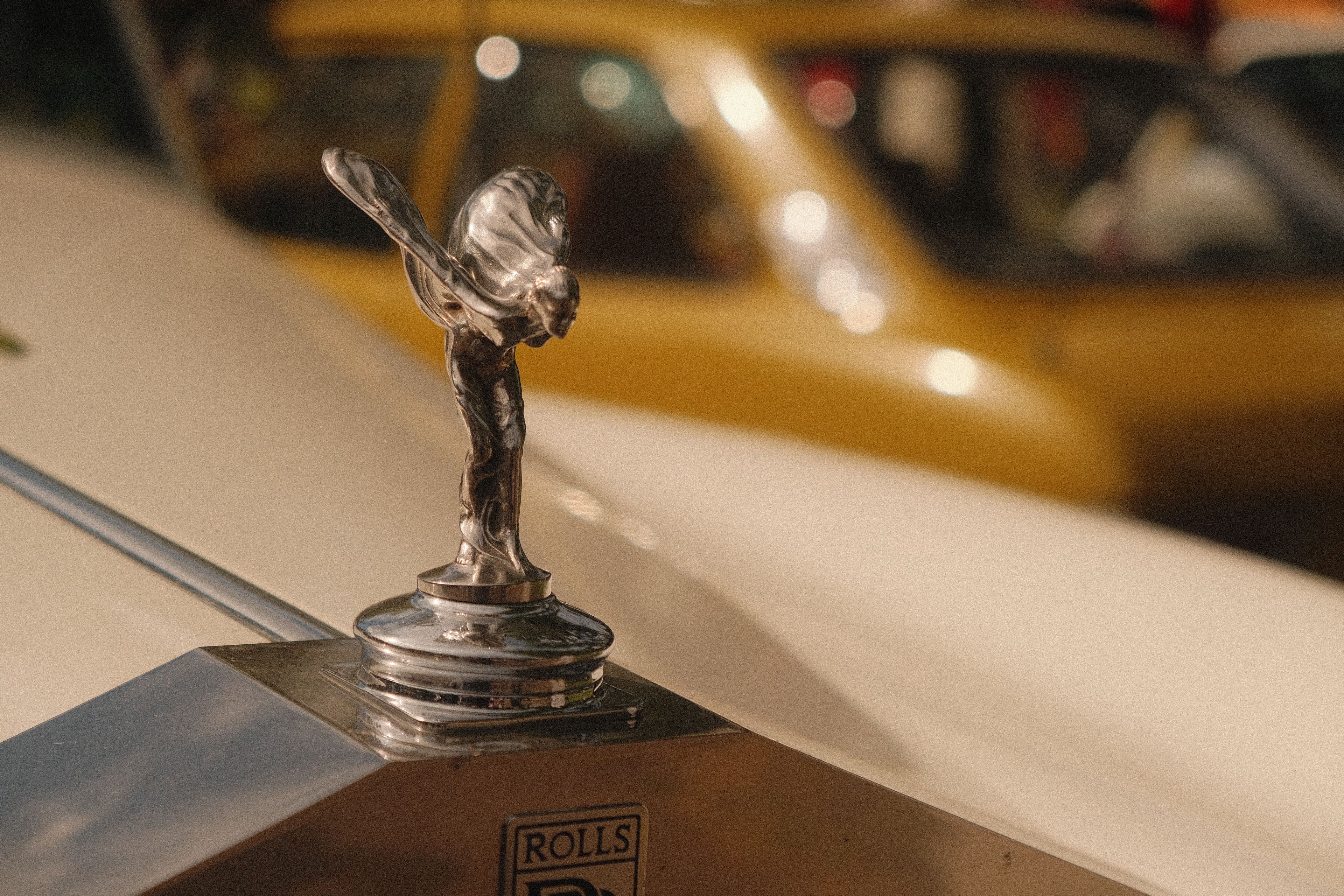
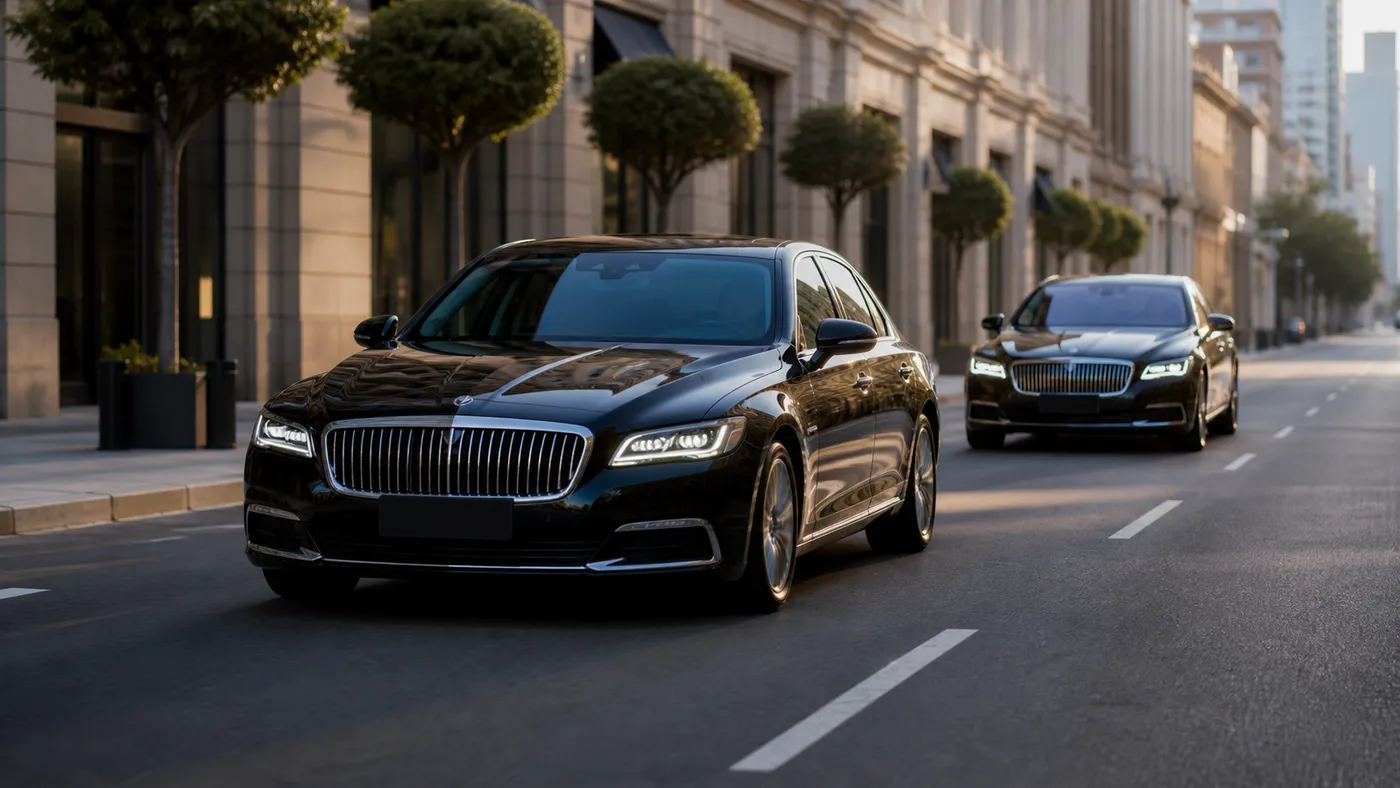
The Ghost is the more usable of the two and was designed to be. It is a large saloon by any normal measure, yet it can be driven regularly, placed on a city street and taken to an ordinary destination without the whole occasion reorganising itself around the car. Its refinement is complete and its presence is substantial without becoming theatrical.
The Phantom is the ceremonial flagship and makes no attempt to be anything else. It is longer, taller and more imposing, its interior is closer to a room than a cabin, and everything about it is calibrated for the moment it stops and the door opens. Where the Ghost is a superb car, the Phantom is an event that happens to move.
Rear space and what the length buys
Both offer rear legroom that no ordinary saloon approaches, and in extended-wheelbase examples of either it becomes genuinely luxurious rather than merely generous. The Phantom's additional space is felt most in height and width as much as in length: there is more air around you, the roof feels further away, and two passengers sit further apart than they would in almost any other car.
Whether that matters depends on what you do with it. For a short ceremonial journey it contributes to the sense of occasion considerably. For a long working journey the practical difference between the two is smaller than the difference in scale suggests, since both provide more room than a person can use and both are quiet enough for anything you might wish to do.
Streets, gateways and where size becomes a problem
A very large car has to arrive somewhere, and Britain's older venues were not built with one in mind. Narrow lanes, tight gateposts, cobbled courtyards, listed forecourts with turning restrictions and multi-storey car parks with height and length limits are all genuine constraints, and they are encountered more often with the larger of the two. Every one of them is worth checking rather than assuming.
The Ghost fits more places, turns in less space and draws less of a crowd on a residential street. For a city day involving several stops, or a venue with an awkward approach, that practicality is worth a great deal. We would always rather check the venue in advance than send a magnificent car that cannot get to the door.
None of this is a criticism of the Phantom. It is simply the ordinary consequence of scale, and it is best handled by asking about the approach when booking rather than by discovering it on the day with a wedding party waiting. Where the approach is generous, the larger car is magnificent and there is no reason at all to hesitate over it.
The two set side by side
Compared on the criteria that clients raise most, they divide cleanly, and very few occasions score evenly on both sides. That is unusual for two cars from the same maker, and it reflects how differently each was intended to be used. Read the list against the venue as much as against the journey, since the venue is what most often decides between them.
- Ceremony and sheer presence: the Phantom, unmistakably
- City streets, mews and tight venue approaches: the Ghost
- Rear space and the sense of a room: the Phantom
- A long working journey: close, with the Ghost easier to arrange
- Wedding photography with a grand frontage: the Phantom
- Discretion of any kind: the Ghost, though neither is discreet
- Availability at reasonable notice: the Ghost, by some margin
- Luggage: both are saloons, so both are limited in the same way
When the Ghost is the right car
For most bookings, frankly. If the journey is a transfer, a dinner, an evening at the theatre or a day of appointments, the Ghost delivers everything a Rolls-Royce is chosen for while remaining a car you can take anywhere. The additional scale of the Phantom adds ceremony to an occasion that may not be asking for it. Ceremony that nobody asked for is simply expense.
It is also the better choice for a venue you do not know. Where the approach is uncertain, a slightly smaller car removes a risk that cannot be undone on the day. A grand arrival that has to happen at the end of a lane rather than at the door is not a grand arrival, and this is the single most common reason we suggest the Ghost.
And it is easier to secure. Supply of both is limited, and the Phantom more so, particularly on Saturdays through the wedding season and at short notice outside London. If your date is fixed, asking for the Ghost gives you a much better chance of a confirmed booking rather than a hopeful one. Certainty on a date that cannot move is worth more than the last increment of grandeur.
Booking either with confidence
Tell us the venues by name and address, not just the town, and mention anything you know about the approach: a narrow bridge, a gravel drive, a gated courtyard, a car park with a barrier. We can then say plainly whether the larger car is sensible, and if it is not, we would far rather say so weeks beforehand than manage it awkwardly on the morning.
Prestige motor cars come from our own fleet and from a vetted network of professional chauffeur operators. We therefore quote a class of vehicle, with model year, colour and interior specification subject to availability and confirmed when you book. Send your date and the outline of the occasion over WhatsApp or by email and we will come back in writing.