



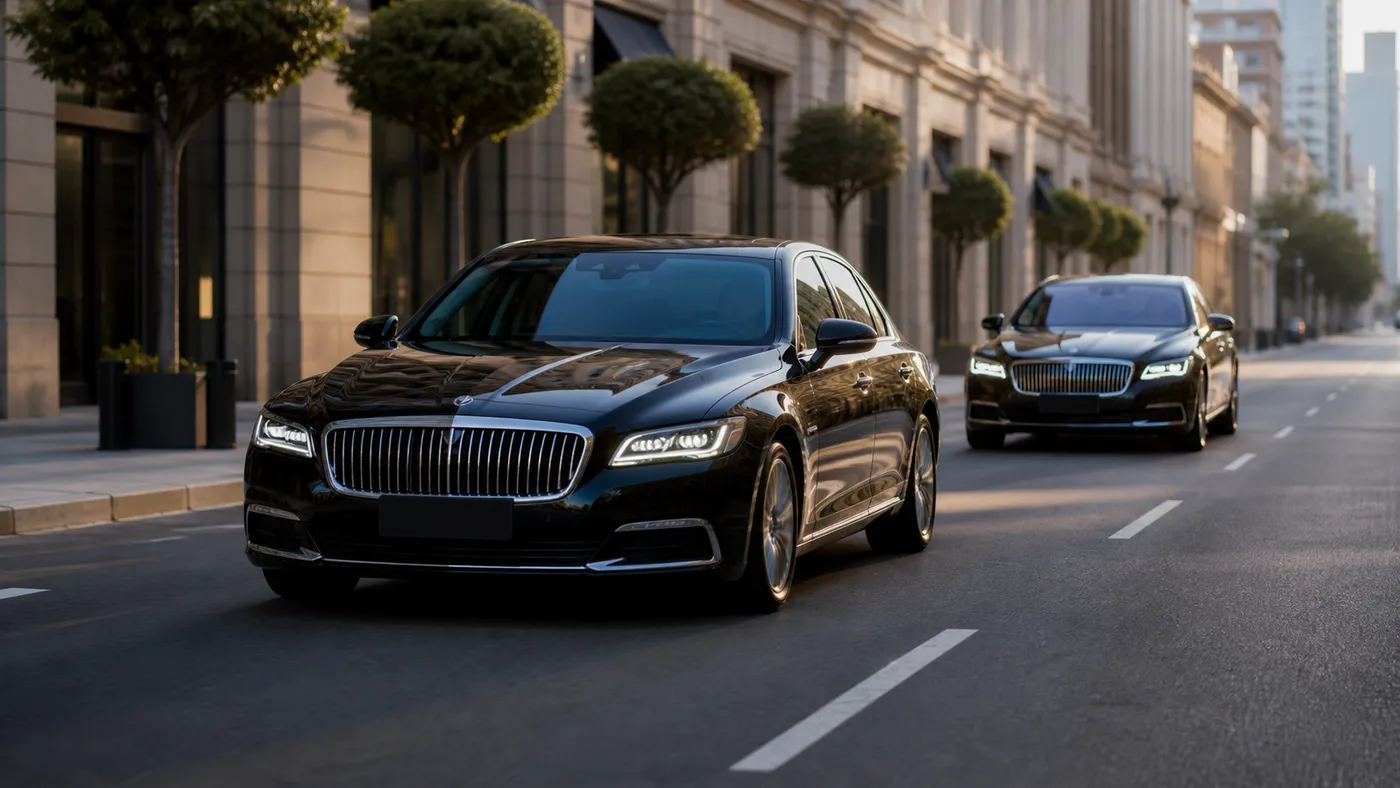



Stansted takes aircraft that the smaller London airfields cannot, and that one operational fact governs almost everything about ground transport here. Long-range departures, heavier charter types and group movements all gravitate towards Essex, which means the parties arriving at the private terminals tend to be bigger, carrying more, and travelling further at the other end than they would from a short-hop airfield.
The practical consequence is that vehicle sizing matters here more than journey times do. An hour on the M11 that goes slightly wrong is recoverable; a saloon sent to collect four passengers with nine cases is not. This page sets out how we plan around that. We are an independent chauffeur company and take no part in the airside arrangements, which belong entirely to your operator and their appointed handling agent.
Why the aircraft here are larger
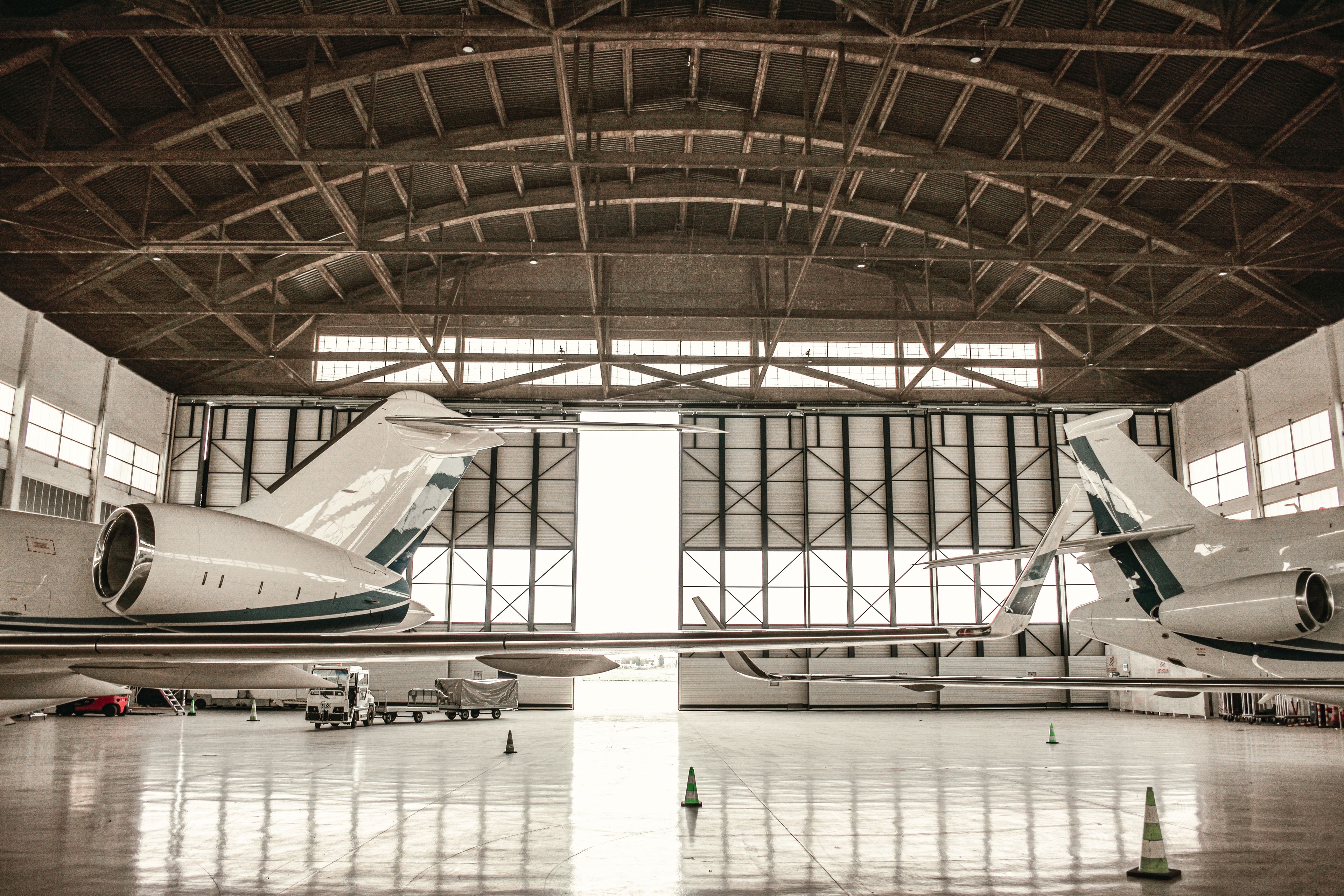
The runway length is the reason, and it draws a distinct kind of traffic. Departures heading well beyond Europe, aircraft that need to leave with a full fuel load, and charters carrying a whole party rather than two executives all end up here rather than at the smaller fields closer to town. Alongside that sits the airport's substantial scheduled operation, which shares the perimeter but very little else.
For a passenger this changes the tempo of an arrival. The walk from aircraft to building may be slightly longer, there may be more of you, and the luggage will take a few minutes to appear at the car rather than arriving in one armful. None of it is slow by commercial standards, but it is not the thirty-second transition of a light jet at a small airfield either.
Luggage is the planning problem
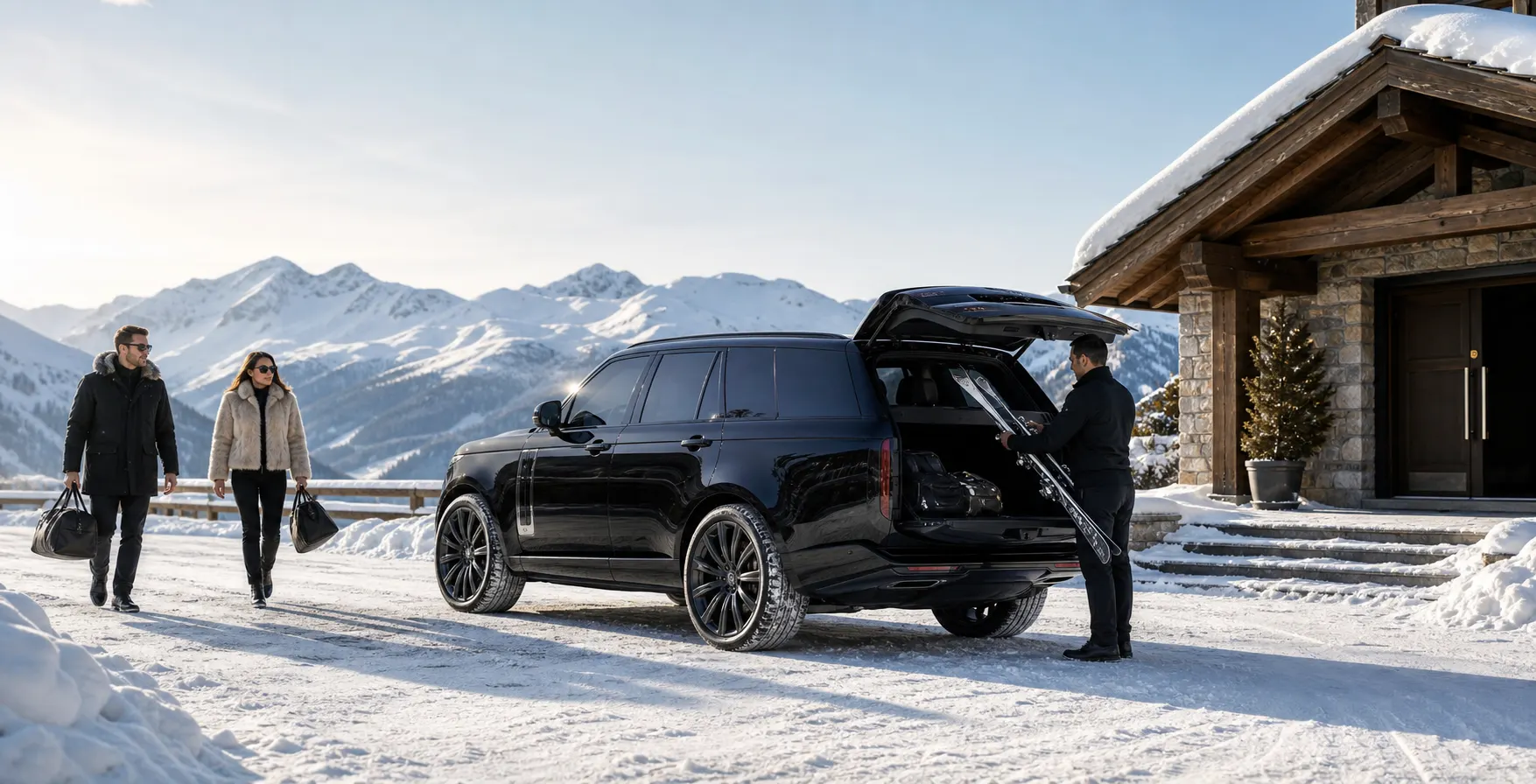
We would rather over-specify a vehicle than have a chauffeur performing geometry on a kerb while a party stands in the wind. A large aircraft hold empties into a surprising volume, and hold bags travelling with a group very rarely match the tidy assumptions of a boot capacity table. Skis, golf, camera equipment, expedition kit and trade samples are all common departures from the standard case.
The counter-measure is simple: give us the real numbers when you book. Four passengers and eight large cases is a different vehicle from four passengers and four cabin bags, and the difference costs nothing to establish a week ahead. Where the hold genuinely exceeds one car, a second vehicle for luggage running alongside the passenger car is far more comfortable than a compromise.
- Large hold cases, counted rather than estimated
- Cabin bags, which still occupy real space in a boot
- Skis, golf clubs, bicycles and other awkward items
- Equipment cases, samples or production kit travelling with the party
- Whether anything must stay with the passengers rather than follow
- Pushchairs, child seats and anything needed at the far end
The eastern approach and the M11
Journeys from London run out through the eastern side of the city before joining the M11, and it is that urban section rather than the motorway which produces most of the variation. Once on the motorway the run is generally straightforward, with the caveat that weekend closures and overnight roadworks on this corridor are frequent enough to be worth checking rather than assuming.
So we check the evening before, not the morning of. Where the route through east London is unpromising, an earlier departure is the honest answer rather than a clever alternative that saves nothing. For journeys starting north or east of the capital the picture is much simpler, and the same is true coming down from Cambridge, where the run is comfortable outside term-time congestion.
Cambridge and East Anglia in reach
For anyone based in Cambridge, the research parks around it, or the wider East Anglian region, Stansted is usually the most practical private option by a distance. The road connection is direct and the timing is dependable enough that a same-day return works properly rather than theoretically, which is why a good deal of our work here has nothing to do with London at all.
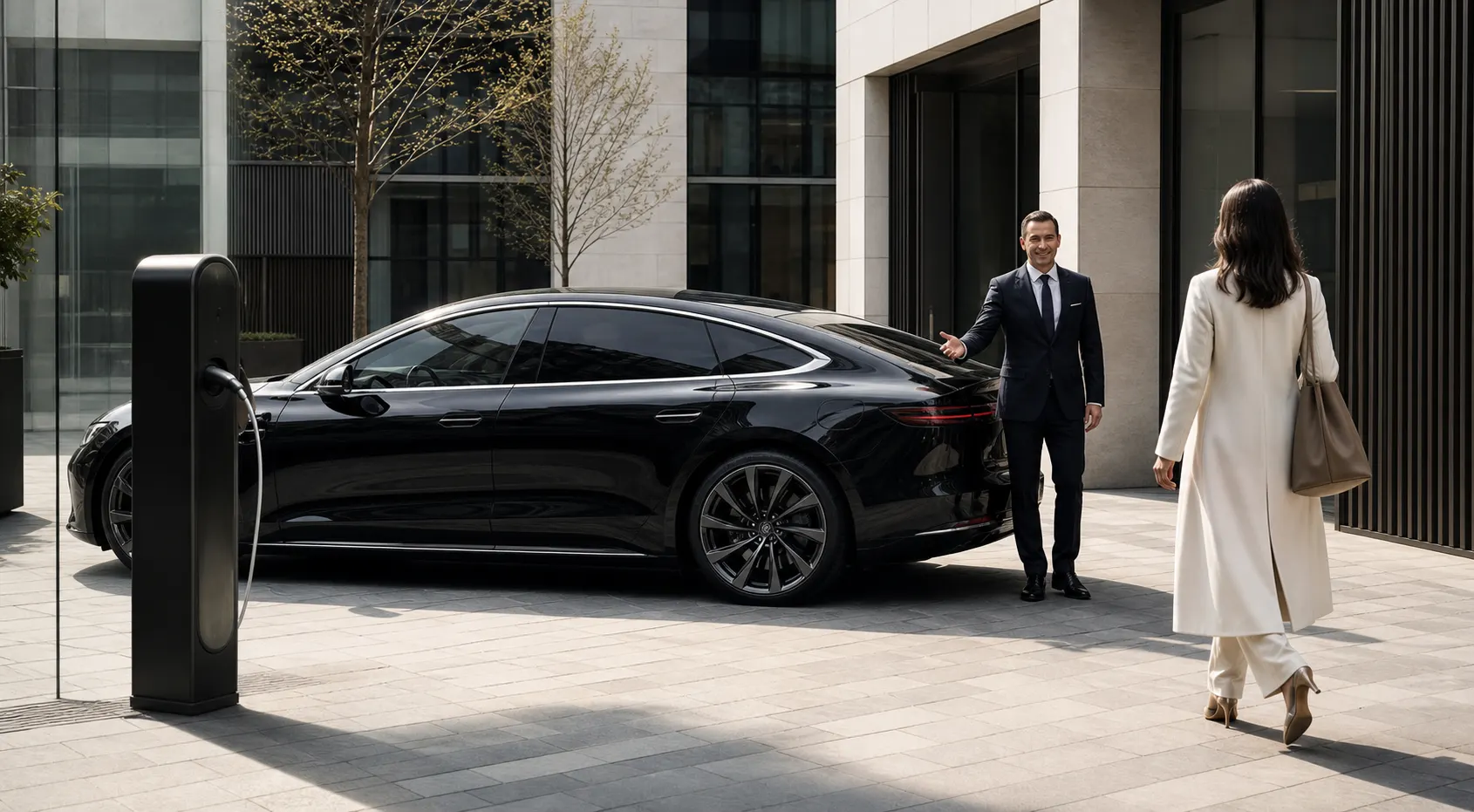
That also shapes the vehicle. A single passenger travelling between a college or a laboratory and a private terminal wants a quiet saloon and an uninterrupted hour of work. A delegation arriving for a site visit wants space, working room and somewhere to put coats. Telling us the purpose of the journey, not merely the addresses, gets you the right one.
Entrances, access and the handler
The private facilities operate away from the main passenger terminal and on their own arrangements, so the handling agent your operator appoints determines where a vehicle presents itself. We ask for that at the point of booking, confirm what is permitted, and instruct the chauffeur accordingly. Some handlers allow a chauffeur to come inside for luggage; others prefer the car held nearby with a short walk.
We make no promises about apron access, airside driving or accompanying anyone through security, and any service that does is describing something it does not control. Nor do we claim to track aircraft. The flight time you give us, plus a sensible margin and a message when you are down, is what keeps a Stansted collection tidy, and it has never yet needed anything more elaborate.
Moving a group as one party
Group movements are where a transfer either feels organised or feels like herding. Two or three vehicles running on matched timings, with the chauffeurs in contact and a single point of co-ordination, means the party leaves together and arrives together. Vehicles come from our own cars and a vetted network of professional chauffeur operators, so the mix can be assembled to fit the party rather than the other way round.
Crew almost always need their own arrangement, because they finish long after the passengers have gone and often stay locally overnight. Booking the crew vehicle at the same time as the passenger car, against the same flight details, avoids anyone standing outside a terminal at the end of a long duty day waiting for something to be arranged from scratch.
- Total passengers, split by who travels with whom
- Whether principals and staff travel in separate vehicles
- Crew numbers, their hotel and their expected finishing time
- A single co-ordinator we can message on the day
- Onward addresses for each vehicle, which may differ
- Any requirement for the party to arrive together