








The Cotswolds are not a place so much as a hundred villages spread across five counties, joined by lanes that were laid out for carts and have been resurfaced rather than redesigned. Distances here are short and journeys are not. Eight miles between two villages can take twenty five minutes, and on a summer Sunday with a tractor ahead it can take considerably longer.
This is the single most important thing to understand when planning a Cotswolds itinerary. The temptation is to list six villages and a house; the reality is that four stops make a comfortable day and five make a rushed one. What follows is how the region actually drives, where the pinch points are, and what a country house arrival requires that a city one does not.
How you get in, and from which side
The Cotswolds sit between the M40 to the east and the M5 to the west, which means the approach determines which part of the region you reach first. From London, the M40 at junctions 8, 9, 10 or 11 gives access to Burford, Chipping Norton, Stow and the northern villages, usually around two hours to two and a half depending on where you are going.
From the west and the south west, the M5 at junctions 9, 11, 13 and 15 serves Broadway, Cheltenham, Stroud and Cirencester. The A419 links Cirencester to Swindon and the M4, and the A417 climbs the escarpment near Birdlip, a long-standing bottleneck with an improvement scheme in progress.
The A429 Fosse Way runs diagonally through the middle, straight because the Romans built it, and it is the fastest way between Cirencester, Stow and Moreton. The A40 and A44 are the other useful through routes. Everything else is a lane, and lanes are the reason a Cotswolds day takes the shape it does.
What the lanes are actually like
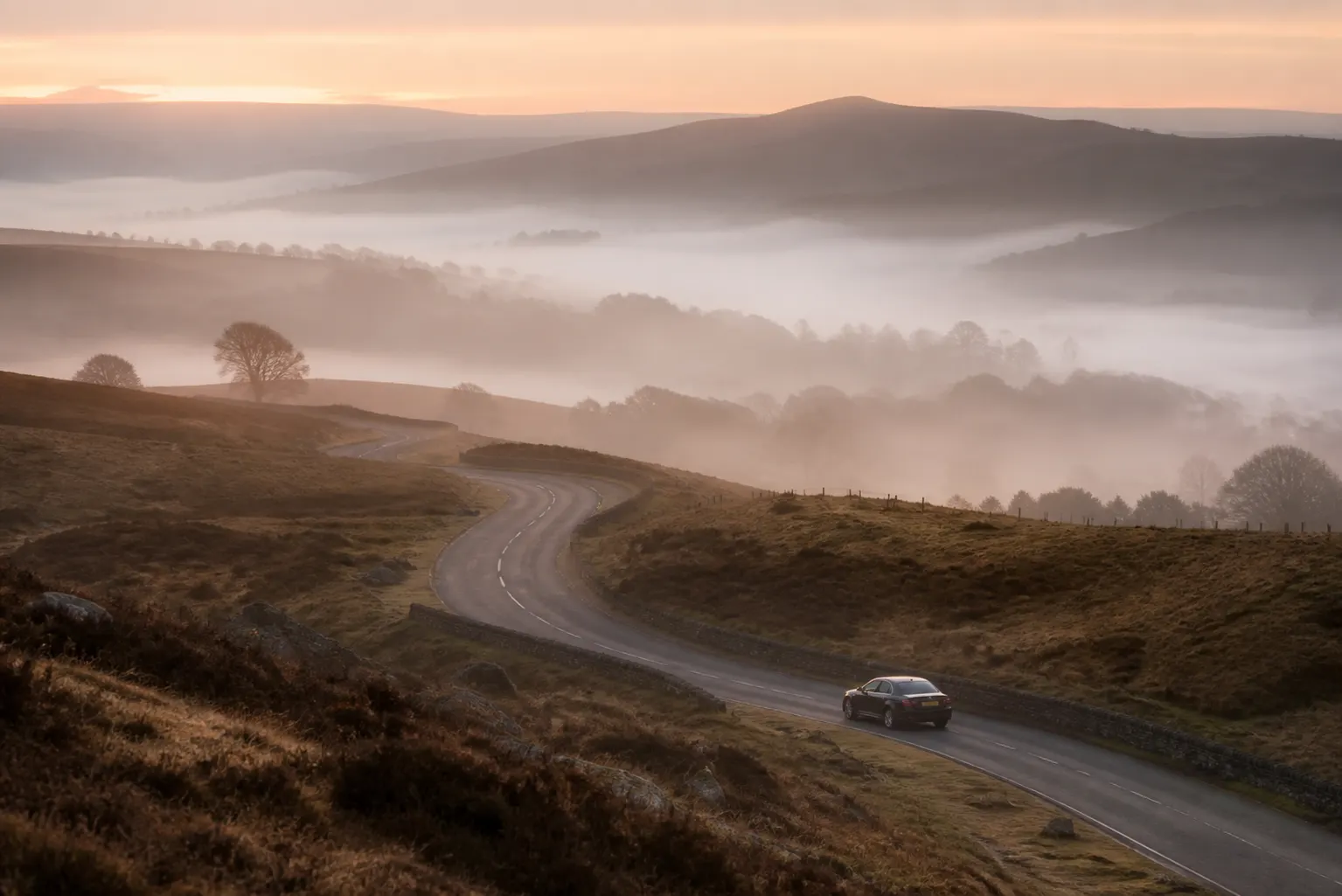
Away from the main routes, the roads are single carriageway, often single track with passing places, bounded by dry stone walls or high hedges with no verge and no pavement. Sight lines at junctions are frequently poor, farm traffic uses them, horses use them, and cyclists use them in considerable numbers at weekends.
In winter they hold water and mud, and after rain the surface at the bottom of a dip can be genuinely deep. Ice forms in shaded stretches long after the main roads have cleared. In summer the same lanes carry heavy visitor traffic, and villages like Bourton and Bibury become congested in a way that has to be seen to be believed.
None of this makes the region difficult to enjoy. It makes it a place where the chauffeur matters. A driver who knows which lane is passable, where the passing places are and which village to approach from which end saves an hour across a day without anyone noticing it happening.
- Single track lanes with passing places and no verges
- Dry stone walls and high hedges limiting visibility at junctions
- Farm traffic, horses and heavy weekend cycling
- Standing water and mud in winter, ice long after main roads clear
- Bourton and Bibury congest heavily on summer weekends
- Mobile signal is unreliable in the valleys
- Village parking is minimal and often on the street
Country house arrivals and the last hundred yards
A great many Cotswolds destinations are private houses, hotels in converted manors, or estates approached down an unmade drive. The drive is where the difficulties are. Gravel, potholes, cattle grids, a gate with a keypad, a turning circle designed for a Land Rover rather than a long saloon, and no lighting whatsoever after dark.
We ask for the entrance details in advance: the gate code if there is one, whether the drive is gravel or tarmac, where the car should wait and whether the approach is from the village or the main road. A photograph of the entrance is genuinely useful. A postcode alone often covers half a mile of lane with three unmarked openings.
Waiting is the other consideration. At a country house there is frequently nowhere for a chauffeur to sit for four hours and nothing nearby. We arrange that in advance rather than leaving it to chance, and for late finishes we plan the return route in daylight before driving it in the dark.
Cheltenham week and the seasonal calendar
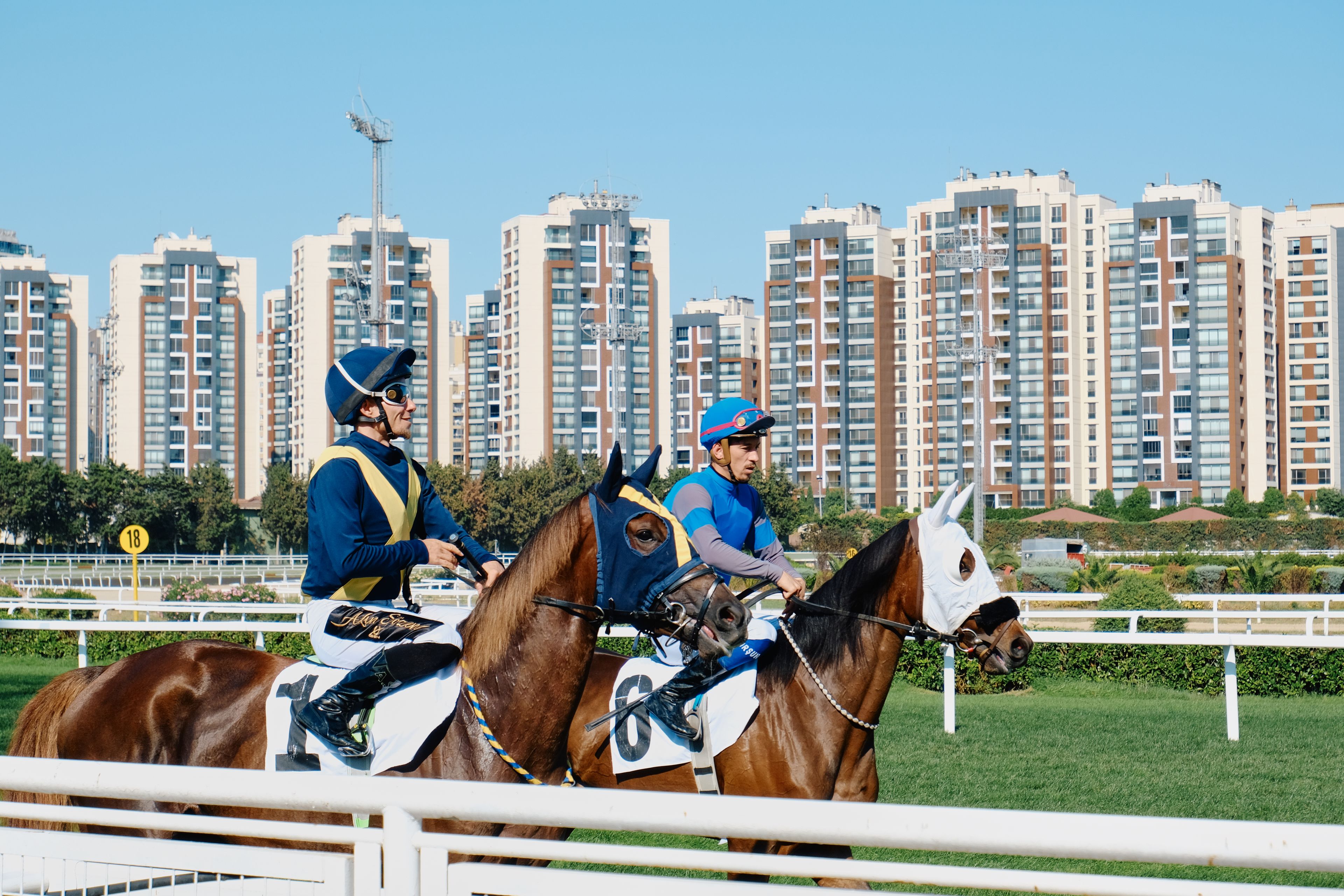
The March festival at Cheltenham is the single largest event in the Cotswolds calendar and it reshapes the roads across a wide area for four days. The A40, the M5 junctions and every approach to the town carry far more than usual, car park access is arranged by pass through the racecourse, and departures after the last race are slow in every direction.
Anyone travelling in the region that week, for racing or otherwise, should plan around it. Chauffeur availability across Gloucestershire and Oxfordshire tightens considerably, accommodation fills months ahead, and journeys that normally take forty minutes take substantially longer. If you are visiting the region that week with no interest in racing whatsoever, it remains the single most important thing to know about the roads.
The rest of the calendar has its own pressures. Summer weekends fill the honeypot villages from mid-morning, the literature and music festivals bring their own days, and harvest brings slow agricultural traffic to the lanes in late summer. Winter is quiet, beautiful and the season when the roads themselves are the constraint.
Building an itinerary that actually works
The honest planning rule for the Cotswolds is fewer stops, longer at each. Four is comfortable for a full day including lunch. A house and garden absorbs two hours without difficulty, a village worth stopping in absorbs an hour, and the driving between them adds up faster than the mileage suggests.
Rail arrivals work well here. Kingham, Moreton-in-Marsh and Charlbury sit on the line from Paddington, Cheltenham Spa serves the western side, and Kemble is convenient for Cirencester and Tetbury. Meeting a train and keeping the car for the day is generally the arrangement that gives the best of both, since the drive from London is around two hours before you have seen anything.
We are glad to say honestly when an itinerary is too ambitious. It is a far better conversation to have at the planning stage than at four in the afternoon on a wet lane with two stops still on the list and the light going.
- Kingham to Stow-on-the-Wold: usually around fifteen minutes
- Burford to Bourton-on-the-Water: commonly around twenty five minutes
- Cheltenham to Broadway: generally around thirty five minutes
- Cirencester to Tetbury: usually around twenty minutes
- London to the northern Cotswolds: commonly two hours to two and a half