







A day with three or four stops in it can be booked two ways. You can hold a car and chauffeur for a block of hours and use them as the day requires, or you can book each journey separately as a defined trip between two addresses. Both are entirely normal, and the difference between them is not a matter of prestige but of how much uncertainty your day contains.
Get this decision right and the day runs itself. Get it wrong in one direction and you pay for a car standing idle in a side street for three hours. Get it wrong in the other and you spend the afternoon waiting for vehicles while a meeting you cannot leave runs over. The signals that tell you which way to go are quite reliable once you know to look for them.
What each arrangement actually buys
Hourly hire, sometimes called as-directed, reserves a vehicle and a named chauffeur for a continuous period. Within that period the itinerary can change, stops can be added, and the sequence can be rearranged on the spot. You are not buying a route; you are buying availability, and the flexibility is the product rather than a bonus attached to it. Nothing about the day has to be settled in advance.
A single journey is a defined movement from one address to another at a stated time. It is quoted against that route and that duration, and it is efficient precisely because it is bounded. The chauffeur is free afterwards, and nothing is being held on your behalf between engagements. For a straightforward transfer, this is the cleaner and leaner arrangement by a comfortable margin.
How uncertain is your day, honestly
The single most useful test is whether you can state your departure times in advance and believe them. A day built from board meetings that habitually overrun, site visits of unknown length, or viewings where you may want to linger is a day that will defeat a schedule of separate bookings. Every overrun becomes a car waiting or a car dispatched again, and the friction accumulates.
Conversely, a day of two fixed appointments with a long, certain gap between them does not need a car held throughout. If you are in a meeting from ten until four and nothing will change that, holding a vehicle outside for six hours buys you nothing you will use. Two separate journeys serve the same day more sensibly, and we will say so when we see it.
Weather, city traffic and the density of the itinerary all push in the same direction. Four stops within a small area on a wet December afternoon argues strongly for keeping the car. Two stops thirty miles apart with hours between them argues equally strongly for letting it go. Density of stops, rather than total distance travelled, is usually the signal worth watching.

Luggage, laptops and leaving things behind
There is a practical dimension that has nothing to do with timing. If you are carrying samples, presentation materials, a suit for the evening, gifts, or simply more coats than a party can hold, the car becomes a moving cloakroom and the case for holding it is made before the timing is even discussed. Nobody wants to carry a garment bag through four appointments.
The same applies to security and discretion. Documents or equipment that should not be left in a public cloakroom are better in a vehicle attended by a professional chauffeur, and a passenger who wants somewhere private to take a call between meetings is well served by a car waiting nearby. These are ordinary reasons and they justify hourly hire on their own.
Side by side
For a day that could plausibly go either way, these are the deciding factors, listed roughly in the order they tend to matter. Timing certainty comes first, the number and closeness of the stops second, and what you are carrying third. If the first three all point the same way, stop deliberating and book it. Anything beyond those three is refinement rather than decision.
Mixed days are common and perfectly workable. A fixed morning transfer, a held afternoon and a separate evening collection can be booked as three distinct arrangements, and for some itineraries that is genuinely the tidiest structure. Nobody is obliged to choose one model for a whole day when the day itself changes character halfway through, and many days do. It is a common enough arrangement.
- Three or more stops within a few miles: hourly hire, almost always
- Two journeys separated by a long, certain gap: separate bookings
- Timings that habitually slip: hourly hire, to absorb the drift
- A simple airport run or a single evening out: a defined single journey
- Luggage or materials that must travel with you all day: hourly hire
- A day with a fixed start and finish and nothing in between: separate bookings
- Several passengers being collected from different addresses in sequence: hourly hire
When separate journeys are the better buy
If your day amounts to two clean movements with a substantial gap, book them as two journeys and put the difference to better use. A morning transfer to a conference and an evening return after dinner is not one long engagement; it is two short ones separated by hours during which no car of yours needs to exist. Paying to hold a vehicle through that gap is simply waste, however smoothly it is presented.
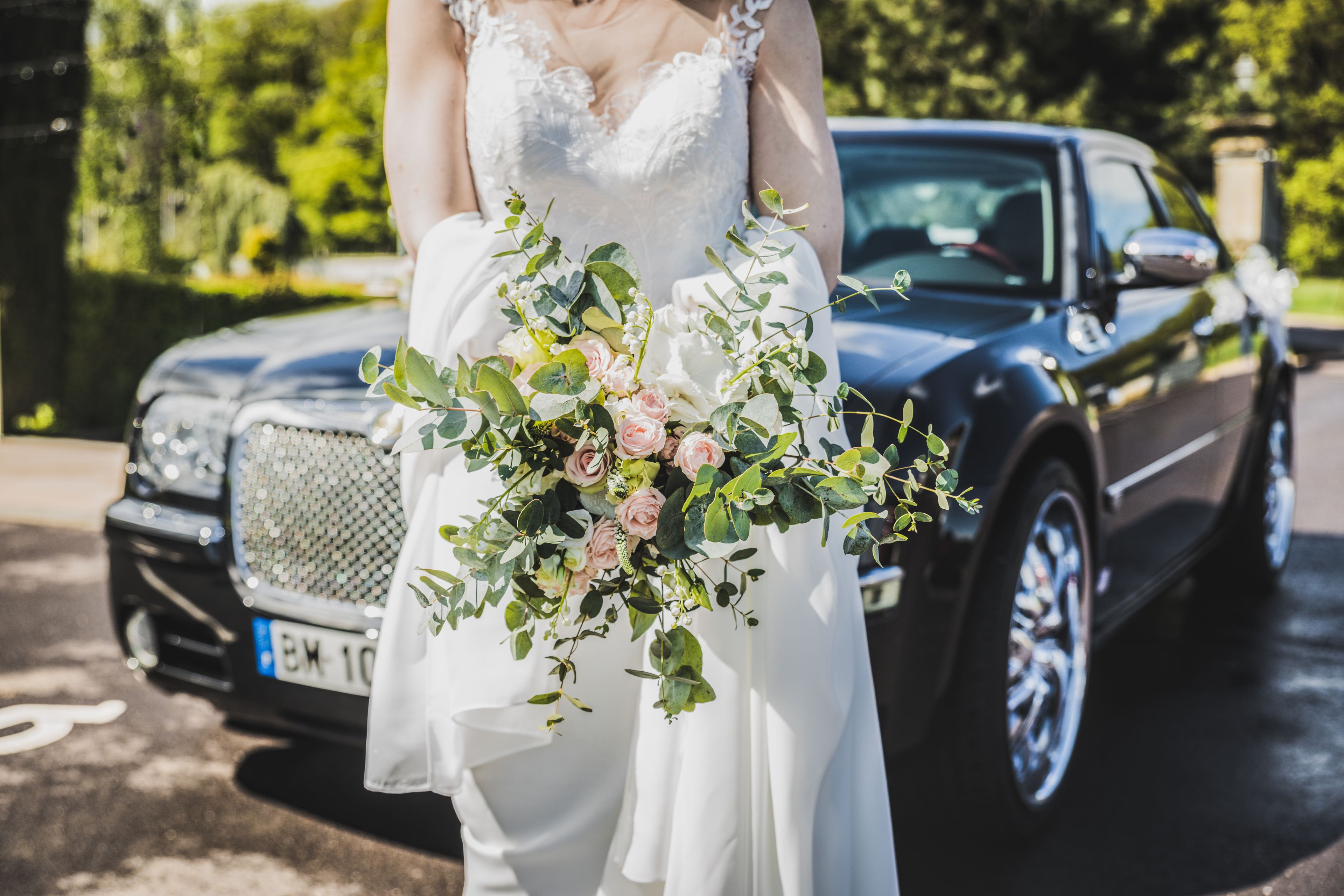
Airport work is the clearest case of all. An outbound transfer and a return several days later have nothing structurally in common, and quoting them together offers no advantage. The same is true of a wedding guest travelling to a church and home again at midnight, or a theatre evening where the interval between arrival and departure is entirely predictable.
There is also a straightforward argument from tidiness. Separate journeys are easier to compare, easier to approve against an expenses policy and easier to change one at a time. If your day is genuinely predictable, the simpler booking is also the better one, and we would rather quote it that way than construct a package around a day that does not need one.
Planning an honest day
A professional chauffeur's working day has limits, and a well-built booking respects them rather than discovering them at nine in the evening. Long as-directed days need breaks, and a schedule that ignores that is not really a schedule. When we quote an hourly booking we plan the rest into it, which is why we ask what time you expect to finish rather than assuming it will sort itself out.
Send us the outline of the day, even a rough one: the addresses, the appointments you are confident about, the ones you are not, and what you will be carrying. We will come back with a written quotation for whichever structure genuinely fits, including the one that costs less. Vehicles come from our own cars and a vetted network of professional chauffeur operators, with specification subject to availability, and WhatsApp or email is all it takes to start.