









Booking a chauffeur for the first time is easier than most people expect and slightly different from what they imagine. There is no app, no fare meter and no queue. You describe the journey, somebody replies with a written plan, and on the day a named person turns up early in a clean car. The uncertainty is usually about the small things nobody explains.
So this checklist explains them. What to include in a first enquiry so the reply is useful. What a quotation should tell you. What happens between confirming and travelling. What the chauffeur will and will not do. And the handful of unwritten conventions that make the whole thing feel natural rather than formal. None of it is complicated, and none of it is a test.
What to send with your first enquiry
The quality of the reply depends almost entirely on the quality of the enquiry. A message saying you need a car to Heathrow on Thursday will get a reply asking six questions. A message with the full picture will get a plan and a figure. It takes about the same two minutes to write either one, so it may as well be the second.
Do not worry about using the right terminology. Describe the day in ordinary language — where you are starting, where you need to be, how many of you there are, what you are carrying — and we will translate that into the vehicle and the timings. If something is uncertain, say so; a range is far more useful than a guess presented as fact.
- The date, and the time something has to happen by
- Where the journey starts, in full, with a flat or building number
- Where it ends, and whether there are stops in between
- How many people are travelling, adults and children
- How much luggage, counted in bags rather than described as light
- Anything that changes the vehicle: a child seat, a wheelchair, a dog
What a written quotation should cover
You should never have to guess at what has been agreed. A proper quotation sets out the vehicle class, the timings, the route as understood, what is included in the arrangement and the terms that apply. It is a document you can read once and act on, not a number in a message. If anything in it does not match what you meant, that is the moment to say so.
Nothing is confirmed until you have that in writing and have agreed to it. Payment arrangements, waiting arrangements and anything to do with changes or cancellation are set out there rather than assumed from a website. Keep the confirmation somewhere you can find it, because it also carries the details you will want on the day. It is the most useful thing to have on your phone that morning.
- The vehicle class quoted, and what would happen if it changed
- Every timing: collection, expected arrival, and any waiting
- What is included, and what would count as a separate journey
- The terms covering changes, waiting and cancellation
- Who to contact, and how, once the booking is live

What happens on the day
Before the collection you will know the chauffeur's name and have a way to message them. They will arrive early rather than on time, and will usually wait nearby rather than sitting outside your door for twenty minutes. When you appear, they will take your bags, open the door and let you get in without hovering. There is nothing you need to do except turn up.
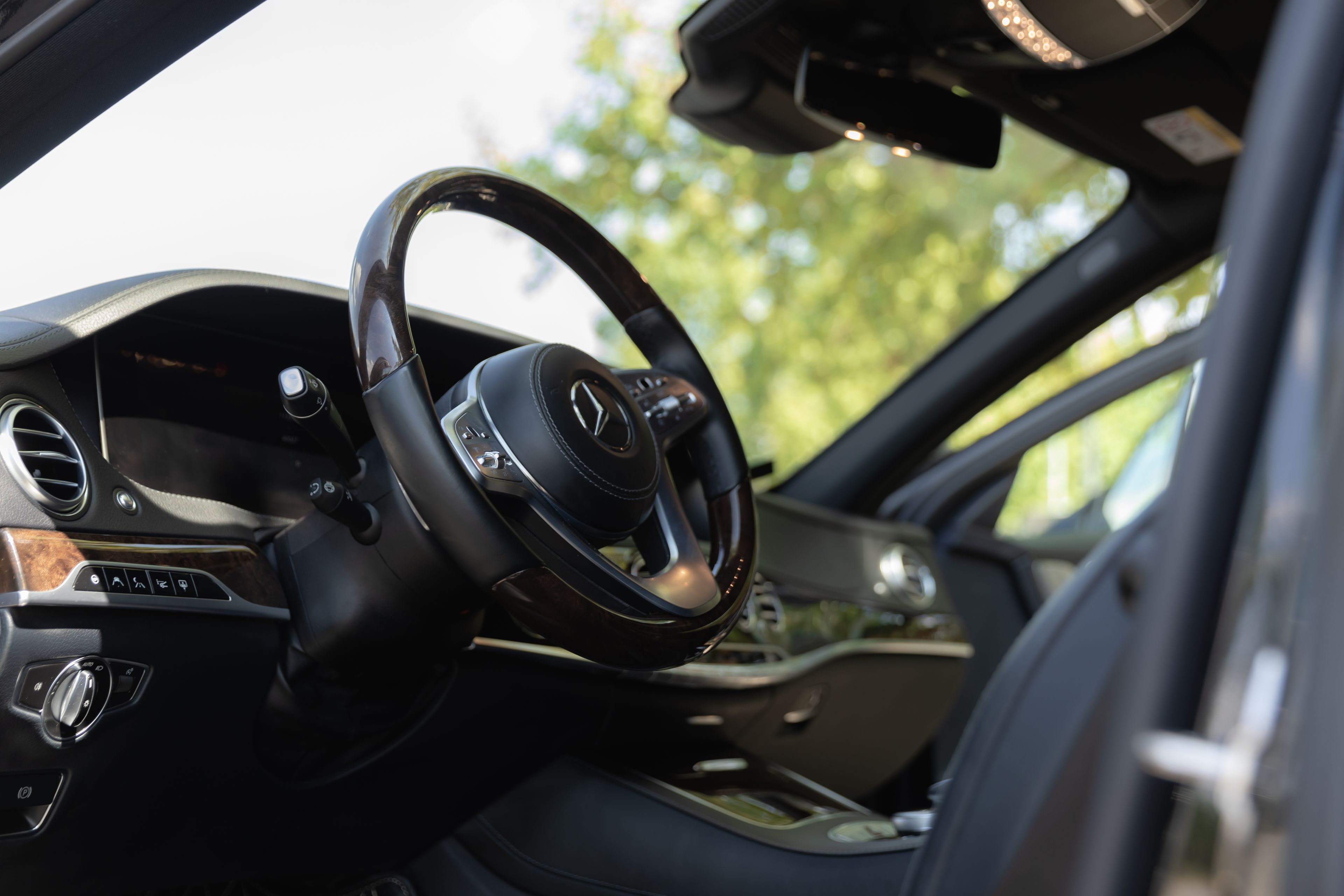
In the car, the temperature is yours to set and the conversation is yours to start or not. Water is in the door. If you want to stop, you say so. If plans change while you are travelling, tell the chauffeur rather than trying to reach the office, because they are the person who can actually do something about it. At the end, they will get out first and open the door.
- Have your phone charged, with the chauffeur's message thread to hand
- Be ready a few minutes before the agreed time
- Say where you would like your bags: boot, or in the cabin with you
- Mention any stop or change directly to the chauffeur
- Take everything with you at the end, and check the door pocket
Etiquette, answered honestly
The questions first-time clients ask most are the ones they feel silly asking. Do you sit in the back or the front? The back, usually behind the front passenger, but if you would rather sit in the front nobody will mind. Should you make conversation? Only if you want to. Should you eat in the car? Ask, and the answer is usually yes for something tidy.
Should you tip? It is never expected and always noticed. Do you need to dress a particular way? No. Is it rude to work, sleep or take a call? None of those. A chauffeur's job is to make the journey suit you rather than the other way around, and the only real etiquette is telling them what you want rather than hoping they will guess.
- Sit wherever you are comfortable; the back is simply the default
- Conversation is optional in both directions
- Confidential calls are routine and treated as such
- Tipping is never expected
- Say if something is too warm, too cold, too fast or too loud
When a chauffeur is not the answer
It is worth knowing where the service does not earn its keep, because a company that says every journey needs a chauffeur is not being useful. A single short hop across a city centre at a quiet hour is faster in a taxi. A solo trip between two stations on a good line is better by train. We would rather tell you that than take the booking.
Where it genuinely pays is anywhere waiting has value: airport collections, days with several appointments, evening events, long drives, and any journey where you are travelling with people you would rather talk to than navigate for. If you are unsure which category your journey falls into, describe it and we will give you an honest view. The answer costs nothing either way.