





Accessibility in chauffeur travel is mostly a matter of specification. There is no single accessible car, because the thing that makes a journey work for one person makes it harder for another: a high seat helps some and hinders others, a wide door matters more than legroom to many, and a folded wheelchair is a boot question rather than a passenger one.
What follows is a way of describing needs precisely enough that the right vehicle and the right chauffeur arrive. It also covers the parts of the journey that happen outside the car — kerbs, steps, venue entrances — because those are where most difficulties actually occur, and because they are answerable in advance. Nothing here needs a diagnosis; it needs a description of what helps.
Describe the transfer, not the condition
The most useful thing you can tell us is what actually happens when somebody gets into a car. Can they step up, or do they need to sit and swing their legs round? Do they need a hand, an arm to lean on, or nothing at all? Is one side easier than the other? That description tells a chauffeur far more than a medical label, and it is what determines the vehicle.
It also removes guesswork about how much help to offer. Some passengers want a steadying arm and no discussion; others find unasked-for help intrusive. Say which, and the chauffeur will do exactly that. Being explicit here is not oversharing — it is the difference between arriving with dignity and being handled. Every professional chauffeur would rather be told than left to judge.
- Whether the passenger steps up into a seat, or sits and turns
- Which side of the body is stronger, and which door suits better
- Whether a hand, an arm or nothing at all is wanted
- Whether help should be offered, or waited for
- How far the passenger can comfortably walk from the vehicle
Getting in and out of the vehicle
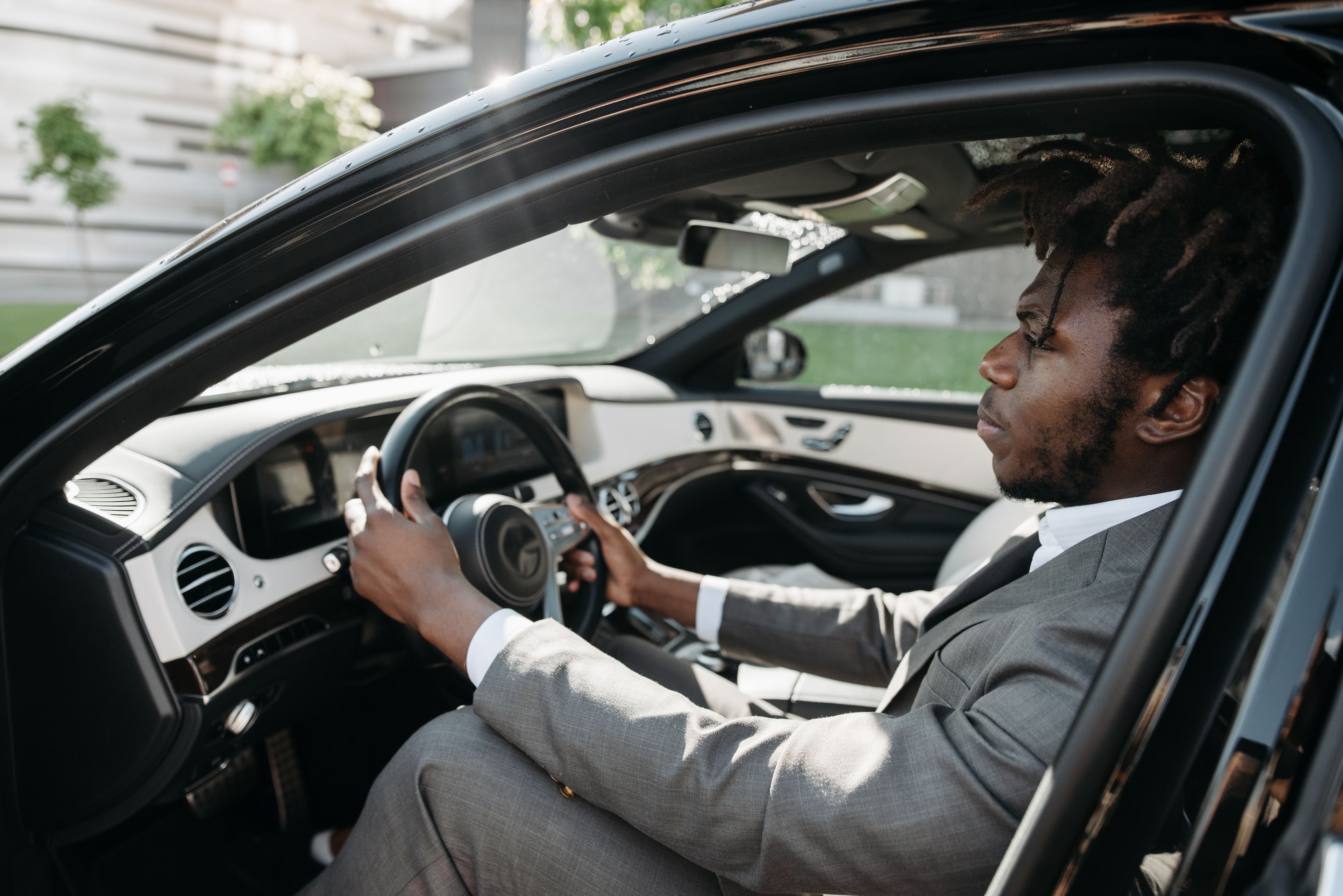
Vehicle geometry decides more than badge or class. Executive saloons sit low, which suits some passengers and is genuinely difficult for others; luxury MPVs sit higher with a wider aperture and a flatter seat, which many find easier. Grab handles, door opening angle and the height of the sill all matter, and none of them appear in a brochure. Describe what helps and we will match the vehicle to it.
Swivel seats, transfer boards and portable steps are not standard equipment, so anything of that kind needs discussing at the enquiry stage rather than assumed. Where a specific adaptation is required, we will say plainly whether it can be arranged and by when. We draw on our own vehicles and a vetted network of professional chauffeur operators, so specification varies with availability.
- Preferred seat height: low and reclined, or high and upright
- Door aperture width, which matters more than interior legroom
- Whether a grab handle or a firm surface to push against is needed
- Space for a leg that does not bend, or for a leg to be lifted in
- Any transfer aid you use, and whether it travels with you

Wheelchairs, walkers and equipment
Manual chairs, powered chairs, rollators, crutches and folding scooters have very different demands, and the differences are practical rather than delicate. A folded manual chair fits in most large boots. A powered chair usually does not, and needs either a suitable vehicle or a plan for the chair to travel separately. The dimensions and the weight are what decide it.
If the chair is used up to the vehicle and the passenger then transfers, say so, because the chauffeur needs to know whether they are folding and loading a chair or simply putting a bag in the boot. If the passenger needs to remain seated in a wheelchair for the journey, that is a specific vehicle requirement and one to raise at the enquiry stage.
- Chair type: manual, powered, folding or rigid frame
- Folded dimensions and weight, if you know them
- Whether the chair folds or dismantles, and who normally does it
- Whether the passenger transfers to a car seat, or must remain seated
- Rollators, crutches or walking sticks travelling as well
- Oxygen, a nebuliser or other equipment needing secure space
Sensory, cognitive and communication needs
Not every requirement is about movement. Bright lighting, a talkative chauffeur, an unfamiliar route or a change of plan can each make a journey difficult for reasons that never appear on a booking form. All of them are straightforward to accommodate once said, and none of them require explanation beyond what you choose to give. A short sentence at the enquiry stage is enough.
It is often the small consistencies that matter: the same chauffeur where possible, the same route, a quiet cabin, no radio, a clear description of what will happen before it happens. Tell us which of those helps and it becomes part of the booking rather than something to renegotiate every journey. Regular clients find this is the part that makes a service usable rather than merely available.
- Preferred level of conversation, including none at all
- Radio, music or silence in the cabin
- Whether a clear explanation of each step helps before it happens
- Motion sensitivity, which affects seating and route choice
- Continuity: the same chauffeur or the same route where possible
The journey outside the car
Most access problems happen in the twenty metres between the door and the car. A dropped kerb on the wrong side of the road, a step at a venue entrance that nobody mentioned, a car park with no working lift: these are the things that turn a manageable journey into a difficult one, and they are almost all discoverable in advance. The venue's own operations team is usually the fastest route to a straight answer.
Ask the destination directly rather than relying on a website's accessibility page, which is often optimistic. Where the answer is unclear, tell us and the chauffeur will find the workable set-down point on arrival rather than at the moment you need to get out. It is one message, and it removes the most common single cause of difficulty on the day.
- Step-free access at both ends, confirmed with the building itself
- The nearest dropped kerb to the entrance you will use
- Whether a car can stop at the door, and for how long
- Lift availability, and what happens if it is out of service
- Distance from the set-down point to where you actually need to be