









An airport transfer is the journey most likely to be remembered for the wrong reasons. Everything hinges on a small number of facts being correct — the terminal, the number of cases, the name on the booking, and where the car will actually be standing. Get those right at the point of enquiry and the rest of the arrangement tends to look after itself.
This checklist covers both directions: the outbound run, where the risk is traffic and the clock, and the inbound collection, where the risk is a party arriving to find nobody expecting them. Work down it before you send your enquiry over WhatsApp or email, and the reply you receive will be a firm plan rather than a list of questions.
Details to gather before enquiring
Almost every airport booking that goes wrong was under-specified at the start. A chauffeur can only work with what is on the job sheet, so the goal is to hand over a complete picture in one message rather than in six. Most people already know all of it — they simply have not written it down in one place, which is exactly what the list below is for.
Two details are worth double-checking rather than recalling from memory. The first is the terminal, which airlines change more often than passengers expect. The second is the name the booking is held under, because that is the name that goes on the meeting board and the one the chauffeur will use when they greet you. A shortened version is fine if you prefer it; just say so.
- Full date and time, with the time zone if you are booking from abroad
- Airport and terminal, taken from the airline confirmation rather than memory
- Flight number, so the journey can be planned around the published schedule
- Exact pickup address, including any gate code, buzzer or side entrance
- Number of passengers, and whether any are children needing seats
- Case count split into large hold bags and cabin bags
- The lead passenger's name as it should appear on the meeting board
Setting the departure time
The question worth asking is not how long the drive takes but what time you want to be standing at the bag drop. Work backwards from there: check-in cut-off, security queue, the walk to the gate, and then the drive. Airlines publish their cut-offs, and it is safer to build the plan around those than around a comfortable guess about the road.
Departure hour matters more than distance on almost every UK airport run. A journey that takes fifty minutes at nine in the evening can take twice that at seven in the morning, and the M25 in particular rewards leaving before the peak rather than driving faster once you are in it. Tell us the flight time and we will suggest a collection time we would be happy to rely on ourselves.
- Check-in and bag-drop cut-off times for your specific airline
- Whether you are travelling hand luggage only or need the desk
- Fast track or lounge access, which changes how early is early enough
- School term dates and bank holidays, which reshape the motorway peaks
- Roadworks or closures on the approach, which we check the evening before

Meeting an arriving flight
Arrivals are where a chauffeur service earns its keep, because somebody is standing there regardless of how immigration behaves. A flight number lets us plan around the published schedule and adjust the meeting time if the airline updates it. What we cannot do is guess which of several exits you will use, so the meeting point is agreed in writing well before the day itself.
Decide in advance whether you want a chauffeur waiting in the arrivals hall with a board, or a kerbside collection once you are through with your bags. Meeting inside suits families, first visits and anyone arriving tired. Kerbside suits frequent travellers with hand luggage who would rather walk straight out. Neither is better; they simply need to be chosen rather than assumed.
- Airline and flight number, plus the scheduled landing time
- Meeting inside the hall, or a kerbside pickup once you are outside
- The exact arrivals door or car park level if you have a preference
- How long you expect to spend at baggage reclaim and passport control
- Who to contact if the party is held up inside the terminal
Luggage decides the vehicle
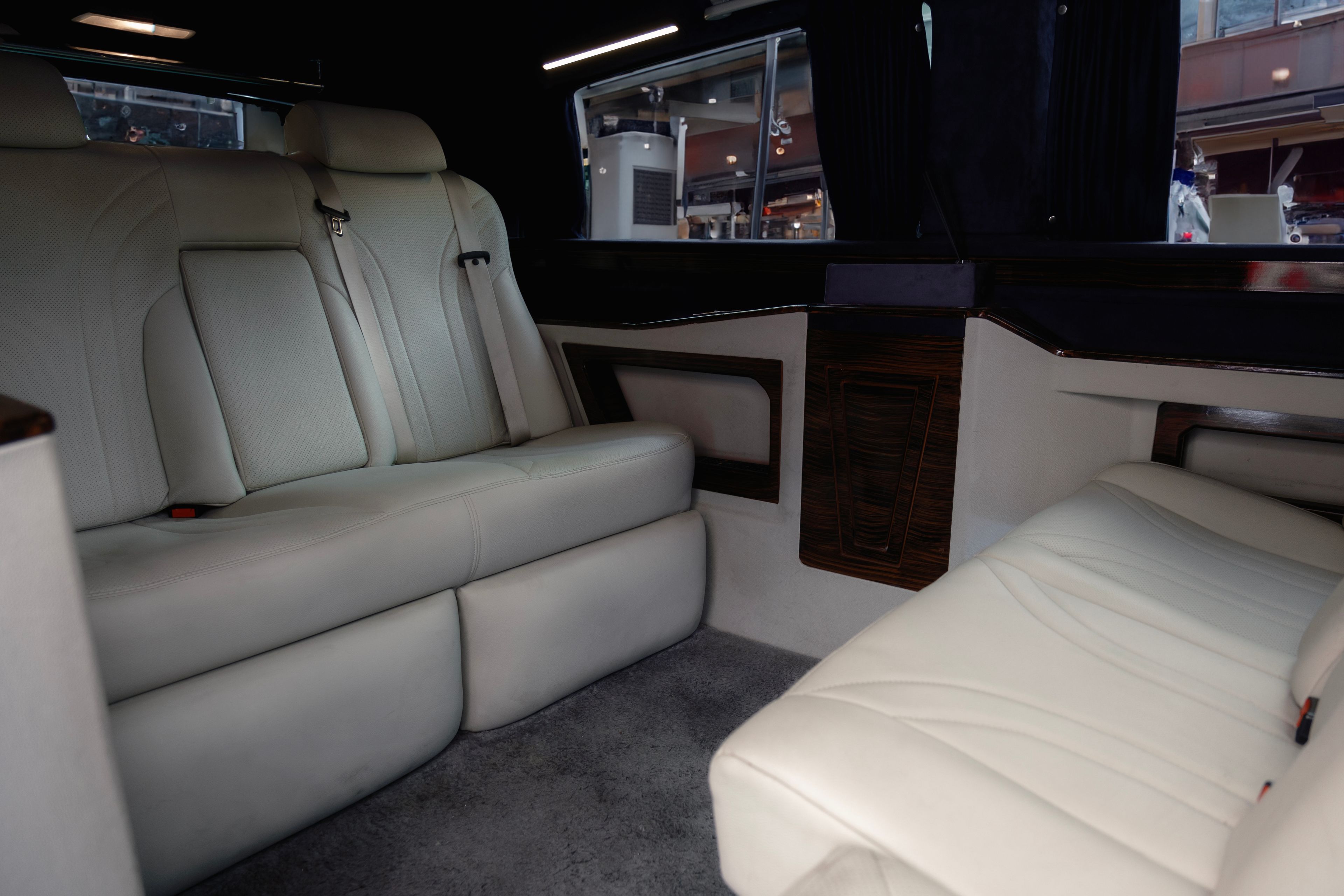
Passenger numbers are easy to state and rarely wrong. Luggage is where airport bookings quietly fail. Four adults will sit comfortably in a large saloon; four adults with four hold cases will not, and the discovery is always made at the kerb with the clock running. Counting bags before you book is the single most useful minute you can spend on the whole arrangement.
Golf bags, ski equipment, pushchairs, musical instruments and boxed artwork all need mentioning by name rather than being folded into a general estimate, because each has an awkward dimension. If you are collecting somebody who has been away for months, assume more luggage than they told you. We would far rather send a larger vehicle than watch a boot lid refuse to close.
- Large hold cases, counted rather than estimated
- Cabin bags, laptop bags and handbags that will travel in the cabin
- Sports equipment: skis, golf clubs, bicycles, diving kit
- Pushchairs, travel cots and car seats you are bringing yourselves
- Instruments, display materials or anything in a rigid case
- Duty free and shopping picked up on the way through
When plans change
Flights move, meetings overrun and families run late. None of that is unusual and none of it needs to become a crisis, provided the message reaches us rather than sitting unsent. Tell us as early as you can and we will re-plan around the new information; the terms that apply to changes and cancellations are the ones set out in writing when the booking was confirmed.
If your flight is delayed while you are already in the air, there is nothing for you to do. If it is delayed before you leave home, a single message lets us move the collection and free the chauffeur for a coffee rather than an hour on a parking meter. And if you are diverted to a different airport entirely, send the new one and we will tell you honestly what we can arrange and by when.