


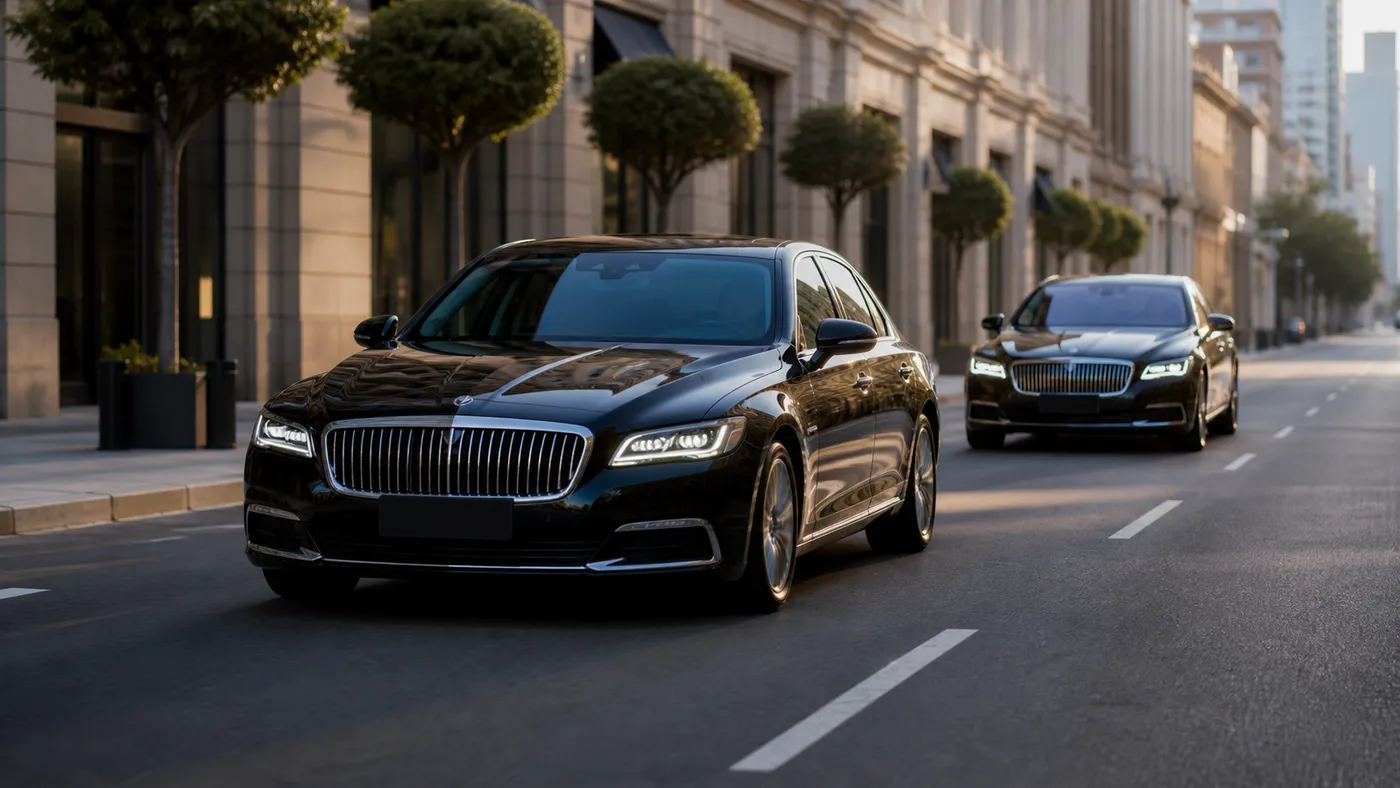


When you are hosting, the transport stops being a detail and becomes part of the hospitality itself. A guest collected from their office and delivered to a marquee has had a good day before anything else has happened. A guest who parked in a field and walked twenty minutes in the rain has formed a rather different impression.
This guide is written for whoever inside a business has ended up arranging the day. It covers collecting guests who are scattered, deciding who travels with whom, the timings hospitality actually runs to, and the return leg after an afternoon that has gone well. Tickets, badges and hospitality packages come from the organisers or your own provider.
The transport is part of the hospitality
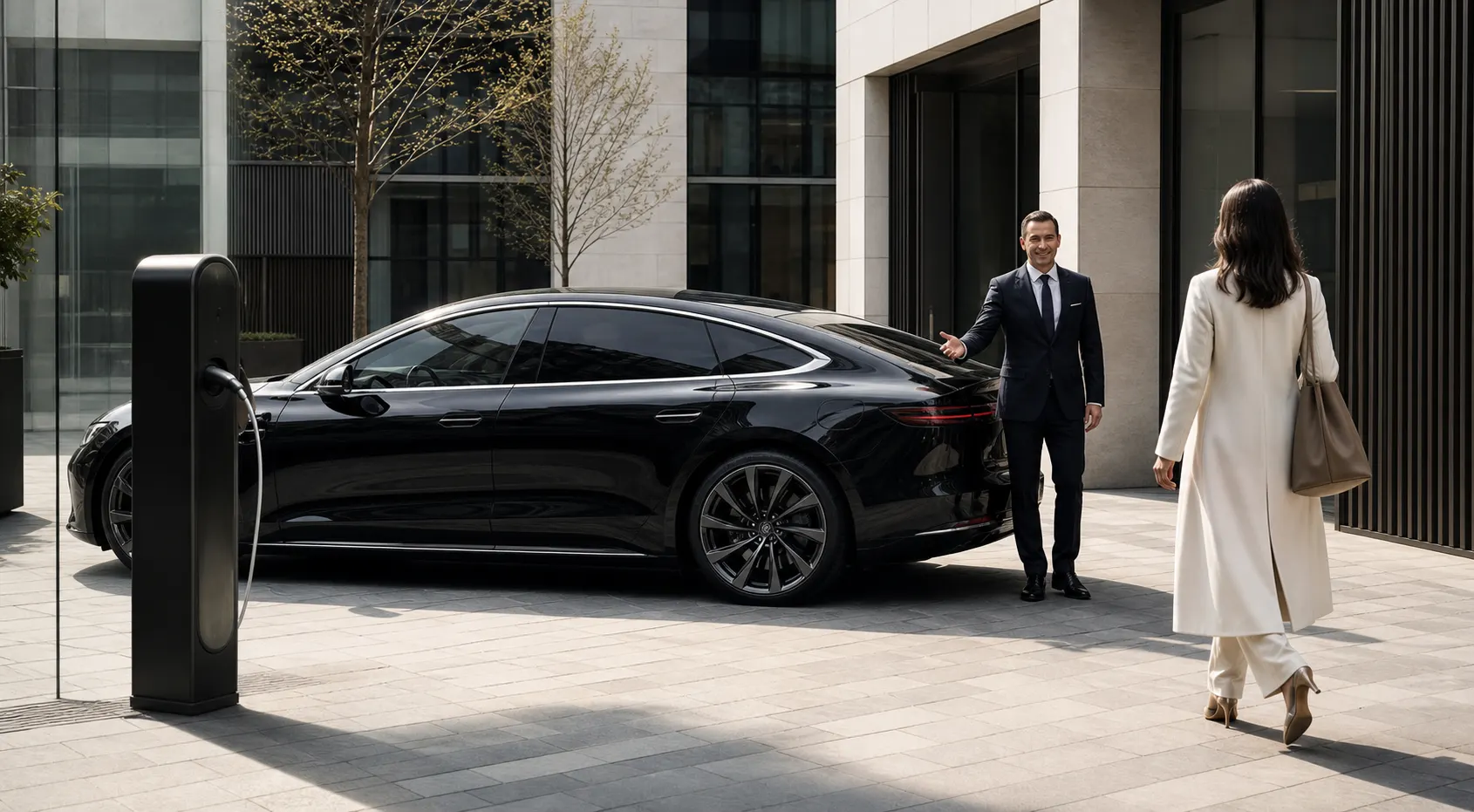
The first and last impressions of a hospitality day are both made by the transport, and both happen while your guests are alone with somebody who does not work for you. A chauffeur who is early, who knows the guest's name, who says almost nothing and opens a door properly is doing something no amount of catering afterwards can undo.
It is also the part guests recognise as effort. Anybody can buy a ticket. Sending a car to somebody's office at eight in the morning is a different signal, and it lands before the day has started rather than after it has finished. The practical benefit follows from the same fact: your guests arrive in the condition you would like them to arrive in.
Collecting scattered guests
The difficulty is rarely the destination. It is that six guests are starting from six places: two offices, three hotels and somebody's home in another county. Trying to bring all of them together before setting off usually wastes more time than it saves and produces a first collection at an unreasonably early hour.
Better to plan each collection as its own journey with a shared arrival window at the far end. Guests near each other can share; guests who are not should not be asked to. And where anybody is arriving by train or by air that morning, build their leg around the published arrival rather than the printed schedule.
- Every guest's actual starting address, not their office by default
- A mobile number for each guest, or for their assistant
- Which guests are content to share a vehicle
- Rail or flight arrivals, with numbers and scheduled times
- One arrival window at the venue rather than six separate times
- A named contact within your company for the day

Who travels with whom
Pairing guests in a car is a decision, not a convenience. Forty minutes in a vehicle with somebody they have never met can be the most valuable part of the day for two clients, or the most uncomfortable. It deserves five minutes of thought from whoever knows the relationships, rather than being settled by whoever happens to be standing nearest.
The same applies to your own people. Putting a host in each vehicle means no guest travels alone with a stranger, and the conversation starts before the venue rather than at it. Where the numbers do not allow that, tell us, and the chauffeur will know who is expecting whom rather than guessing at a kerb.
Hospitality timings are not event timings
A hospitality package has its own timetable, and it usually begins considerably earlier than the event does. Reception, lunch and speeches all happen before whatever you have come to watch, and the arrival time you must meet is the hospitality one rather than the published start of play. The two are commonly hours apart.
Get the timings from the organiser or your hospitality provider in writing and send them to us unedited. We build departures backwards from the earliest of them, with the usual margin for the last few miles of any event approach. Guests arriving as lunch is being cleared is the failure this avoids, and it is entirely avoidable.
The return after a long afternoon
Hospitality days are long and generously provisioned, and by the end of one a proportion of your guests will not be in a position to drive. That is the ordinary condition of the day rather than an embarrassment, and it should be planned for rather than discovered. Nobody should be quietly working out how they get home during the last hour.
Return legs are best treated as windows with a nominated contact, because guests will not leave at the same moment and some will want to stay on. Where guests are being taken to different addresses, work out the order in advance. A guest who lives furthest away and is dropped last should at least know that is the plan.
It is also worth deciding whether the cars stay for the whole day or return later. For a long event the vehicles are usually held, because summoning six cars into one car park at the same moment at the end of an afternoon is precisely the situation the arrangement exists to avoid.
What to send when you brief us
One message with everything in it saves a week of exchanges. Date, venue, the hospitality timings as issued, the guest list with starting addresses, who travels with whom, and the name of the person co-ordinating on the day. From that we can propose vehicles and departure times rather than asking a series of questions.
Everything is arranged over WhatsApp or email, and a written quotation covering vehicles, hours and terms reaches you before anything is confirmed. Cars come from our own fleet and a vetted network of professional chauffeur operators, so model, colour and specification depend on availability. Admission and hospitality remain your arrangement with the organisers.
- The venue, and which entrance or car park you are directed to
- Hospitality timings exactly as the organiser issued them
- A guest list with real starting addresses
- Pairings, where you want particular guests together
- One co-ordinator's name and number for the day