





It sounds like a trivial question and it is not. A phone at four per cent on the way to an airport is a genuine problem: your boarding pass lives on it, your driver updates arrive on it, and the person meeting you at the far end is expecting to hear from it. Charging is one of those details that only matters once, and then matters enormously.
The honest position is that every car has power, and that the shape of the socket is the only thing worth thinking about in advance. Below is what is normally fitted, what to do about laptops and cameras, and how to handle the handful of situations where the car's own provision is not quite enough for the day you have planned.
What is in the back of the car
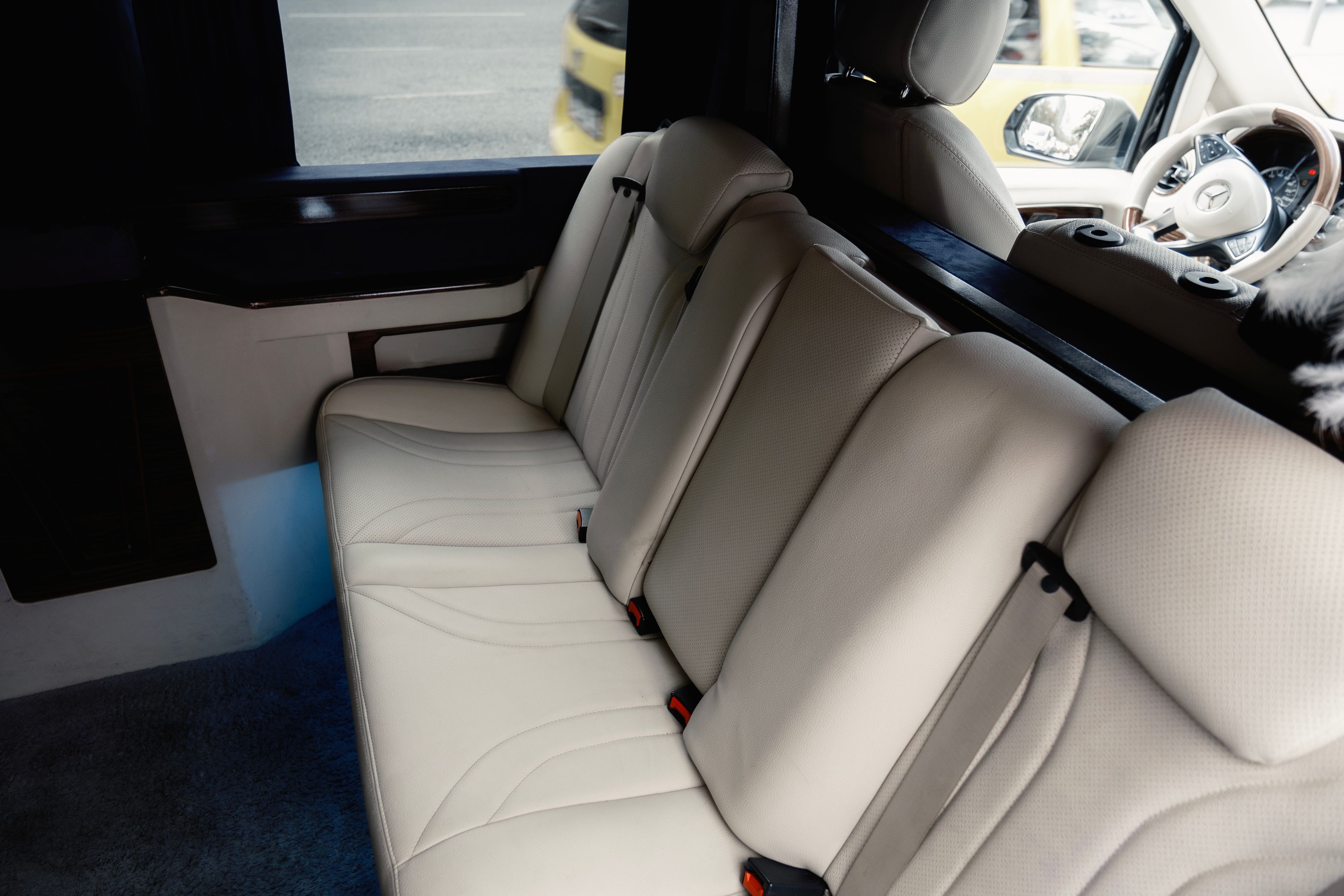
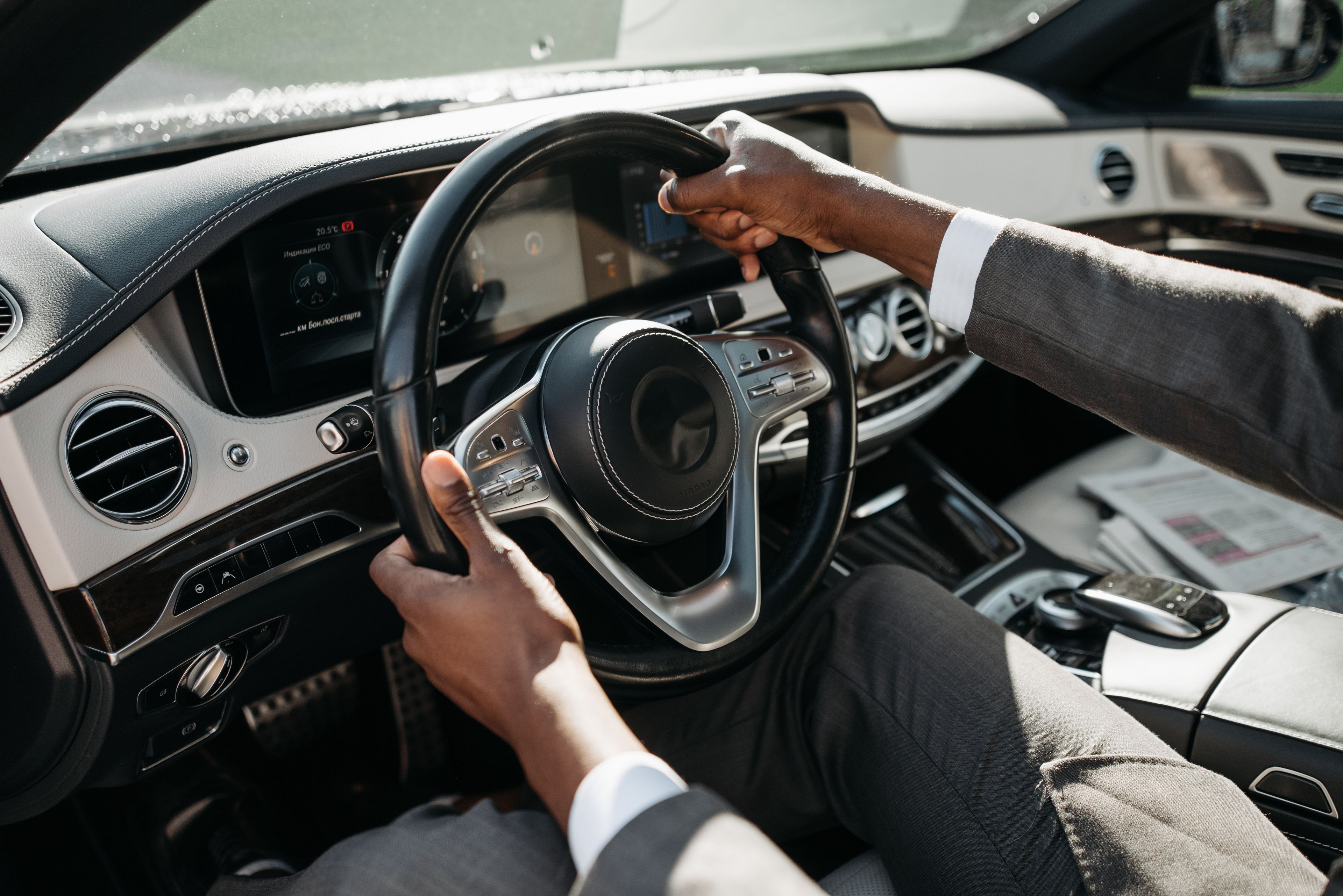
In a modern executive or luxury saloon you will usually find USB sockets in the rear centre console or in the backs of the front seats, a twelve-volt outlet somewhere in the same area, and increasingly a wireless pad ahead of the armrest. Larger MPVs tend to be better provisioned still, with sockets for the second and third rows, which matters when four people all arrive with flat batteries after a flight.
Newer cars have largely moved to USB-C, while a proportion of the fleet across the industry still runs older USB-A sockets, and a small number of prestige and classic vehicles have almost nothing beyond a cigarette lighter socket. That is not a shortcoming so much as a fact of vehicle age. Your chauffeur usually carries a cable or two, but relying on that is a gamble rather than a plan.
Bring the cable that matters
The single most useful thing you can do is put your own cable in your bag. It removes every question about socket types, cable length and whether your phone charges slowly on somebody else's lead. If the journey is long or the day is full, a small power bank is worth more than any in-car provision, because it keeps working while you are out of the car as well as in it.
If charging genuinely matters for a particular booking, say so when you enquire and we will confirm what the allocated vehicle has. That is a straightforward question to answer in writing before you travel, and a far better use of two minutes than discovering the position on the way to a terminal.
- Carry your own cable rather than relying on what happens to be aboard
- A pocket power bank covers you outside the car as well as inside it
- Tell us if a specific connector is essential for your journey
- Older and prestige vehicles may offer only a twelve-volt outlet
- Ask about rear sockets when several passengers are travelling together

Laptops, cameras and larger devices
A phone is easy; a laptop is a different proposition. Most cars will trickle a modern laptop through a high-output USB-C socket, but older machines with mains-only adapters need an inverter, which is not standard equipment in a chauffeur car and is not something we would fit without discussing it first. If you plan to work across several hours, arrive with a charged machine and treat the car's power as a bonus.
Camera batteries, medical devices and anything that must not run flat deserve a specific conversation rather than an assumption. Tell us what the device is and how it charges, and we will be straight about whether the vehicle can support it or whether a stop somewhere with mains power is the better answer for that particular day.
Working on the move
We do not promise onboard wireless internet as a standard feature, because it is not reliably fitted across every vehicle and we would rather under-claim than have you plan a call around something that turns out not to be there. Most passengers who work in the car tether to their own phone, which is why keeping that phone charged matters more than any other connectivity question.
If a journey is effectively a mobile office, tell us the shape of it when you enquire: how many hours in the car, whether calls need to be confidential, whether you want the partition or the privacy glass, and whether a rear-facing seat arrangement would help. Those details change the vehicle recommendation far more than the socket count does.