




Luggage handling is one of those things that separates a chauffeur from a driver, and it is noticed most sharply on the days it does not happen. Standing at a kerb wrestling a case into a boot while somebody watches from the front seat is a small indignity, but it sets the tone for everything after it, particularly at the end of a long flight.
The expectation on our side is straightforward: the chauffeur is out of the car and at the boot before you reach it. What follows describes what that looks like in practice at each end of a journey, the items that genuinely need flagging before the day, and the handful of real-world limits it is better to know about than to discover in a set-down bay.
What happens at each end of the journey
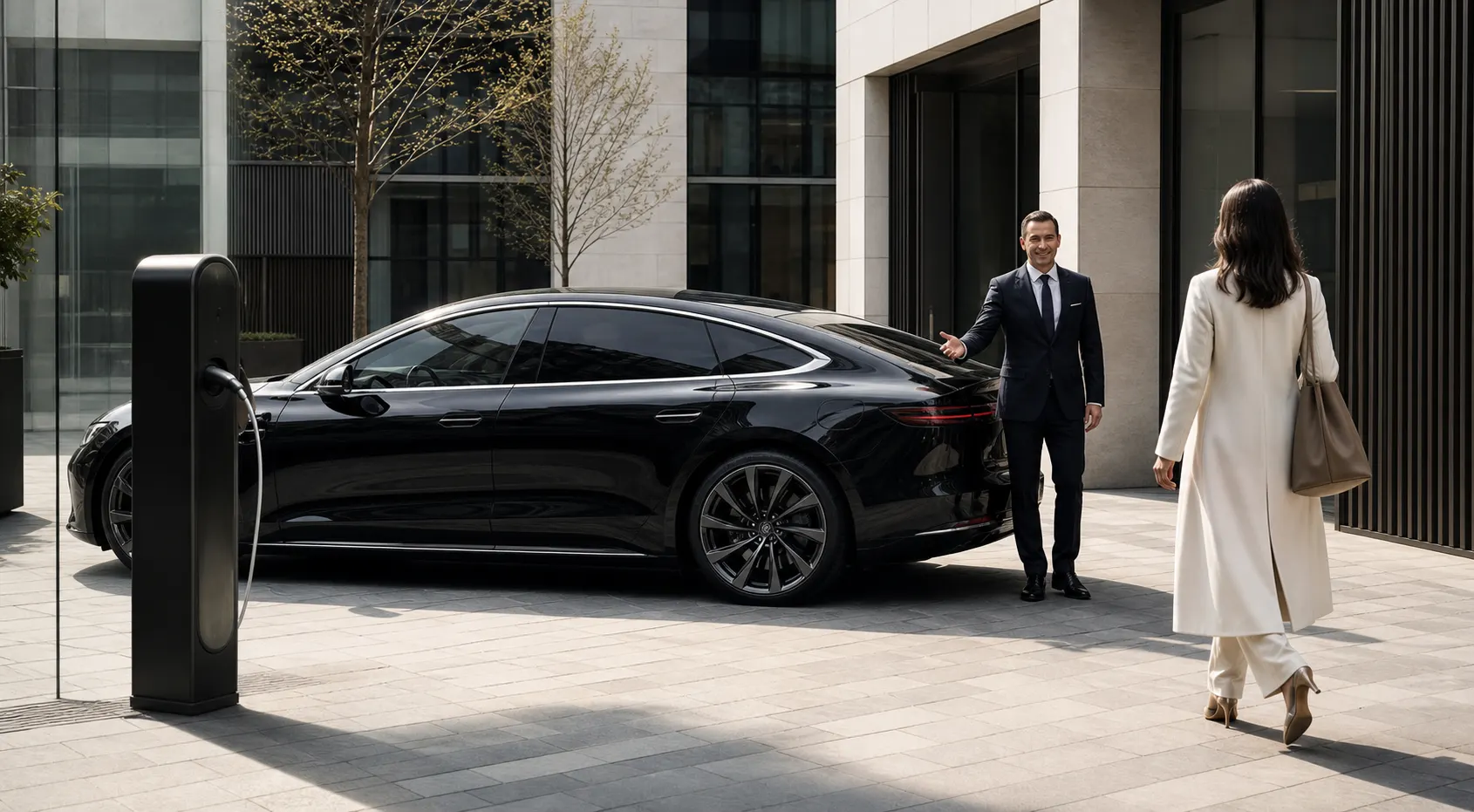
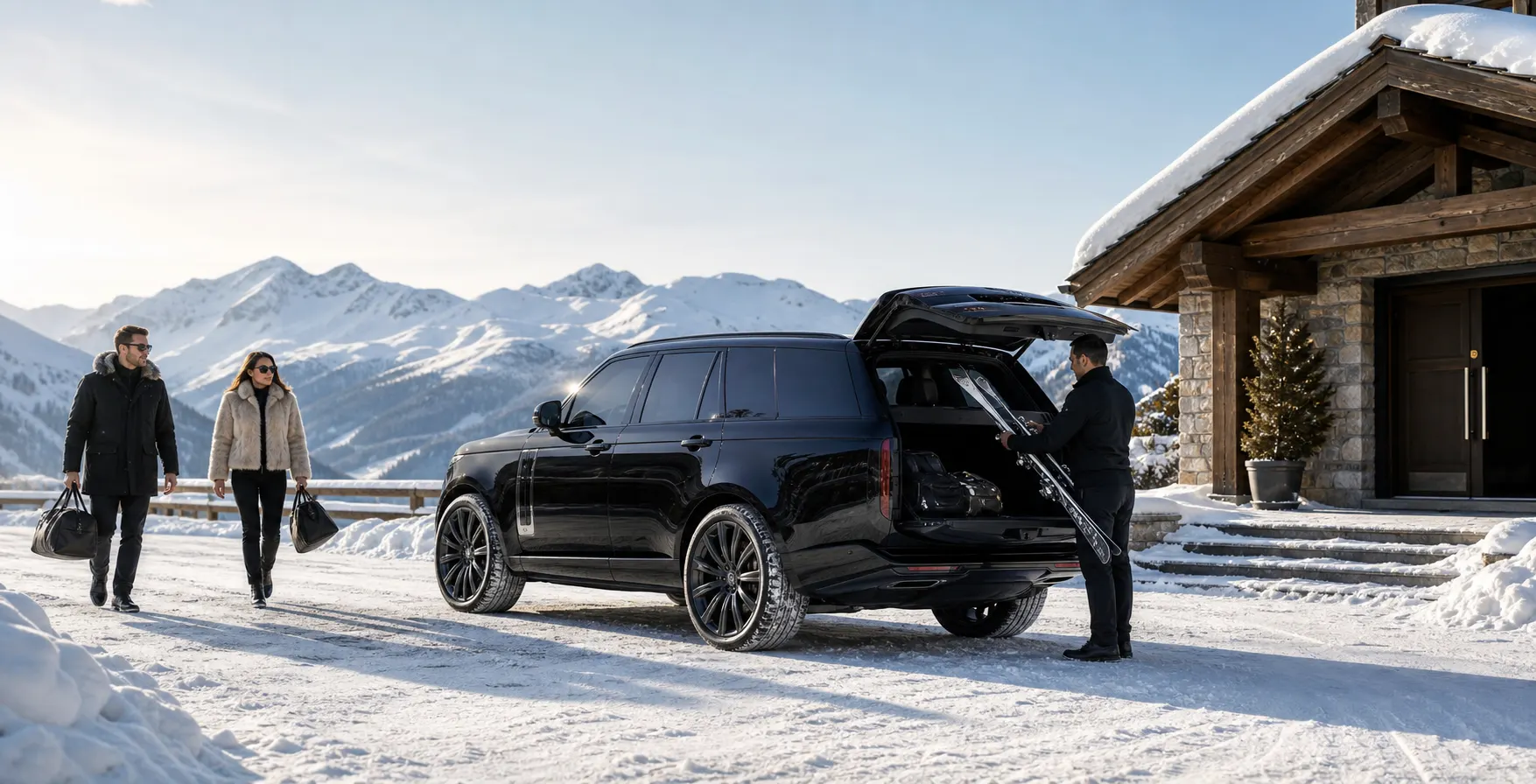
At a collection, the chauffeur is out of the vehicle as you appear, takes the cases, loads them properly rather than stacking them, and holds the door. Bags that need to stay with you, such as a laptop case or a coat, travel in the cabin rather than in the boot. Fragile items go where they will not shift. It sounds obvious, and it is precisely the sort of obvious thing that stops happening when nobody is paying attention.
At the destination the sequence runs in reverse, with the addition that bags are carried to where they are actually going. That means to the door of a house, into a hotel reception, or across the concourse to a check-in desk rather than being left at the kerb. Where a porter takes over, your chauffeur hands off and stays until the transfer is complete rather than driving away mid-transaction.
Items worth naming in advance
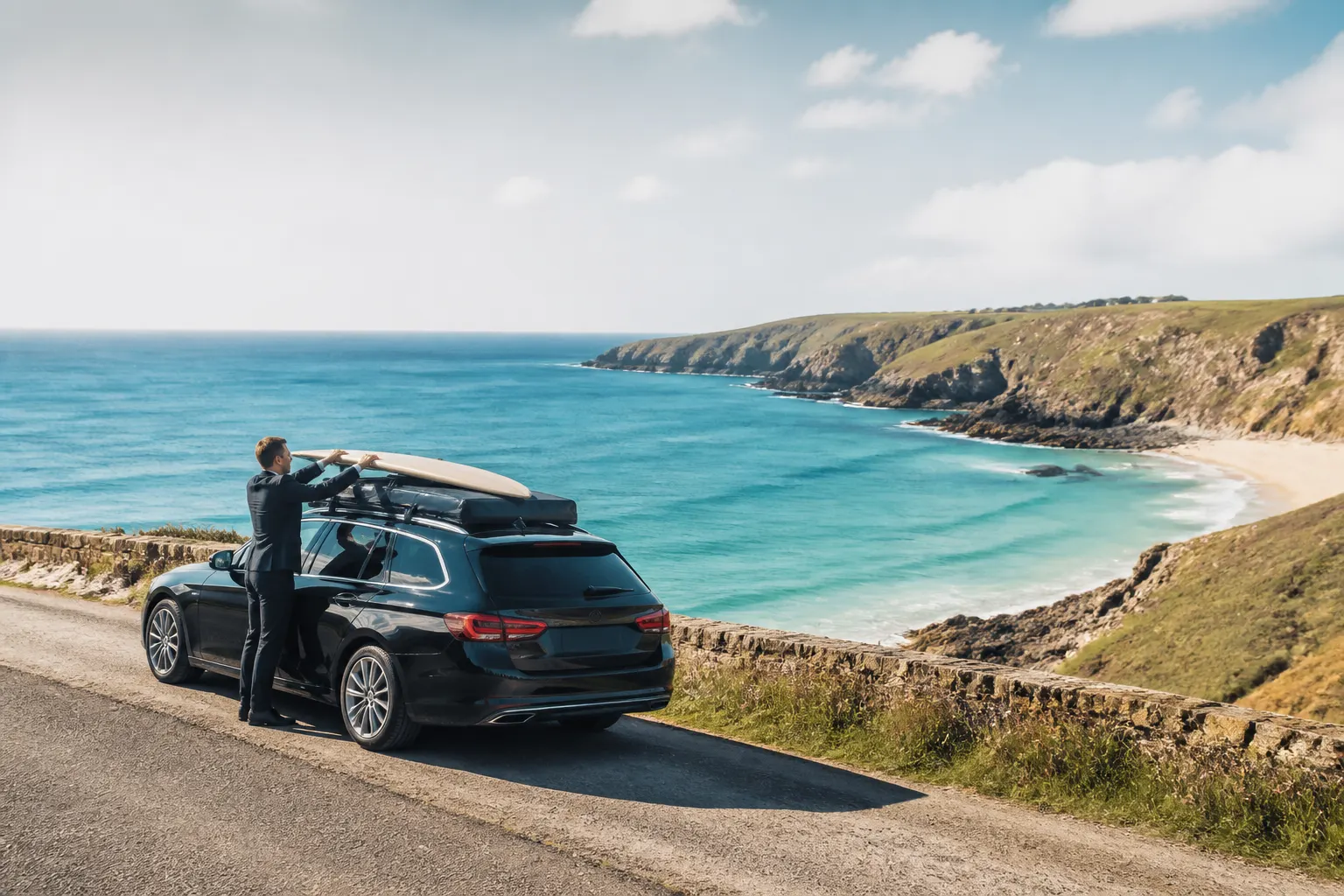
Anything long, heavy or valuable changes the plan, sometimes by changing the vehicle. Golf clubs and skis need boot length rather than boot volume. A cello or a double bass needs a cabin seat of its own. Boxed artwork needs to travel flat and secured. Trade samples and exhibition materials need to be counted properly, because a saloon boot fills faster than most people estimate.
The same applies to items that need handling rather than lifting. A folding wheelchair, a walking frame, a travel cot or a pushchair all need somewhere sensible to go and a chauffeur who knows they are coming. Tell us in the enquiry and the recommendation adjusts automatically. Leave it unsaid and the vehicle sent may simply be the wrong shape for the day, which is the one outcome nobody wants at the door.
- Golf bags, ski bags, snowboards and other long equipment
- Musical instruments, especially anything requiring its own seat
- Artwork, framed pictures or anything that must travel flat
- Exhibition stands, sample cases and boxed work materials
- Wheelchairs, walking frames and other mobility equipment
- Unusually heavy single items such as tool cases or hardware

The limits worth knowing about
There are places a chauffeur cannot follow. Airport set-down bays are actively enforced and a vehicle cannot be left unattended in one, so at a busy terminal the practical arrangement is often to park properly and walk in rather than to stop at the kerb. Some office buildings and private estates restrict access beyond a reception desk. None of it is reluctance; it is simply where somebody else's rules take over.
Meet and greet at an airport means a chauffeur waiting in the arrivals hall with a name board and helping with your bags from that point on. It does not mean airside access or anything resembling fast-track through the border, and we will not imply otherwise. Once you are through customs and into the hall, the luggage stops being your problem, which is the part that actually matters after a long flight.