






The theatre is unusual among evenings out in having a genuinely immovable deadline. Curtain-up happens whether you are in your seat or not, and most houses hold latecomers at the back until a suitable break, which in some productions does not arrive for a considerable while. That single fact shapes every sensible decision about the journey there.
The other complication is geography. London's theatres are concentrated into a few streets laid out long before anybody imagined cars stopping outside them, and regional and touring houses are frequently in city centres with restrictions of their own. What follows covers the deadline, the streets, matinee days, longer forms such as opera, and getting somebody with limited mobility comfortably to a seat.
Curtain-up is not negotiable
Work backwards from the advertised curtain and add more margin than feels necessary. The published time is when the performance begins, not when you should arrive; most houses want audiences in some minutes beforehand, and a bar, a cloakroom, a programme or a queue absorbs the rest. Arriving as the doors close is not arriving on time.
That margin has to absorb central London traffic, which on a weekday evening is a genuinely variable quantity. We would generally propose a departure that has you at the theatre with time in hand and treat the surplus as a drink beforehand rather than a loss. The alternative is watching a clock from the back of a car, which spoils the beginning of an evening whether or not you make it.
Latecomer policies differ by production and by house, and some are considerably stricter than others. The theatre's own guidance is the only reliable source, and it is worth a glance when you book the seats rather than on the night. Where a production has no early break, missing curtain-up can mean missing a substantial part of the first act entirely.
The geography of theatreland
The West End houses sit along and behind Shaftesbury Avenue, the Strand, the Haymarket and the streets around Covent Garden, and almost none of them has anything resembling a forecourt. Several stand on roads with evening restrictions; a few are on pedestrianised streets a car cannot enter at all. The door is rarely the set-down point, and expecting otherwise causes more delay than the traffic does.
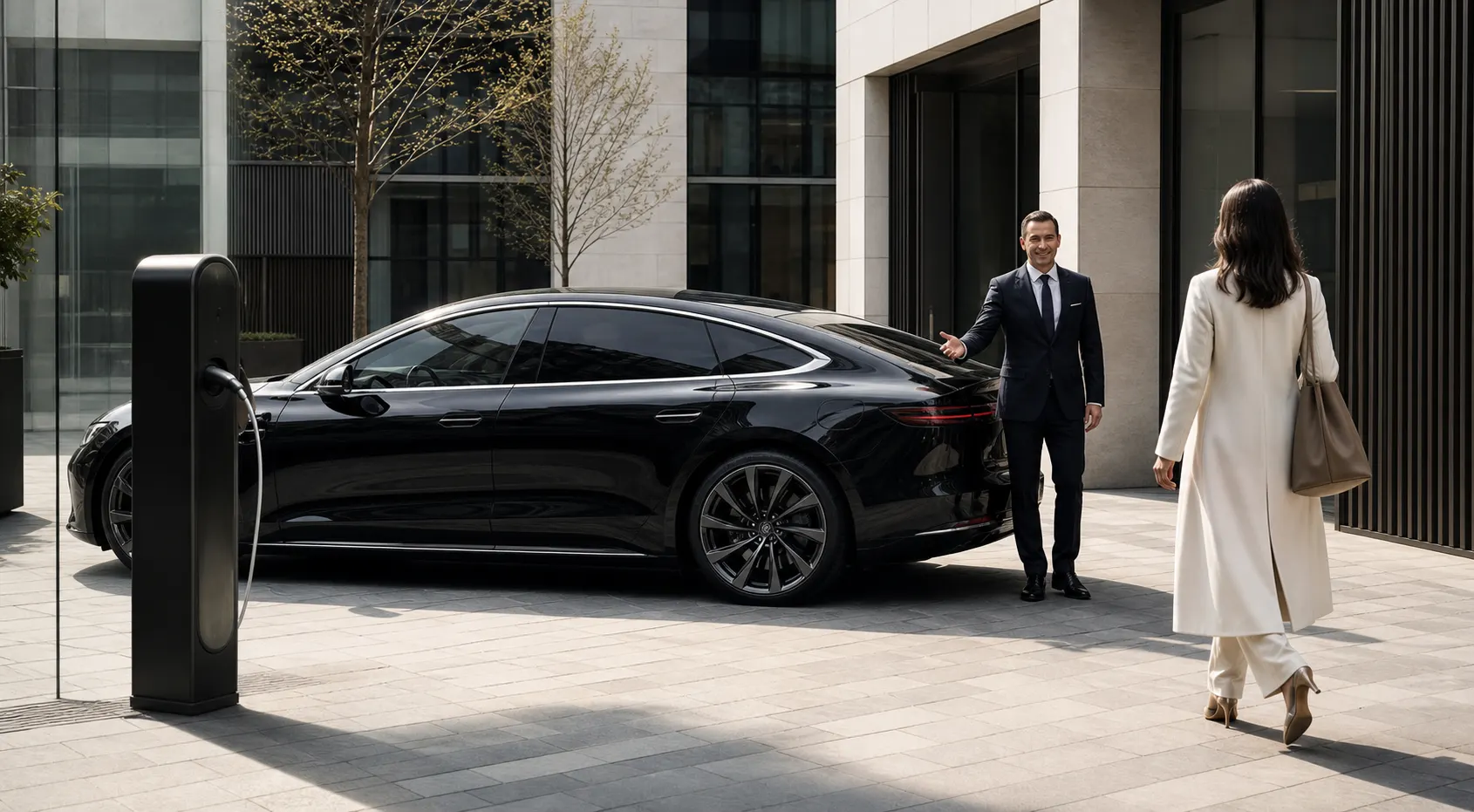
What actually happens is that the car stops at a workable corner nearby and you walk the last stretch, usually a very short one. Your chauffeur knows which corner suits which theatre and, more usefully, which one still works when the surrounding streets are full. Send us the name of the theatre rather than the name of the show, since productions transfer and shows close.
- The theatre's name, not only the production
- Whether anyone in the party finds a short walk difficult
- The advertised curtain time and any early entry you have booked
- Interval arrangements, if you are meeting people there
- The likely finish, which the theatre usually publishes

Matinees and two-show days
Matinee days change the character of the district entirely. A midweek or Saturday afternoon performance puts a full audience into the same streets in daylight, and on days when both a matinee and an evening show run, the gap between them produces a double flow of people and vehicles inside a short window.
If you are going to a matinee, allow for shopping traffic on top of theatre traffic, particularly around Covent Garden and Piccadilly on a Saturday. If you are going in the evening on a two-show day, the streets shortly before your curtain are carrying the previous audience away. Neither is hard to plan around, but both reward leaving earlier than a map suggests.
Opera, and evenings that run long
Opera and some classical productions run considerably longer than a play, occasionally with a long dining interval built into the middle, and they can finish late enough to make the journey home a real consideration. Country house opera adds a rural drive at either end and clothes that combine badly with an unlit lane and a taxi that never arrives.
For these evenings the useful arrangement is usually a held vehicle rather than two separate journeys. The car is there in the interval if you want something from it, and it is there at the end whenever the end arrives. Running times are published by the house and are the figure to plan from, since they vary a great deal between productions of the same work.
Regional and touring venues
Outside London the theatres are often the most historic buildings on their street, which means narrow frontages, city-centre restrictions and parking arrangements designed for a different era. Stratford, Chichester, Bath, Manchester and Leeds all present versions of the same problem: the venue is easy to reach and awkward to stop at.
The advantage regionally is that the surrounding roads clear faster after a performance than they do in central London. The disadvantage is distance, since a regional theatre is frequently a journey rather than a hop. Where the drive home is long, a held car turns a late finish into something restful instead of the least enjoyable hour of the evening.
Access, steps and getting to the seat
Historic theatres were not built with step-free access in mind, and the distance between the nearest point a car can stop and the seat itself may involve stairs, a slope, or a longer walk than a website implies. Where somebody uses a stick or a wheelchair, or simply finds standing difficult, this is worth establishing when the tickets are booked.
Tell us as well, because it changes both the vehicle and the set-down. A higher seat and a wide door aperture make a considerable difference, and there is often a stopping point closer to an accessible entrance than to the main doors. Your chauffeur can also stay near the exit at the end for a collection that involves almost no walking at all.