





Skip to content
Luxury ChauffeursUnited Kingdom
How to Set Up a Corporate Chauffeur Account

Costs & Booking

How to Set Up a Corporate Chauffeur Account

6 min readUpdated 16 January 2026

Quoted individually. Share the outline and we reply with a written price — no rate card, no obligation.

Topic
Costs & Booking
Reading
6 min read
Updated
16 January 2026
Coverage
London & the whole UK

Corporate accounts are often described as though they were a membership, which they are not. An account is an administrative arrangement that changes who may book, how bookings are authorised, how they are recorded and how they are reconciled. It solves problems of governance, authority and paperwork rather than problems of transport, and it is worth being clear about that before anybody sets one up.

Which means the first question is whether you have those problems. If two people in your organisation book a car occasionally, an account will add process without removing much. If a dozen assistants across three offices are each arranging travel independently and finance cannot tell which cost centre anything belongs to, an account is the answer. This guide covers both cases honestly.

What an account actually changes

Three things, mainly. Bookings stop being individual transactions and become part of a standing arrangement, so recurring details do not have to be restated each time. Authority is defined, so it is clear who may commit the company to travel. And reporting becomes consistent, so finance receives the same information in the same shape every period rather than a scatter of unrelated documents.

What an account does not change is how a journey is quoted. Each booking is still priced on its own facts, because a Tuesday transfer and a full day of held hours consume different amounts of a chauffeur's time regardless of who is paying. The account governs the wrapper around the journeys rather than the arithmetic inside them, and any operator implying otherwise is describing a discount rather than an account.

Deciding who may book

This is the decision that most repays thought, and it is usually made carelessly. Name the individuals who can raise a booking, and say whether any of them require approval beyond a certain scope. The commonest arrangement is a small group of authorised bookers, typically executive assistants, with everybody else routed through them. It is worth naming a deputy as well, because assistants take holidays and travel does not stop while they do.

Then decide what a booker must supply. If every journey needs a cost centre, a project code or a passenger name for reporting, make that a required field from the outset rather than chasing it afterwards. Retrofitting a code onto three months of past bookings is a miserable job that somebody will be asked to do if it is not settled now.

  • The named individuals authorised to raise bookings
  • Any approval step required above a defined scope of travel
  • The cost centre, project or entity code to accompany each booking
  • Who receives confirmations, and who receives billing documents
  • Which passengers may travel on the account and which may not
  • How after-hours and weekend requests should be handled
  • Who to contact when something goes wrong during a journey
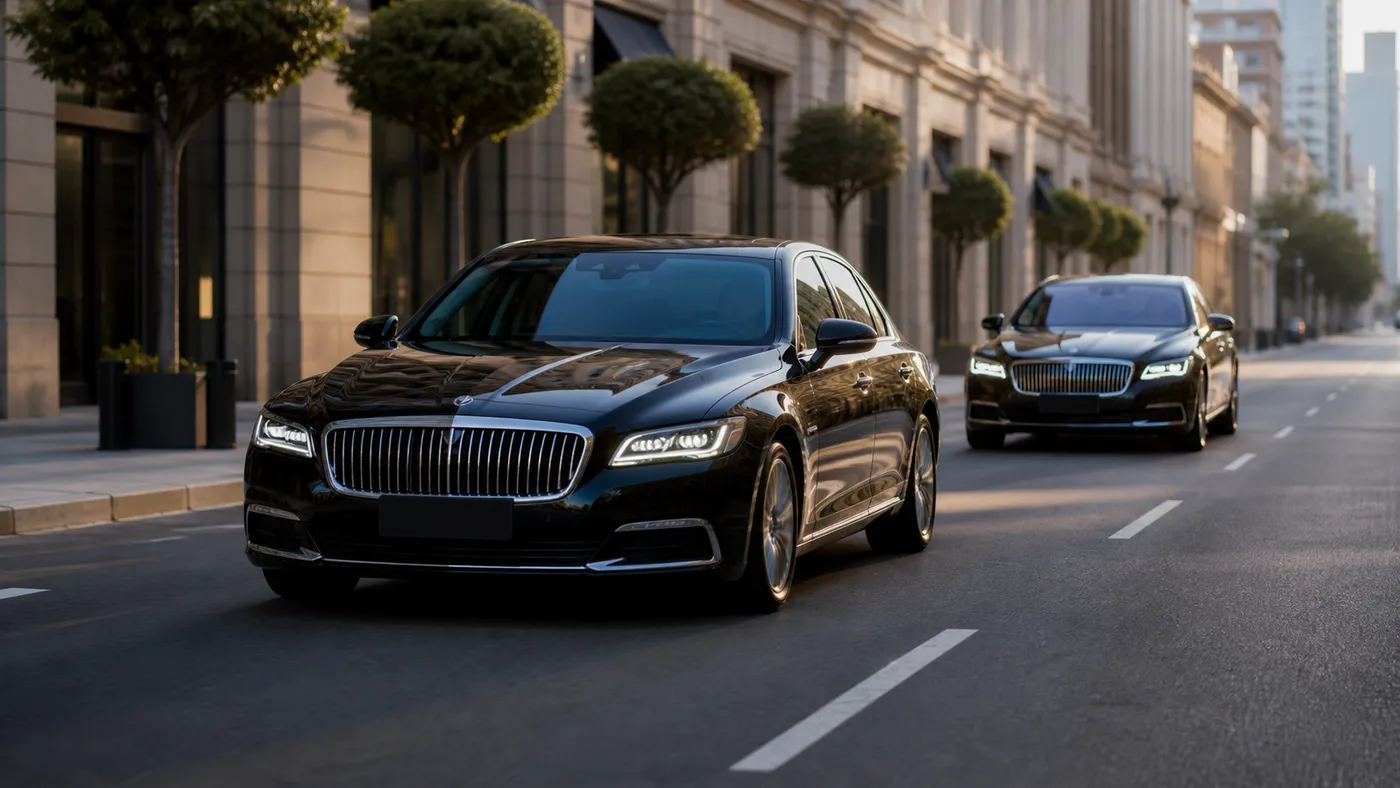
How to Set Up a Corporate Chauffeur Account — illustrating the guide

Travel policy and duty of care

An account is a good moment to write down what your organisation actually wants. Which journeys justify a chauffeur and which should be rail or taxi. Which vehicle class is appropriate for which level of traveller. Whether late-night travel for lone employees is arranged as a matter of course. These questions get answered ad hoc otherwise, differently by different people.

The duty of care angle is real and increasingly asked about. Employers are responsible for the safety of staff travelling on business, and pre-booked travel with a licensed operator, a named driver and a recorded itinerary is materially easier to evidence than reimbursed ride-hailing receipts. If your policy has to satisfy a board or an insurer, say so and we will make sure the records support it.

  • Which journeys justify a car and which should be rail
  • Which vehicle class suits which kind of traveller and occasion
  • Whether late-night travel for lone staff is arranged as standard
  • How travel for visiting clients and guests is authorised
  • What record finance and the insurer need to see afterwards

Reporting and reconciliation

Decide what finance needs before the first booking rather than after the first period close. The useful fields are usually the passenger, the date, the route, the cost centre and the booker, and having them recorded consistently turns reconciliation from an investigation into a sort. Ask for the reporting format your finance team actually uses rather than accepting whatever happens to be offered as standard.

Billing arrangements are agreed in writing when the account is opened, and set out how and when documents are issued, in whose name, and to which address. Those are commercial terms specific to your organisation rather than a general policy, and they are confirmed in the account paperwork so that nobody is later working from a recollection of a conversation held with somebody who has since changed roles.

Setting one up in practice

It is a short exercise. Send us the company details, the authorised bookers, the reporting fields you need and an outline of the travel pattern you expect, and we will come back with the account terms in writing. Nothing is live until both sides have agreed them, and the first bookings are usually made within a day or two of that.

It is worth including the awkward cases rather than only the routine ones. Very early airport departures, visiting clients whose travel you cover, board meeting days with several cars, and any recurring weekly journey are all far easier to handle if they have been anticipated in the account arrangement than if they arrive as exceptions nobody has authority to approve. Exceptions are where most corporate travel comes unstuck.

Whether you need one at all

If your organisation books a handful of journeys a year, the honest answer is probably not. A written quotation and confirmation for each booking gives you the same audit trail with none of the administration, and a named contact who knows your requirements achieves most of what people actually want from an account without any of the paperwork that comes with one. We would rather say that than set up something you will never use.

The point at which it starts to pay is when the volume creates coordination problems: several bookers, several cost centres, recurring patterns, or a finance team asking questions nobody can answer quickly. If you are not sure which side of that line you are on, describe your pattern to us on WhatsApp or by email and we will tell you plainly whether an account would help.


In Short

Key Points

  1. 01An account governs authority, records and reporting, not how journeys are quoted
  2. 02Name the authorised bookers and the required codes before the first booking
  3. 03Pre-booked, recorded travel is far easier to evidence for duty of care
  4. 04Ask for the reporting fields finance actually uses, not the default ones
  5. 05Low-volume users usually gain nothing an ordinary written booking lacks

Why Luxury Chauffeurs

Why Choose Luxury Chauffeurs

  • 01

    Held, not hailed

    The car is reserved against your name for the whole booking. Nothing is pooled, nothing is reallocated, and no algorithm decides who arrives at your door.

  • 02

    Priced in writing

    Distance, duration, vehicle and timing are worked out before you commit, then confirmed in writing, so the figure you agree is the figure for the journey.

  • 03

    London and beyond

    A short run across Mayfair and an unhurried drive to the Highlands are arranged with the same care, by the same people, under one booking.

  • 04

    Discretion as habit

    Unbranded vehicles, chauffeurs who speak only when spoken to, and a rear compartment where a confidential call needs no lowering of the voice.

Luxury Vehicles

Choose Your Chauffeur Driven Car

From an executive saloon to a Rolls-Royce. Model, colour and specification are subject to availability and booking confirmation.

Four Steps

How Booking Works

Chauffeur booking with us is a conversation rather than a checkout. Every journey is priced individually.

  1. 01

    Tell us the journey

    Send the date, the addresses and the shape of the day on WhatsApp, or use the journey planner. There is no obligation and no card details are taken to get a price.

  2. 02

    We quote in writing

    You receive a written quotation covering the vehicle, the timings and everything included — no estimates that move later, and no surge pricing.

  3. 03

    The car is held

    On confirmation a vehicle and a named professional chauffeur are assigned to your date, and the terms are put in writing.

  4. 04

    Your chauffeur arrives

    Briefed on the route, the access and the waiting arrangements before the day, so nothing is decided at the kerb.

Executive chauffeur travel

Corporate & Business

Business Travel Across Britain

Corporate chauffeur work runs to a diary rather than a postcode. Meetings overrun, a signing drags past six, and the airport leg still has to make check-in. Because the vehicle is committed to your booking, a revised plan costs a message rather than a fresh price. Accounts can be arranged so individual travellers never handle payment, and the paperwork is kept plain enough for a finance team to reconcile without chasing anybody.

The rear compartment is treated as a working space. Cabins are quiet enough for a confidential call, papers can stay open on the seat between stops, and chauffeurs understand that what is overheard is not repeated. Roadshows, board visits and conference movements involving several cars are coordinated centrally, so one person holds the schedule and one thread carries every change to it.

Airports

Airport Chauffeur Connections

Met in arrivals with a name board, luggage carried, and departures planned around your check-in.

Before You Send

What to Tell Us

None of it is compulsory. The more you include, the sooner we can reply with a firm written price rather than a question.

  1. 01

    Where and when

    Pickup and destination addresses, the date, and the time you need to arrive rather than leave.

  2. 02

    Who is travelling

    Passenger numbers, large cases and cabin bags, and the ages of any children so we fit the right seats.

  3. 03

    The shape of the day

    One journey, a return, or a car held for several hours. Say if the timings might move.

  4. 04

    Flight or event details

    A flight number lets us plan around the published schedule; an event name tells us which gate and which traffic plan.

  5. 05

    Vehicle preference

    A category is enough — or ask us to recommend one for the party and the distance.

  6. 06

    Anything else

    Accessibility requirements, a preferred route, a stop on the way, or a quiet car with no conversation.

Professional Chauffeur Standards

The Standard We Hold

What a premium chauffeur service should mean in practice, rather than in a brochure.

  • Vetted professional chauffeurs

    Every chauffeur is licensed, insured and vetted before they drive for us. They are briefed on your journey in advance and dressed for the occasion.

  • Discretion by default

    Vehicles carry no branding. Your chauffeur speaks when spoken to, and what is discussed in the back of the car stays there.

  • Immaculate vehicles

    Current-generation cars, valeted before every journey, with still water and charging in the rear compartment.

  • One point of contact

    The same person handles your enquiry, your quotation and your booking, so nothing is explained twice.

A professional chauffeur waiting beside a luxury car

Where We Travel

Nationwide Chauffeur Service

London is where most of our work begins, but a chauffeur can be arranged to and from any address in the United Kingdom.

Get a Quote

Request a Personalised Quotation

Every journey is priced individually against distance, duration, vehicle and timing. Send the outline and we will reply with a written quotation.

Frequently Asked

Related questions

What This Page Covers

  • corporate chauffeur account
  • business chauffeur account uk
  • company car service account
  • corporate ground transport setup
  • executive travel account
  • chauffeur account for business
  • duty of care ground transport

Related

Continue Reading

WhatsApp

+44 7775 554848

The quickest way to reach us, day or night.

Email

info@luxury-chauffeurs.uk

For itineraries, accounts and anything with an attachment.

Coverage

London & the whole UK

Quoted individually, in writing, before anything is confirmed.

A chauffeur-driven journey at dusk

Arrange Your Chauffeur

Where Will Your Next Journey Take You?

Tell us the date, the destination and the mood of the day. We will reply with a written quotation and a chauffeur assigned to you.

Get a QuoteWhatsApp