



Most couples come to the question of wedding cars from the wrong end. They choose a vehicle they like the look of, and then discover on the day that it can only be in one place at a time, that a gown does not board a low saloon gracefully, and that the parents needed collecting from a hotel twenty minutes in the opposite direction. The car is the easy part. The timeline is the part that decides whether the morning is calm.
This guide works through wedding transport in the order it should be planned: the schedule first, then the bridal car, then the guest movements, then the London-specific complications of churches on one-way systems and hotels with restricted forecourts. It is written from the perspective of the person who will be sitting outside at half past ten wondering whether anyone remembered the bouquet.
Start with the timeline, not the car
Write out the day as a sequence of movements before you look at a single photograph of a Rolls-Royce. Who is where at what time, and who needs to move between those points. A typical London wedding involves the bride and her father from home or a hotel to the ceremony; the bride's mother and attendants somewhat earlier; the couple from the ceremony to the photography location; and the couple from photographs to the reception. That is four distinct movements and it frequently cannot be done by one car.
Then add the buffers. Hair and make-up overrun almost as a rule. Photographs take longer than the photographer estimates. Guests arrive late and the ceremony start slips. We build fifteen to twenty minutes of slack into each leg, because a wedding schedule with no slack in it is a schedule that will fail at the first delay and stay failed all afternoon.
Once the timeline exists, the vehicle question answers itself. You can see immediately whether one car can cover the day, whether a second is needed for the parents, where the pressure points fall and which leg has no slack left in it at all. It takes twenty minutes to write out and it prevents most of the things that go wrong on a wedding morning.
The bridal car and what a gown actually needs
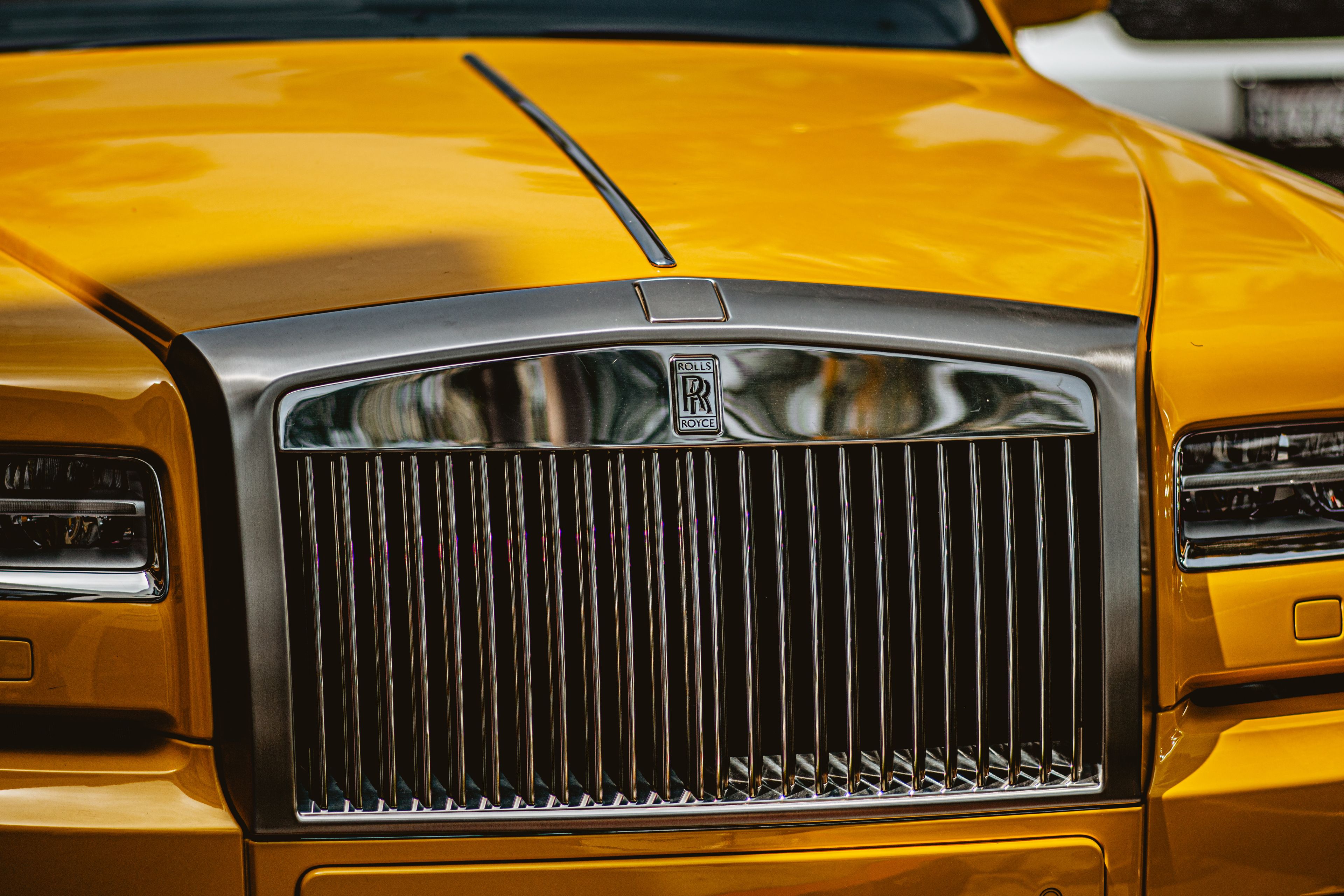
A wedding dress is a physical object with real dimensions, and not every beautiful car accommodates one well. What matters is the width of the rear compartment, the height of the roof line at the door aperture, and the direction the door opens. Rear-hinged coach doors, as on a Rolls-Royce, are genuinely superior here because you step out forwards rather than swivelling and climbing.
Full skirts, long trains and structured bodices all need space that a sports-oriented interior will not give them. If the gown is substantial, the Phantom or the Cullinan are the two cars we would point you towards, and the Cullinan in particular is easier to enter because of the seating height. For a slimmer dress, almost any of the flagship saloons will do the job comfortably.
Practical details worth agreeing in advance: who carries the bouquet during the journey, whether the veil needs a seat to itself, whether anyone is travelling in the front, and where the dress is being put on. Your chauffeur will help with the gown at both ends without being asked to, and will step back the moment you are safely on your feet.
Guests, parents and the second car
The bridal car gets all the attention and the second car does most of the work. Parents, grandparents, attendants and small children all need moving, often from a different starting point and always earlier than the bride. A luxury MPV is usually the right answer here: everyone sits properly, there is room for coats and gifts, and elderly guests find the higher entry considerably easier than a low saloon.
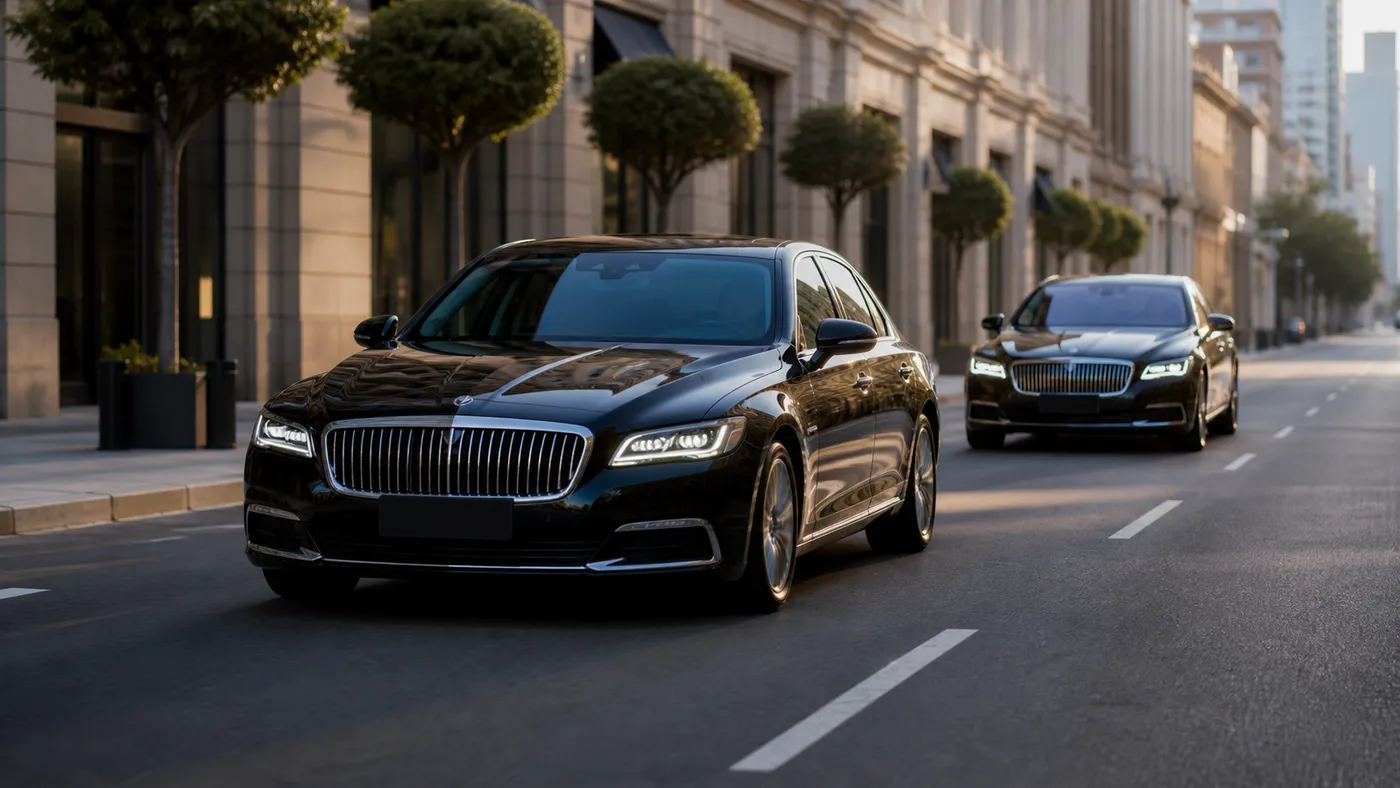
For larger guest movements — a group from a hotel to a church, or from the ceremony to a reception across town — two or three matched vehicles running together are far more manageable than one large one, and they place better at venue entrances. We will quote the whole arrangement together so you can see the shape of it rather than assembling it piecemeal.
Do not forget the end of the night. Guests leaving a London reception at midnight are in the worst possible position for finding transport, particularly in an area with few passing taxis, and pre-arranged cars for parents and older guests are one of the more quietly appreciated things a couple can organise for the people who travelled furthest to be there.
London specifics: churches, hotels and one-way systems
London wedding venues throw up problems that rural ones do not. Many central churches sit on one-way systems or bus lanes where a car simply cannot stop, which means the set-down point is a few doors away and needs identifying beforehand rather than discovering on the day. Hotels vary in whether they allow a private car on the forecourt at all, and some require the vehicle to circulate and be called forward.
Then there is the traffic. A Saturday afternoon in central London is unpredictable, road closures for events are common and frequently announced late, and the distance between two venues tells you almost nothing about the time it will take. This is why we drive the route beforehand where the day warrants it, and why we always plan two ways into each venue.
Photographs add their own logistics. The parks, bridges and squares that photograph beautifully very often have no legal stopping at all, and a photographer working to a schedule does not want to lose fifteen minutes to a parking problem. Tell us where they intend to work and we will find the nearest workable set-down and somewhere for the car to wait out of shot.
Ribbons, photographs and the small courtesies
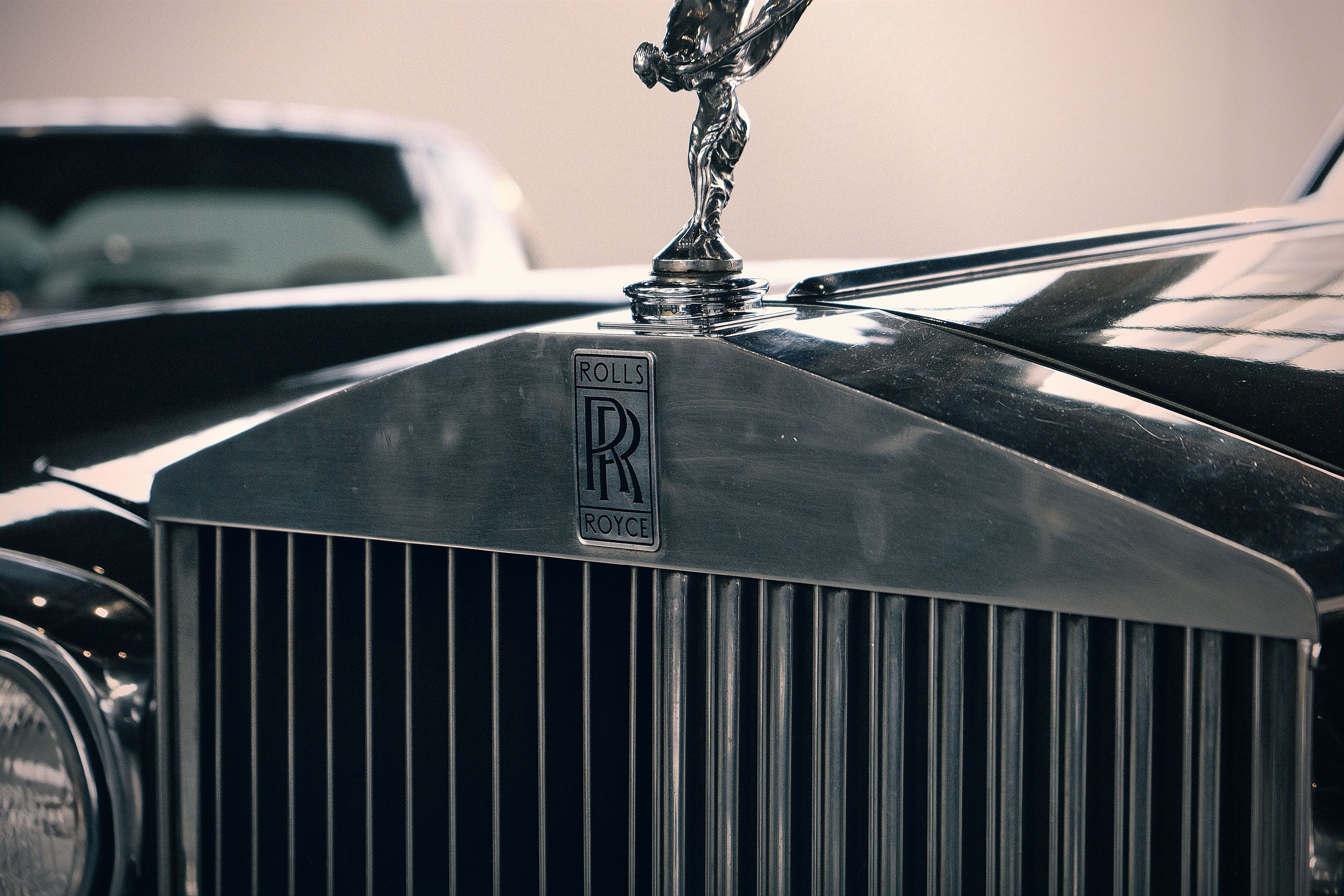
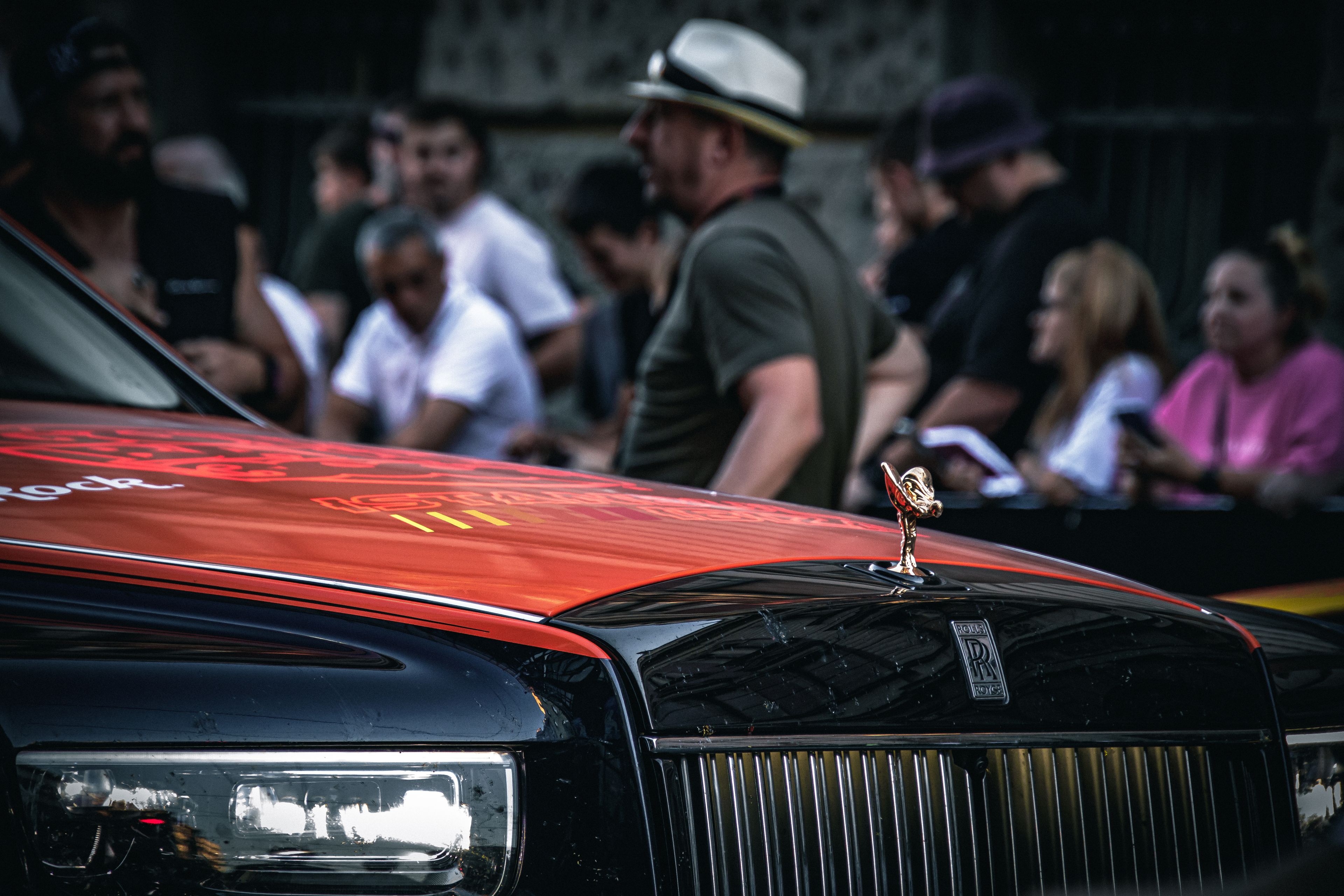
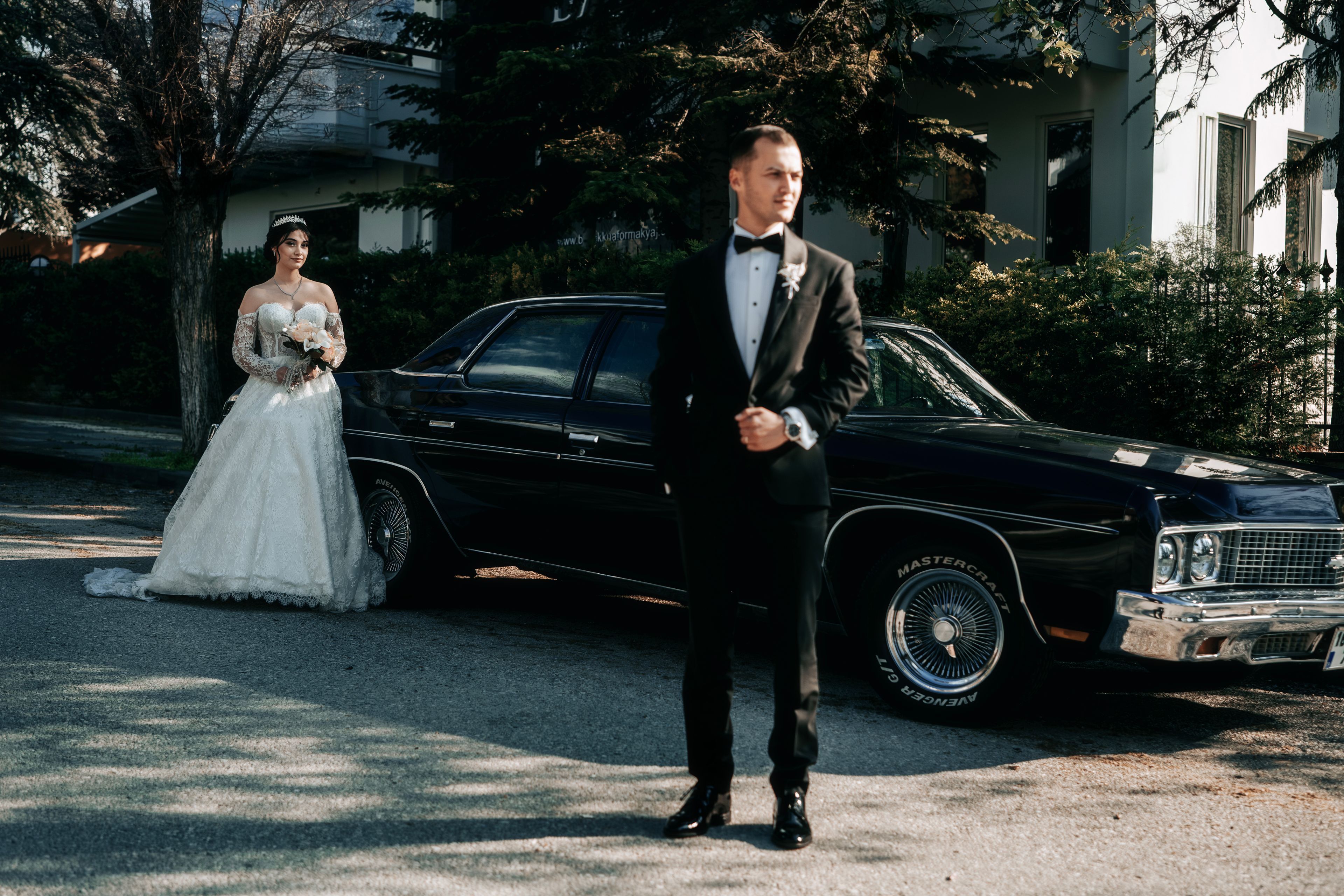
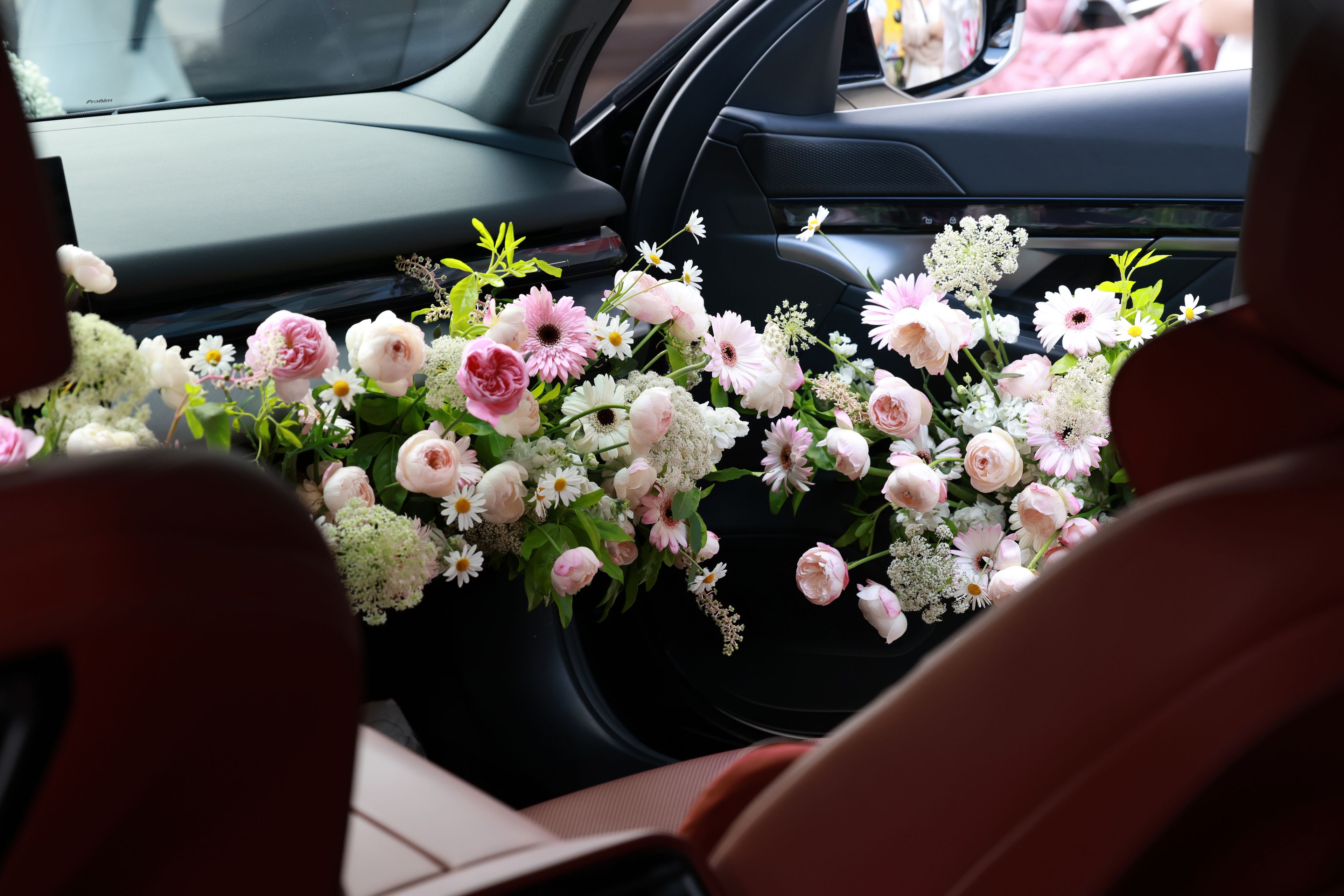
Ribbons are arranged without drama: tell us your colours when you confirm and the car will be dressed for the morning. The traditional arrangement runs from the bonnet ornament to the corners of the windscreen, and we will fit it in a way that suits the particular car rather than a standard template. The car will feature in the photographs whether you plan for it or not, so it is worth agreeing where it should stand during the group shots — your chauffeur will position it and then remove themselves from frame.
Small things matter disproportionately on the day: still water in the car, somewhere sensible to put the bouquet, an umbrella held over the door in rain, a hand offered on a wet step, and a chauffeur who knows exactly when to help and when to step back. These are the details couples mention afterwards far more often than the marque of the car.
Booking ahead, and what changes on the day
Wedding demand concentrates almost entirely on Saturdays between May and September, and the prestige and ultra-luxury cars are a small part of national supply on precisely those dates. If a particular Rolls-Royce on a particular June Saturday matters to you, that conversation should ideally happen many months in advance. Model, colour and specification remain subject to availability and booking confirmation.
Details will change, and that is normal. Ceremony times move, photograph locations change, guest numbers shift. Tell us as soon as you know and we will rework the timings. What we would ask is that changes on the day itself go through one nominated person — usually a member of the wedding party rather than the couple — so that your chauffeur is not receiving three different instructions from three different people.
The terms of your booking, including waiting time and any cancellation or amendment provisions, are confirmed in writing when you book and form part of your quotation. Nothing about the arrangement should ever come as a surprise, and least of all on that particular morning, when you already have a great many other things to think about. If anything reads unclearly, ask before you confirm.